


/file/publisher-c1a3f893382d2b2f8a9aa22a654d9c97/2026/07/748a499471e2e705c0114f274da8e393.png)

KINIGUIDE | The Houthis and why they trigger another surge in oil prices
KINIGUIDE | Oil prices are climbing once again as attacks by a Yemeni armed group on commercial ships in the Red Sea threaten another one of the world’s important energy trade routes.
The latest attacks have ignited a new phase in the crisis between the United States and Iran, drawing fresh attention to Yemen’s Houthi group - an Iran-aligned armed movement that has become a key player in the widening regional conflict.
The developments have raised concerns over the stability of the global energy supply chain, particularly amid ongoing tensions in the Strait of Hormuz, one of the world's most important oil shipping routes.
Attention has now also shifted to...
KINIGUIDE | Oil prices are climbing once again as attacks by a Yemeni armed group on commercial ships in the Red Sea threaten another one of the world’s important energy trade routes.
The latest attacks have ignited a new phase in the crisis between the United States and Iran, drawing fresh attention to Yemen’s Houthi group - an Iran-aligned armed movement that has become a key player in the widening regional conflict.
The developments have raised concerns over the stability of the global energy supply chain, particularly amid ongoing tensions in the Strait of Hormuz, one of the world's most important oil shipping routes.
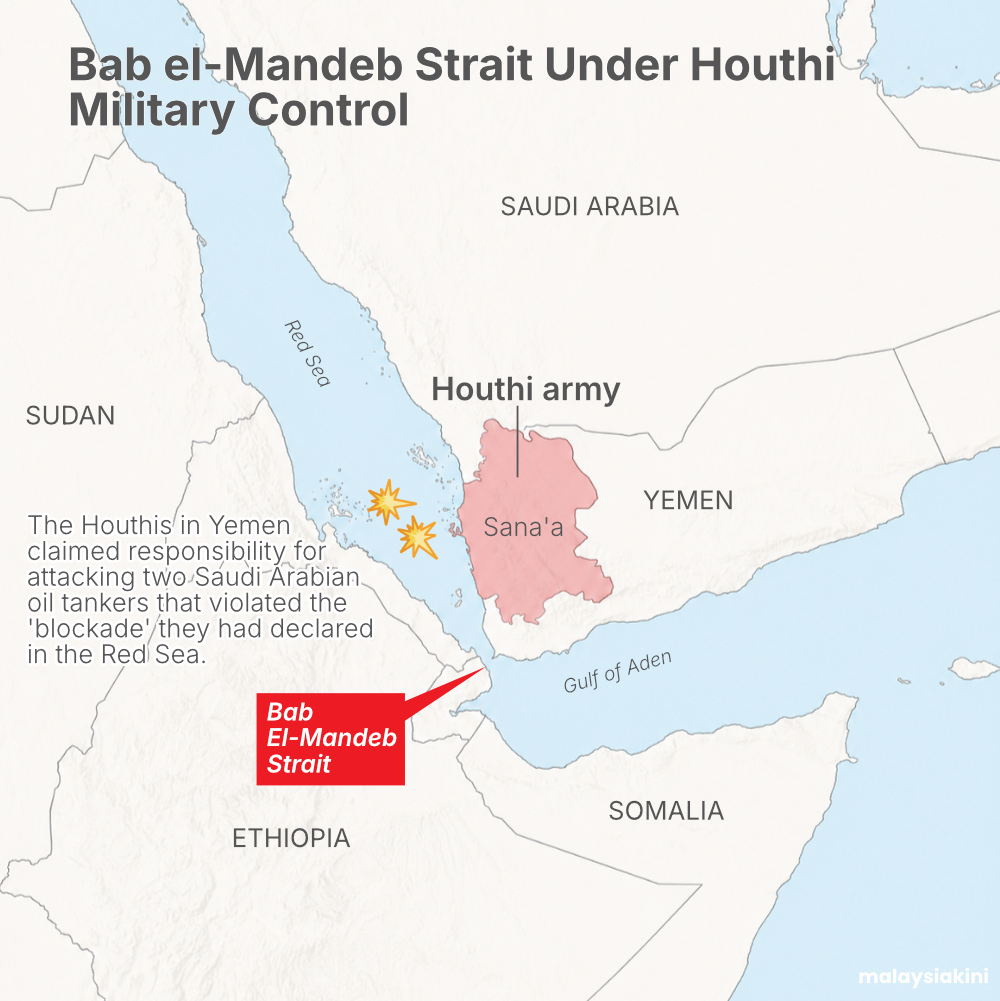
Attention has now also shifted to the Bab el-Mandeb Strait, off the coast of Yemen and southeast of the Strait of Hormuz, a waterway linking the Red Sea to the Gulf of Aden and the Arabian Sea, after the Houthis stepped up threats against commercial vessels passing through the area.
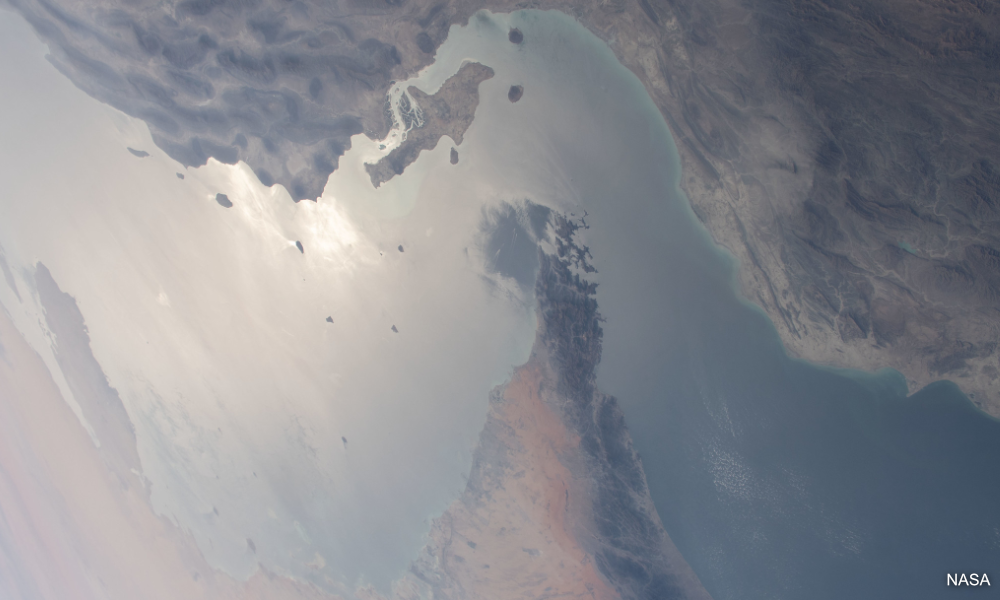
Who are the Houthis?
The Houthis are a political and armed movement originating from the mountainous region of Saada in the northwest of Yemen.
The movement grew from being a Zaydi revivalist movement established in the early 1990s and was later led by Hussein Badreddin al-Houthi, evolving into an armed group.
Conflicts between the Houthis and the Yemeni government escalated during the early 2000s, before the group succeeded in capturing Sanaa, Yemen’s capital, in 2014.
The takeover forced the government of then-president Abdrabbuh Mansur Hadi to lose control of the capital and flee to Aden, before receiving military backing from a Saudi Arabia-led coalition in 2015.
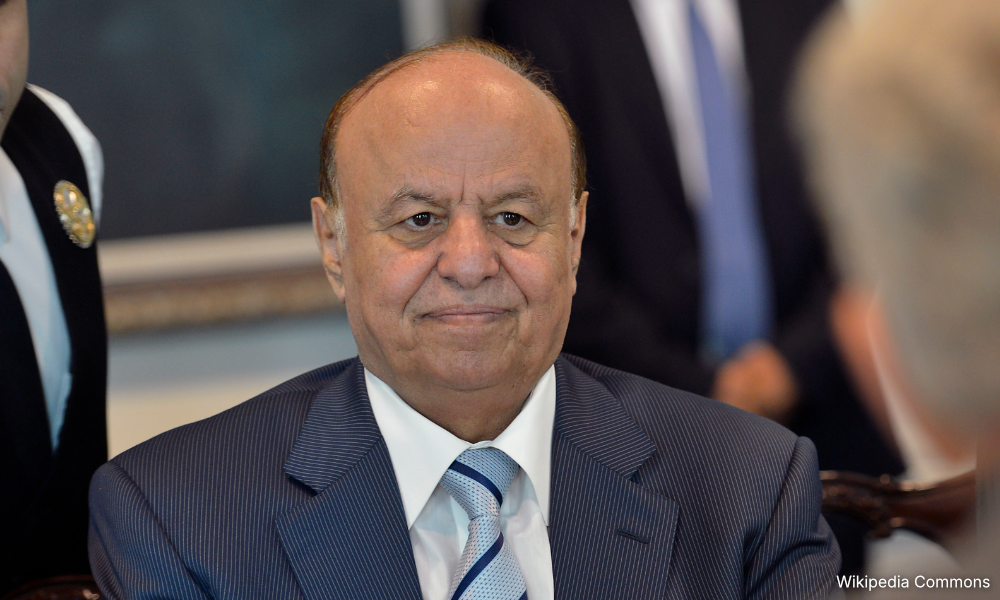
The Houthis are often associated with Iran since they receive military, financial, and technological support from Tehran.
In the Israel-Hamas conflict, the movement declared its support for Hamas and launched attacks on vessels it claimed were linked to Israel or its allies.
Why is the Bab el-Mandeb Strait important?
The Bab el-Mandeb Strait is one of the world's most strategically important maritime routes, connecting the Red Sea to the Gulf of Aden before opening into the Arabian Sea and the Indian Ocean.
At its narrowest point, the strait is only about 29km wide, making it one of the world's most critical maritime chokepoints for international trade.
The route serves as a vital corridor for shipments of crude oil, liquefied natural gas (LNG) and a wide range of goods travelling between West Asia, Asia and Europe via the Suez Canal.
According to Time magazine, the Bab el-Mandeb Strait is as strategically significant as the Strait of Hormuz because both are critical maritime chokepoints for global trade and energy supplies.
Following mounting security threats in the Red Sea, many shipping companies have opted to avoid the Bab el-Mandeb Strait and the Suez Canal by rerouting vessels around the Cape of Good Hope in South Africa.
While the alternative route is safer, it significantly extends voyage times, increases fuel consumption, transportation costs and insurance premiums.
Since March, Reuters reported that Saudi Arabia has been exporting about five million barrels of oil per day from its west coast, more than double the volume shipped before the conflict.
Around 80 percent of those shipments pass through the Bab el-Mandeb Strait, according to analytics firm Kepler.
However, the current situation is once again forcing a reshaping of global oil trade routes.
The international news agency reported that many vessels carrying Saudi crude oil to Asia are now sailing through the Suez Canal into the Mediterranean Sea before sailing around the African continent to continue their journey.
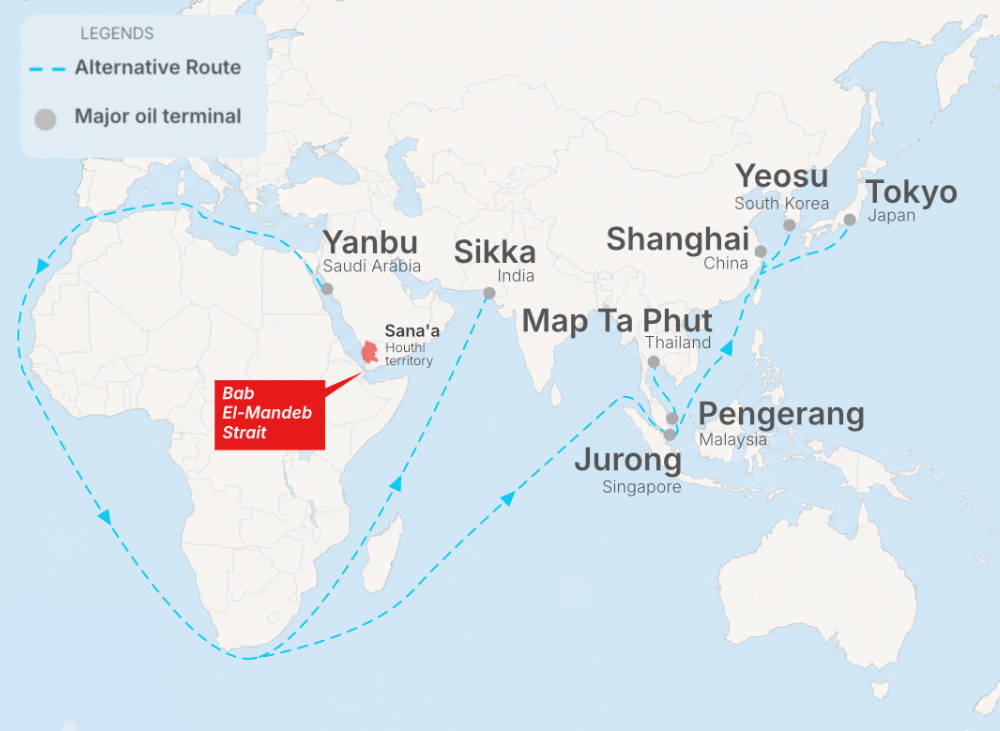
However, logistical constraints remain, as the largest fully laden tankers are unable to use the route because of draft restrictions.
Part of the cargo must first be transferred into pipelines south of the canal before being reloaded onto vessels near Alexandria to continue the voyage.
By avoiding the Bab el-Mandeb Strait, shipping times increase by at least four weeks compared with the usual tanker route, more than doubling voyage durations while driving up freight costs and insurance premiums.
The disruption to crude oil shipping is expected to deal an even greater blow to the global oil refining sector, which is currently regarded as the weakest point in the world's energy system.
What is happening in Bab el-Mandeb?
The United Kingdom Maritime Trade Operations (UKMTO) has confirmed that a tanker in the Red Sea was struck by an unidentified projectile, triggering a fire on board.
According to the German Press Agency, citing UKMTO, the vessel's captain reported that the incident occurred about 70 nautical miles (around 130km) southwest of Al-Shuqaiq, Saudi Arabia.
While investigations into the incident are ongoing, the Houthis claimed responsibility for attacking two Saudi oil tankers that it alleged had violated its self-declared "blockade" in the Red Sea.
The group said it used missiles and drones in the attacks. Fires reportedly broke out on both vessels, while about 10 other ships were forced to turn back. However, it has not been confirmed whether both reports refer to the same incident.
How have world leaders responded?
So far, the US and Pakistan have condemned the Houthi threats against commercial shipping routes in the Red Sea.
US State Secretary Marco Rubio blamed Iran for the maritime blockade imposed by the Houthi rebels against Saudi Arabia, while expressing hope that the situation could be de-escalated, the AP News reported.

Although the Houthis are widely believed to be heavily influenced by Iran, they do not operate under the direct command of Iran's supreme leader, unlike Lebanon's Hezbollah and several Iran-backed militias in Iraq.
"Anything that obstructs shipping through the Red Sea will be a problem for the same reason the Strait of Hormuz is also an issue," Rubio said on the outside of a regional summit in the Philippines.
He was also quoted as saying that the US was closely monitoring the situation and had been in frequent contact with Saudi Arabia over the past week regarding the threat.
"This is not a new threat, but it is one we have seen before. The key issue, once again, is the fact that Iran is at the centre of it. If we're talking about the source of instability in the region, it's Iran," Rubio said.
The report also said Pakistan condemned the Houthi threats, describing them as a violation of established principles of international law.
Pakistan's Foreign Ministry yesterday warned that the actions "threaten regional security, undermine freedom of navigation, challenge the rules-based maritime order, and endanger the uninterrupted flow of global trade".

Islamabad said it was deeply concerned by reports of threats directed at vessels engaged in legitimate commercial trade with the Saudi government.
The ministry further warned that "any hostile act against Pakistan-flagged vessels or Pakistan's maritime interests will be regarded as a serious threat to Pakistan's national security and sovereign interests".
Threat to the global oil market
The expansion of the conflict into the Red Sea is seen as not only undermining efforts to restore stable energy supplies but also creating another major risk to the global oil market.
About two weeks after renewed hostilities between the US and Iran erupted, tensions in West Asia escalated sharply following Houthi actions in the Bab el-Mandeb Strait.
Following the latest developments, oil prices reportedly rose by more than 1.5 percent to their highest level in more than six weeks after the US launched strikes on Iran.
Reuters reported that Brent crude futures rose by US$1.93 (RM7.90), or two percent, to US$96 (RM392.99) a barrel yesterday, the highest level since June 8.
In the previous session, Brent had already gained more than US$3 (RM12.28) to close at US$94.07 (RM385.10), just shy of a six-week high.
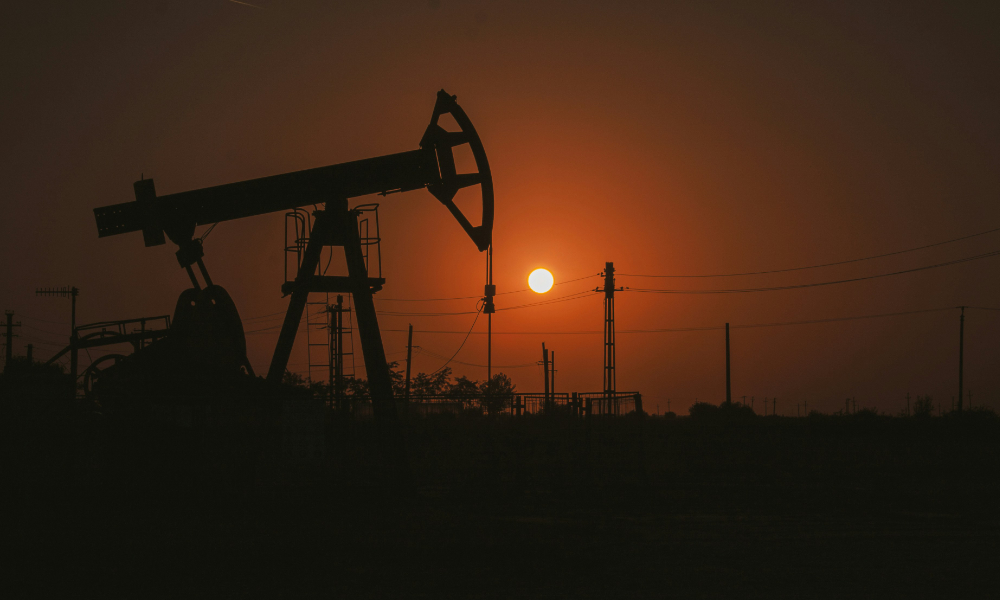
US West Texas Intermediate (WTI) crude also climbed US$1.44 (RM5.89), or 1.7 percent, to US$88.27 (RM361.34) a barrel after surging nearly three percent the previous day.
In the US, crude oil inventories increased by two million barrels last week, according to the Energy Information Administration, due to lower refinery activity and weaker crude exports as imports increased.
Analysts surveyed by Reuters had previously forecast a decline of 1.1 million barrels.
/file/publisher-c1a3f893382d2b2f8a9aa22a654d9c97/2026/07/38258252afe77df241642292b395f1e1.jpg)
/file/publisher-c1a3f893382d2b2f8a9aa22a654d9c97/2026/03/bbf2d75021c78bc0d5530a7d498ae8fe.jpg)
/file/publisher-c1a3f893382d2b2f8a9aa22a654d9c97/2026/06/df94e271b6945d4b65227c9422718e75.jpg)
/file/publisher-c1a3f893382d2b2f8a9aa22a654d9c97/2026/04/4d73687175c2c75b9f5b24a1a85cca7a.jpg)
/file/image/77267628_605.jpg)
/file/image/77558950_605.jpg)
/file/image/77038321_605.jpg)


Report this comment
Are you sure you want to delete this comment?
This action cannot be undone.