




Political maturity gives hope to Nepalese
Talking about Nepal and its people will conjure up images of unskilled migrant labourers, factory workers and security guards to the average Malaysian - apart from Mount Everest that is.
Talking about Nepal and its people will conjure up images of unskilled migrant labourers, factory workers and security guards to the average Malaysian - apart from Mount Everest that is.
None would, or at least those who have never visited this nation that gave birth to the soul progenitor of one of the world’s most followed religions, Siddharta Gautama and Buddhism, ever conceive this poorest country by material standards to be so rich in its political culture.
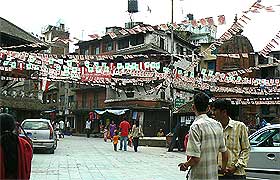 Offered a position among five other Malaysian international observers with a regional Thailand-based poll watchdog Asian Network for Free Elections (Anfrel), I had the opportunity to surpass the stigmas and witness directly the mature state of political culture practiced by Nepalese in their historic constituency assembly (CA) elections.
The April 10 polls was to be the base from where the future of Nepal would be decided upon. From here on, 601 elected representatives will draw out the country’s constitution and for the first time in the country’s troubled history, it will be done so democratically.
This elections had reflected the will of the major political players and the people of Nepal to rid off their country’s political sense of helplessness after experiencing failed political systems that ranged from the tyrannical ‘panchayat’ system (partyless elections) imposed by the monarch to ‘corrupt electoral democracy’.
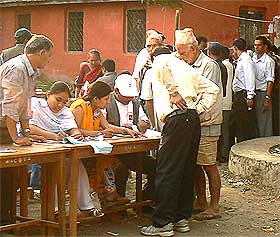 Though positive as it may sound to the average person knowing that the turbulence had brought about the CA elections, it was not without its cost and for the Nepalese people, the cost was often paid with the lives of thousands of poor Nepalese husbands, wives, sons, daughters and so on. These lives make up the blood trail left by a decade long ‘people’s war’ between the Maoist insurgents and the state.
To cut it short, war is over now. A comprehensive peaceful agreement was reached between the Maoists (now known as the Communist Party of Nepal-Maoists or CPN-M) and the two major parties, Nepali Congress (Liberal democrats who headed the interim seven-party alliance government) and the Communist Party of Nepal - Unified Marxist-Leninists (CPN-UML) which is actually, ideologically a social democratic group.
Ideologically different as it may seem the orientation between these parties, they have managed to quell their differences in order to achieve one common objective - to let the people decide by the ballots which political direction Nepal will take. To let the people decide whether they want a constitutional monarch or a republic.
Fair and free elections
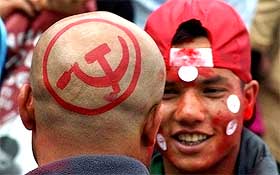
As a Malaysian, I find it quite shocking to find thousands of communist flags hung on lamp poles and buildings in the city and rural districts. It was a sight that reflected political maturity. Ideologies from the far left to the far right was seen free to contest in an equal playing field facilitated by the Nepalese Election Commission.
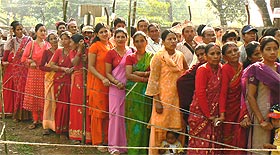 The Nepal EC’s integrity is unquestionable. Unlike Malaysia where its electoral regulators have suffered a major crisis of public confidence as it is pervasively seen as pro-status quo, the Nepal EC seems impeccable.
Observers from international groups like the European Union, Carter Center of United States of America, the British government and Anfrel all agreed that the Nepal EC functions with integrity.
To them, minus the few insignificant administrative problems and minor violent incidents that did not affect the entire integrity of the election process, the Nepalese EC was professional and impartial when it comes to executing their tasks.
My arrival in the Nuwakot district, north of the city’s capital Kathmandu, was greeted with the coincidental encounter with thousands of supporters from the Maoists party rallying on the town’s main streets. Security personnel were present but they were there to protect the rally participants instead of cracking their skulls with batons.
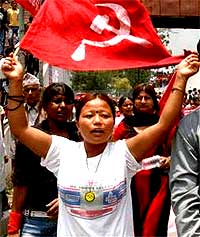 The head security of the district known as the Chief District Officer (CDO) when met informed observers that mass rallies are permitted. A permit is not necessary for parties to organise mass rallies. They must however inform the CDO prior to the event and the CDO will consult with the EC officers on how to facilitate the wishes of the pleading party.
By this, observers witnessed a well coordinated regulation pertaining to campaigning to ensure that all parties receive fair and adequate space and time to express ideas. By this it meant that potential violent clashes between different party supporters had been constructively avoided without obstructing them from exercising their fundamental civil liberties.
Another interesting thing to note about Nepal in this particular elections is the practice of the parallel or known to them as the mixed election system. One is the ‘First-Past-The-Post’ system (the one practiced in Malaysia) and the proportional representative (PR) system.
PR system will ensure candidates contesting have support from all sectors (women, marginalised groups, youth and the elderly) of society. This is to guarantee that no sectors of the Nepalese society are left out from representation and that their voices and concerns will be mediated when the PR elected candidates convene to draft the country’s constitution.
As far as the electoral process is concerned, the measures introduced by the Nepalese EC mirrored an earnest effort to obviate manipulation. The usage of indelible ink faced no objections from all the parties involved.
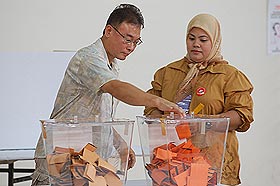 Similarly in Malaysia, party agents were allowed to object to any suspicion of foul play. But Malaysia is rife with protests with regards to electoral rolls and registration problems every time it holds a general election. None of such irregularities were encountered in the polling centres throughout Nepal.
Nepal however suffers from tremendous backwardness in the technological sphere. This rendered voter registration process a total mess. Various instances of eligible voters not being able to vote due to the problems arising from the lack of technological resources.
Half of Nepal is inaccessible by vehicles due to its harsh mountainous terrains and the government is without sufficient financial strength to provide the rural areas with proper roads. This contributed to the EC’s inability to sort out voter registration issues for the poor rural inhabitants of Nepal.
 But before one can pass judgments, the tenacity of the Nepalese EC, the parties and the people of this country to carry on with the elections despite the geographical constraints will command the respect of anyone whom had the opportunity to witness the CA elections through unfiltered eyes.
The election materials (ballot boxes, indelible inks, etc) arrived to the rural areas by foot. People walked for miles and hours through cruel landscapes to the polling centres and did not complain about the government ban on public and private transportation (to prevent voters from other areas to vote outside their designated polling locations).
Many would, given the geographical conditions of Nepal, suggest postal voting but it was not accepted by the EC as they felt that the postal voting system can be easily manipulated in favour of the stakeholders.
After polling time ended, the ballot boxes from the rural areas will be carried to the collecting points (areas accessible by vehicles) where EC transport awaits them. Hours of carrying ballot boxes to the collecting points by foot means that EC officers were susceptible to attacks from party supporters and given the often ill-reported news of violence perpetrated by the Maoists, it did not happen.
Material poverty, political cultural wealth
The presence and acceptance of international election observers by the Nepalese government, political parties including the Maoists proved the country’s political will and seriousness to implement a free and fair elections.
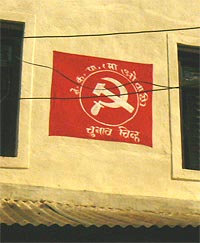 Red flags of the Maoists numbering in thousands waved and hung alongside right-wing parties indicated a certain level of political maturity. It indicated the freedom enjoyed by the people to democratically choose any ideology, be it radical or conservative, without suppression or discrimination.
Observers, western or eastern alike, shared the absence of ethnic antagonism in their observation reports. Despite the high illiteracy rate of Nepal (40 percent) and the extremely low tertiary education graduates percentage (0.7 percent), racism was virtually not in the Nepalese vocabulary. Indo-Aryans alongside their Paharis to other smaller groups like Tharus and Dhimals had all voted according to ideologies brought by the political parties and not ethnicity.
Nepal is no Japan nor South Korea or even near Malaysia when it comes to material prosperity. But this country is as rich in its political culture as any developed democracy in commitment to implement an election system that guarantees the voice of the Nepalese people are properly represented in the construction of a new Nepal.
Can we say the same about Malaysia? I leave it to the readers to decide. As for me, I am writing from Nepal with admiration and hope.


Are you sure you want to delete this comment?
This action cannot be undone.