


/file/attachments/orphans/90834593045_307946.png)

PAS MP wants Rohingya settlement modelled on 1978 Vietnamese refugee camp
PARLIAMENT | Ahmad Fadhli Shaari (PN-Pasir Mas) has urged the government to establish controlled settlement centres for Rohingya refugees, modelled on the former Pulau Bidong camp, saying the public can no longer cope with the influx and feels increasingly threatened.
Debating Budget 2027 in the Dewan Rakyat today, Fadhli questioned whether the government had a concrete solution for the Rohingya issue despite allowing refugees into the country.
“The people are already stretched by this issue. In my constituency, there is even a...
PARLIAMENT | Ahmad Fadhli Shaari (PN-Pasir Mas) has urged the government to establish controlled settlement centres for Rohingya refugees, modelled on the former Pulau Bidong camp, saying the public can no longer cope with the influx and feels increasingly threatened.
Debating Budget 2027 in the Dewan Rakyat today, Fadhli questioned whether the government had a concrete solution for the Rohingya issue despite allowing refugees into the country.
“The people are already stretched by this issue. In my constituency, there is even a school built by these refugees.
“I propose that the government act more harshly and firmly, including hunting down those who commit offences and carrying out a cost and feasibility study for such settlement centres.
“If a capacity of 200,000 cannot be provided, studies can be done for 10,000 or 20,000 people, under strict control by appointed officers,” he said.
/file/attachments/orphans/test111_108685.jpg "Rohingya refugees arrive in KL after alleged threats, eviction in Penang camp outside of UNHR building 270726")
Pulau Bidong, off the coast of Terengganu, served as a camp for Vietnamese “boat people” from 1978 to 1991. At its peak, it housed more than 40,000 people.
About 250,000 refugees passed through the island before the camp closed following an international plan for their resettlement and repatriation.
While acknowledging the humanitarian concerns behind the refugee issue, Fadhli said the public could no longer bear to see the situation continue.
The PAS leader said he understood the government’s diplomatic efforts but cautioned against comparing them with former prime minister Tunku Abdul Rahman’s negotiations with communist leader Chin Peng.
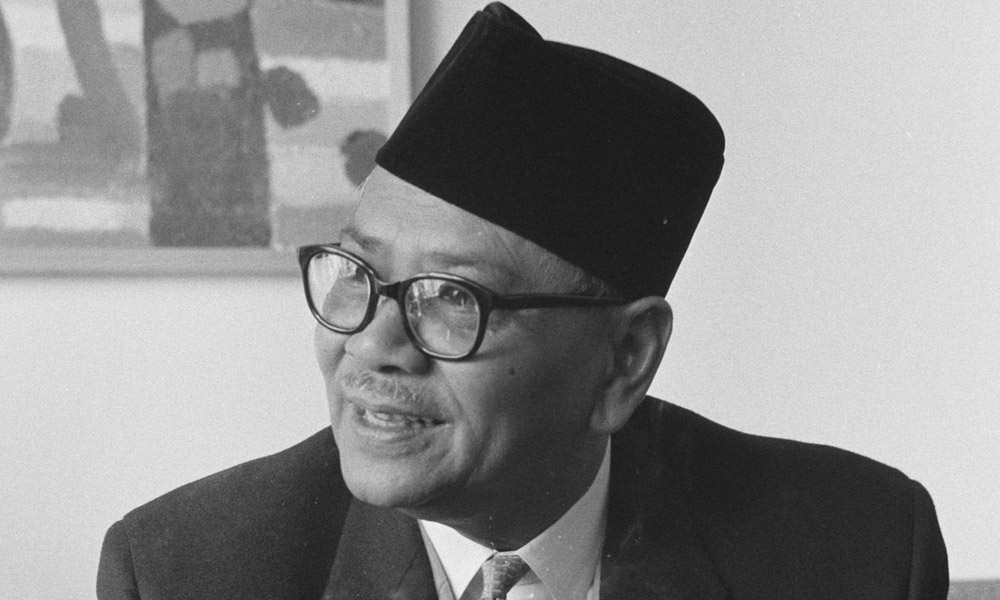
“The communist leader was not feted with a red carpet and only negotiated in a school building to show that the government at the time did not recognise him.
“When we negotiate with terrorists, when we negotiate with those who are not recognised, at the very least there must be a very concrete solution,” Fadhli said.
Refugee management complication
Earlier today, Home Minister Saifuddin Nasution Ismail told the Dewan Rakyat that the United Nations High Commissioner for Refugees (UNHCR) online registration process complicated Malaysia’s management of refugees, as applicants could enter the country as tourists or on social passes while awaiting decisions.
Responding to Radzi Jidin (PN-Putrajaya), Saifuddin said Malaysia’s handling of Vietnamese refugees had differed, with repatriation made a condition for supporting Vietnam’s entry into Asean. The current situation was more complex, involving refugees from multiple countries, he added.
Saifuddin urged the public not to take enforcement into their own hands but to report objectionable behaviour to the authorities.
He said claims that some refugees entered Malaysia using passports before obtaining UNHCR documents remained allegations, adding that the agency had its own screening process.
/file/attachments/orphans/fpiojasdpioasdopds_666286.png)
/file/attachments/orphans/MalaysiaPMAnwarIbrahimandMyanmarPresidentMinAungHlaingofficialvisittoKL0810262_936664.png)
/file/attachments/orphans/homeministry1asdeesd2_674391.png)
/file/attachments/orphans/homeministry1asdesd_153225.png)


Controlled settlement centres also known as Concentration Camps. Way to go mate!
Report this comment
Are you sure you want to delete this comment?
This action cannot be undone.