


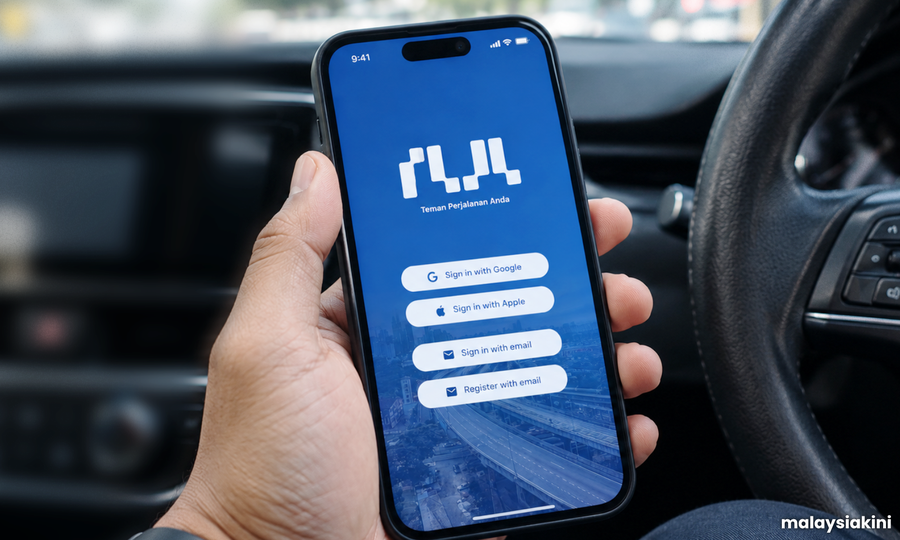

COMMENT | TuJu vs Waze: National pride or national embarrassment?
COMMENT | The government prohibited civil servants from using Waze for official business, citing security concerns associated with the application's Israeli origins and the handling of location data.
Fair enough! No responsible government should take the security of its citizens' data lightly.
However, some Malaysians asked, "What exactly is wrong with Waze?"
Waze originated in Israel and was acquired by Google in 2013. Its service provider, Waze Mobile Ltd, is incorporated under Israeli law. By themselves, these facts do not establish that Malaysian users' information is being misused.
Furthermore, supporting Palestinians does not mean rejecting every technology associated with Israel. Should we also ban Israeli inventions that changed the world, like flexible stents, firewalls, or pillcams?
Shouldn't we judge...
COMMENT | The government prohibited civil servants from using Waze for official business, citing security concerns associated with the application's Israeli origins and the handling of location data.
Fair enough! No responsible government should take the security of its citizens' data lightly.
However, some Malaysians asked, "What exactly is wrong with Waze?"
Waze originated in Israel and was acquired by Google in 2013. Its service provider, Waze Mobile Ltd, is incorporated under Israeli law. By themselves, these facts do not establish that Malaysian users' information is being misused.
Furthermore, supporting Palestinians does not mean rejecting every technology associated with Israel. Should we also ban Israeli inventions that changed the world, like flexible stents, firewalls, or pillcams?
Shouldn't we judge technology by its security, reliability and ethical implications, and not simply by its country of origin?
Prove if TuJu is better
In response to this perceived security threat from Waze, Prime Minister Anwar Ibrahim then promoted a local navigation application, TuJu, as an alternative. When TuJu attracted numerous complaints about its performance, more uncomfortable questions were asked.
If Waze poses a genuine security risk, show the evidence supporting its assessment and why the chosen restriction is proportionate. If TuJu is better, prove it, and if it is not ready, improve it before recommending it to the public.

With ongoing disciplinary threats by the National Security Council (NSC), perhaps Putrajaya should clarify the scope of the prohibition. Is the restriction only for official devices and government business?
We're good about issuing directives, but will enforcement be rigorous, or adopt a "tidak apa" (couldn't care less) attitude?
This saga is not simply about whether TuJu can find a road. It focuses on decision-making: who made them, the supporting evidence, and whether public interest comes first. Significantly, did the government establish that the replacement was ready as a navigation app?
The Malaysian Highway Authority (LLM) and Prosignal Consortium Sdn Bhd developed TuJu in a partnership dating back to 2022, and thus the app was not hastily conceived in response to the latest Waze controversy. The app was launched in November 2025.
So, who initiated the partnership? How was Prosignal selected? Was there an open competitive tender, closed tender, direct negotiation or another procurement process? Were other potential partners considered? What criteria determined the final choice?
Taxpayers deserve transparency about the selection process, project costs, each party's responsibilities and the safeguards in place if the project fails.
Our bitter experience is that a government partnership is not proof of good governance; however, transparency helps build public confidence.
Anwar at fault
DAP's Lim Guan Eng called TuJu a "national embarrassment" and wants the person who convinced Anwar that TuJu was technologically adequate to be punished.

Actually, the PM is at fault.
Rightfully, Anwar cannot be expected to know everything, but he is expected to ask questions, demand independent assessments and challenge assurances before endorsing a product.
Consider the chairperson of organisations, such as Tabung Haji. A chairperson cannot supervise every transaction, but must exercise proper oversight, scrutiny and introduce safeguards. If serious losses occur, saying “I didn't know” is unacceptable; ergo, Tabung Haji's current mess.
The same principle applies to Anwar. Leadership is not just about decision-making; those decisions must be properly scrutinised.
A product does not become a success because it carries a Malaysian name. A partnership does not become transparent because a government agency is involved. A director does not become an expert simply because he once held high office.
Similarly, a PM's endorsement is not a substitute for independent testing.
Locally developing reliable technology
The real test of national ambition is whether we can develop technology that is secure, reliable, useful and trustworthy.
Our projects should be judged by their quality, rather than their symbolism. Our leaders should acknowledge that asking difficult questions before making a decision is not disloyalty, but a fundamental duty of good governance.
Questions about appointments and influence are important. When former senior civil servants, former police chiefs, elites or politically connected individuals take positions in companies working with government agencies, what expertise do they bring?
What are their responsibilities? Were they appointed on merit? Have potential conflicts of interest been disclosed? Were they chosen for their relevant technical expertise, or for their ability to navigate government processes and secure approvals?
Malaysians are fed up with a culture whereby pleasing superiors is rewarded more generously than an ability to challenge questionable decisions and flawed proposals.
Additionally, basic questions about expertise should not be confused with unreasonable demands for perfection.
Who assessed TuJu's technical capabilities? Who determined that its navigation functions were sufficiently reliable? Was its cybersecurity independently audited? Were its traffic information, route accuracy and capacity tested under realistic conditions before its public promotion?
LLM apologised for TuJu's performance, claiming that the PM's recommendation had swamped the site. Pathetic!
The surge may explain some technical disruptions, but complaints about inaccurate routes or inadequate navigation functions are unacceptable. Can TuJu cope with multiple users? Is it reliable?
Accountability comes with the position
A product may struggle under sudden demand even after adequate testing. Equally, a system may have been insufficiently tested before heavy promotion.
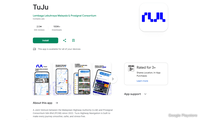
The government should publish appropriate performance assessments, explain what went wrong and set measurable targets for improvement.
Crucially, will Malaysia judge public projects by competence, transparency and results, rather than symbolism? When will leaders accept that accountability accompanies the position?
National pride should inspire us to build better products, not pressure us to accept inferior ones.
MARIAM MOKHTAR is a defender of the truth, the admiral-general of the Green Bean Army, and the president of the Perak Liberation Organisation (PLO). Find her on her website and on X.
The views expressed here are those of the author/contributor and do not necessarily represent the views of Malaysiakini.



From observation, I would say more than 50% ( unconfirmed, just a guess) of Govt's staff actually work in offices and not on the road. So, travelling to and from offices should not be on official duties.So, how are they going to monitor those on the road on official duties?Roadblocks and check their hand phones? Human will use whatever apps they trust and meet their requirements.There is no need to force something on them that may inconvenient them in the so-called name of national pride. I use my CIMB Bank apps more than my HSBC apps, as it meets my day to day requirements. Waze was developed at no monetary costs to Malaysia and Malaysians. However, the questions arise on how much the Govt have paid Prosignal Consortium Sdn Bhd for Tuju apps and how it was appointed without any open tender advertised or RFP openly? That costs are borne by all Malaysians. No more about national pride or embarassment but more of National Debt again.
Search the internet and you find the barest of information on Prosignal Consortium Sdn Bhd except for its board members.TuJu was developed since 2022 and launched in 2025 but how much was paid by the government for the app is not disclosed anywhere, whether in LLM books or Prosignal.How did Prosignal got involved , by open tender or directly chosen is not known.Looks like another potential scandal if substantial taxpayers money was paid for TuJu.Madani government learned well from BN.Anwar preached open tender and transparency but his actions do not matched his speeches. AND here again Loke is involved as LLM is under him just like Zetrix and he is not accountable because he had tendered his resignation? Gobind defended TuJu whilst LGE spoke the truth about TuJu's reliability pointing it out as a national embarrassment.Looks like DAP cabinet ministers are YES MEN to Anwar even though he made a foolish announcement and yet no heads are going to roll?
Something is definitely wrong here ! The PM meant to state "get rid of the Haze" instead by way of a slip of his tongue he said "get rid of the Waze"
Report this comment
Are you sure you want to delete this comment?
This action cannot be undone.