


Israel polls deadlocked, Netanyahu in a bind - what happens next?
With no clear winner emerging from Israel’s elections, the country is bracing for a prolonged period of political uncertainty that could last weeks to months.
Neither of the two main blocs - one led by Prime Minister Benjamin Netanyahu’s right-wing Likud party, the other by his main rival Gadi Eisenkot’s centrist Yashar party - has secured the 61 seats needed to form a government in Israel’s 120-member parliament.
Netanyahu has...
With no clear winner emerging from Israel’s elections, the country is bracing for a prolonged period of political uncertainty that could last weeks to months.
Neither of the two main blocs - one led by Prime Minister Benjamin Netanyahu’s right-wing Likud party, the other by his main rival Gadi Eisenkot’s centrist Yashar party - has secured the 61 seats needed to form a government in Israel’s 120-member parliament.
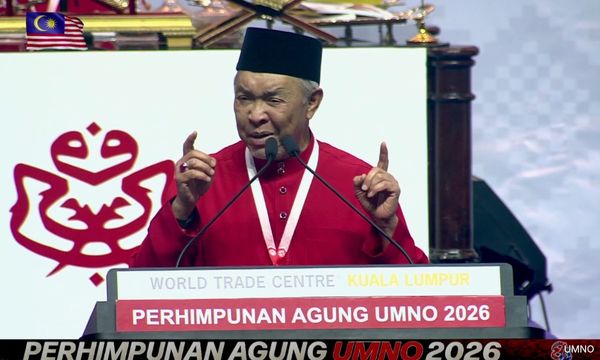
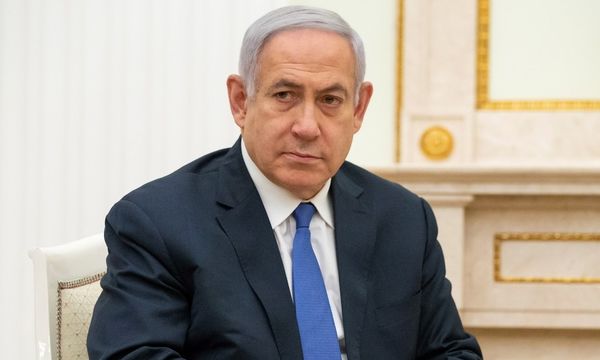
Netanyahu (above, left) has accused Arab parties of benefiting from alleged voter fraud in this week’s election, but has offered no evidence to support the claim.
The allegation, swiftly dismissed by Arab leaders, comes amid heightened tensions following a record turnout among Arab voters. Their strong showing has complicated efforts by both Netanyahu and his opponents to secure a clear path to power.
Analysts interviewed by Reuters believe Netanyahu’s escalating attacks on Arab parties are aimed at putting Eisenkot (above, right) in a political bind, making it harder for him to even form a minority government with Arab backing to unseat the prime minister.
Reichman University political science professor Eytan Gilboa said Netanyahu’s objective was to “delegitimise any Arab-Jewish cooperation”.

The Times of Israel reported that the Central Elections Committee released the final results of the 2026 national election in the early hours of Friday, recording a turnout of 77.9 percent - the highest in decades - with 5,716,665 eligible voters casting their ballots.
The results leave Netanyahu’s governing bloc with 53 seats, down from 68 in the outgoing Knesset. The anti-Netanyahu camp secured 48 seats, while Arab parties collectively won 19, leaving the balance of power fragmented across three blocs.
Divided opposition
Meanwhile, CNN has outlined several possible scenarios for how a new government could emerge.
Arab support holds the key, but opposition is divided
The parliamentary arithmetic may favour Netanyahu’s opponents, but translating that advantage into a change of government is another matter.
Any serious attempt to dislodge the prime minister would appear to require some form of cooperation with Arab lawmakers, an arrangement several influential opposition figures have already ruled out.
Former prime minister Naftali Bennett and former defence minister Avigdor Liberman, both prominent figures on the opposition’s right, have drawn a red line against relying on the Joint List and Raam.
Neither is prepared to accept Arab parties as coalition partners or have them provide parliamentary backing for a minority government. Their resistance has hardened since the Oct 7, 2023 Hamas-led assault.

There is little precedent for such an arrangement. Raam made history in 2021 when it joined an eight-party governing alliance that brought Netanyahu’s tenure to an end.
But that experiment in cross-party cooperation unravelled after just over a year, and Netanyahu returned as prime minister the following year.
The opposition could nevertheless use its parliamentary numbers to challenge Netanyahu without immediately replacing him.
A coordinated front could move to change the Knesset speaker and take control of other key parliamentary positions, giving it greater leverage over the caretaker administration.
Such manoeuvres, however, would leave the fundamental question unanswered: who can command enough support to govern Israel?
A deal across the political divide
If neither side can muster the numbers independently, a broader arrangement involving parties from both camps could offer another way forward.
Such a deal would leave Likud in the equation, alongside some of Netanyahu’s allies, while at least one opposition party agrees to join the administration.
Netanyahu is reportedly open to dropping his far-right National Security Minister Itamar Ben-Gvir from the equation, but appears unwilling to make similar concessions involving far-right Finance Minister Bezalel Smotrich or the ultra-Orthodox parties.
That leaves Eisenkot with a difficult choice, as he has repeatedly ruled out any partnership with Netanyahu. Reversing that position could also alienate voters who backed the opposition precisely because they wanted to end the prime minister’s rule.
Netanyahu looks for reinforcements
Another possibility is for Netanyahu to bolster his numbers by persuading individual lawmakers to defect from the opposition.

But the resistance extends beyond party leaders. Eisenkot, Bennett, Liberman, and the Democrats’ Yair Golan have all publicly committed themselves to staying out of a Netanyahu-led government.
The numbers make such an effort even more challenging. Netanyahu’s bloc is eight seats short of a majority, meaning he would need to attract enough defectors to bridge the entire gap.
Back to the ballot box?
If these competing calculations fail to produce a viable administration, Israelis could eventually be sent back to the polls.
Before that happens, President Isaac Herzog must consult the leaders of all parties that secured representation in the Knesset. Following those discussions, he will designate one politician to make the first attempt to form a government.
With Arab factions expected to endorse Eisenkot, the Yashar leader could be the first to receive that mandate.
Whether he can turn their backing into a coalition that also satisfies his other potential partners, however, remains an entirely different challenge.



Israel needs a break from Netanyahu and a change in direction with the Arab Israeli parties in Government supporting Eisenkot. Otherwise the Middle East will be forever at war.
Bibi Netanyahu is a master politician who is shrewd and cunning and his mastery in leading israel for 19 years is indeed commendable. In 2025, israel defeated her enemies on 7 fronts and yet achieved tremendous economic growth. It will not be easy to replace him and we shall see the final result very soon.
My prediction is that Yashar Party led by Gadi Eisenkot will form the government with the support from the Arab parties, somewhat a similar arrangement like the CSA between Harapan and Bersatu. It will not be a formal coalition though which means Eisenkot's government will not be stable. Netanyahu can buy over some MP's from Yashar but this is quite unlikely.
Report this comment
Are you sure you want to delete this comment?
This action cannot be undone.