




Confirmed: New anti-graft body will not have prosecutory powers
It's confirmed - there will be no prosecutory powers for the proposed Malaysian Commission on Anti-Corruption (MCAC), despite numerous calls to make the proposed anti-graft body a fully independent one.
It's confirmed - there will be no prosecutory powers for the proposed Malaysian Commission on Anti-Corruption (MCAC), despite numerous calls to make the proposed anti-graft body a fully independent one.
According to the MCAC Bill tabled in Parliament today, such powers will continue to be held by the public prosecutor, who is also the attorney-general. The AG’s Chambers report to the Prime Minister’s Department.
“Prosecution for an offence under this Act shall not be instituted except by or with the consent of the public prosecutor,” states the 75-page Bill, tabled by Prime Minister Abdullah Ahmad Badawi in the Dewan Rakyat today.
There have been many calls to make the MCAC - which will replace the Anti-Corruption Agency (ACA) - a fully independent body by giving it full powers.
 The ACA is under the jurisdiction of the Prime Minister’s Department and has long been plagued by
allegations
that it is not impartial in acting against those involved in corrupt practice, especially those seen to be ‘big fish’.
The ACA is under the jurisdiction of the Prime Minister’s Department and has long been plagued by
allegations
that it is not impartial in acting against those involved in corrupt practice, especially those seen to be ‘big fish’.
An official from the PM’s Department told reporters at the Parliament lobby that the prosecutory powers will have to remain in the AG’s hands, as this is stipulated in Article 145 of the federal constitution.
The Dewan Rakyat had been told in May that the government had no plans to give the new body such authority.
Under the proposed structure of the MCAC, the commission will report to a Special Committee on Corruption comprising seven members of both Dewan Negara and Dewan Rakyat. None of them can be a member of the administration.
The special parliamentary committee will examine the commission’s annual report and then submit a yearly report on the discharge of its functions to the prime minister, who will then present the annual report to Parliament.
The head of the MCAC - known as the chief commissioner - will be appointed by the Agong on the advice of the prime minister. The candidate will come from among members of the public service.
“The chief commissioner shall have all the powers of an officer of the commission and shall have such powers of a deputy public prosecutor as authorised by the public prosecutor for the purpose of this Act,” the Bill reads.
Apart from investigating complaints of corrupt practice, the commission is also required to educate the public against corruption and to enlist foster public support against corruption.
Role of committees
The MCAC Bill also paves the way for the formation of two other key components - the Anti-Corruption Advisory Board and a Complaints Committee.
The Anti-Corruption Advisory Board is to:
- advise the commission on any aspect of the corruption problem in Malaysia;
- advise the commission on policies and strategies to eradicate corruption;
- receive, scrutinise and endorse proposals from the commission towards efficient and effective operations;
- scrutinise and endorse recourse the commission’s needs to ensure its effectiveness;
- scrutinise the commission’s annual report before this is submitted to the Special Committee on Corruption; and
- submit its comments to the Special Committee as to the commission’s exercise of its functions.
According to the bill, the advisory board will comprise seven members who will be appointed by the Agong on the advice of the prime minister. The MCAC chief commissioner will be an ex-officio member.
“The members appointed ... shall be persons of integrity who have rendered distinguished public service or have achieved distinction in the professions,” reads the document.
The Complaints Committee will monitor the handling of non-criminal complaints against the MCAC officers and identify any weaknesses in the commission’s work procedures.
Confidentiality for complainant
The MCAC Bill also contains provisions that seek to extend protection to whistleblowers.
Under Clause 65, information will be kept secret by the MCAC officer, while the complainant’s identity “shall not be disclosed or be ordered or required to be disclosed in any civil, criminal or other proceedings in any court, tribunal or other authority”.
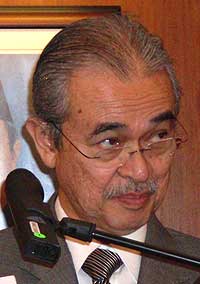 The MCAC has been hyped as the Malaysian version of Hong Kong’s Independent Commission Against Corruption, a highly-respected watchdog and role model for the region.
The MCAC was announced by premier Abdullah Ahmad Badawi a month after his ruling coalition Barisan Nasional’s disastrous showing in the March 8 general election.
He said the new anti-corruption commission would enhance transparency and public accountability, amidst public perceptions that corruption is prevalent in certain government agencies, especially the police force.


Are you sure you want to delete this comment?
This action cannot be undone.