




Silat pulut and weddings

I accompanied my eldest daughter to her weekly Tae-Kwon Do classes last Saturday. She's a very athletic girl, having won four gold medals in the 100m, 200m, 4x100m and 4x200m during her school's recent Sports Day. As I watched her punching and kicking, it dawned on me how different girls are nowadays. Even during my time, girls were restricted to activities like Bulan Sabit Merah and Pandu Puteri, and even that would have already raised some parents' eyebrows. Of course boys were allowed to join the various silat classes, ranging from Silat Gayung, Silat Cekak, Silat Batin, Silat Zahir, Silat this and 'Silat Pulut'.
 Silat Pulut is not an art of self defence per se. Unlike the other forms of silat, there are no actual classes conducted for this particular form of self-defence. Thus, it intrigues me that whenever the situation rises, every Mat, Yeop and Along seem to be able to perform it. And about the only time you'd get to see it performed was, of all times, during weddings.
For those born in the 60s or earlier, you will remember those times when weddings were events by themselves. A wedding would involve everybody; from the Datuks (not the 'beli' type) to the the great-grandchildren. Suddenly everybody assumes their respective responsibilities. No meetings, nothing. No caterers, no hotel staff to organize the event. Not even fancy wedding invitations.

I accompanied my eldest daughter to her weekly Tae-Kwon Do classes last Saturday. She's a very athletic girl, having won four gold medals in the 100m, 200m, 4x100m and 4x200m during her school's recent Sports Day. As I watched her punching and kicking, it dawned on me how different girls are nowadays. Even during my time, girls were restricted to activities like Bulan Sabit Merah and Pandu Puteri, and even that would have already raised some parents' eyebrows. Of course boys were allowed to join the various silat classes, ranging from Silat Gayung, Silat Cekak, Silat Batin, Silat Zahir, Silat this and 'Silat Pulut'.
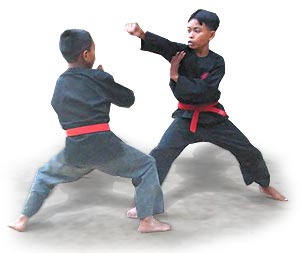 Silat Pulut is not an art of self defence per se. Unlike the other forms of silat, there are no actual classes conducted for this particular form of self-defence. Thus, it intrigues me that whenever the situation rises, every Mat, Yeop and Along seem to be able to perform it. And about the only time you'd get to see it performed was, of all times, during weddings.
For those born in the 60s or earlier, you will remember those times when weddings were events by themselves. A wedding would involve everybody; from the Datuks (not the 'beli' type) to the the great-grandchildren. Suddenly everybody assumes their respective responsibilities. No meetings, nothing. No caterers, no hotel staff to organize the event. Not even fancy wedding invitations.
The big day
When the big day dawns, it's as if everything falls into place. It has all the trappings of a grand garden party. Guests arrive amidst wedding songs like the evergreen Selamat Pengantin Baru blasting from cheap, rusty blue loudspeakers hung high on tree branches. Some play recorded songs, some would even have a live band performing to entertain the guests.
From the night before, all the families would burn the midnight oil preparing for the wedding. Some of them would have not slept for a whole couple of days. Then in the morning there would be a Khatam Quran ceremony, signifying the completion of learning the Quran recital of, perhaps, the bride or bridegroom's younger brother or sister. After that the 'Akad Nikah' ceremony would follow, when the marriage would be duly solemnized. This is normally attended by close relatives only.
Then, as the day wears on, the more distant relatives and the other guests would trickle in. By noon, the house and its compound would already be filled to the brim with guests. They would arrive, be greeted by the father of the bride (or bridegroom) and then be ushered to the tables to enjoy a sumptuous lunch.
They would be pampered with a prompt and courteous service that would rival even The Ritz. When they finish the lunch, they'd mingle around with relatives and friends or make new contacts. Packs of free cigarettes, normally Rough Rider (or more fondly known as 'Rokok Tembak'), would be passed around for the men to puff away in order to kill time.
They wait for the newlyweds who would soon arrive, dressed like a King and Queen for the 'Upacara Bersanding'. The bride and bridegroom would be ushered to the a throne like setting of decorated chairs, amidst the beats of the kompang drums, complete with a gong.
They would then sit on the chairs for all to see. If a camera is available, then they might strike some poses, whereby they'd just freeze a smile and try to look pretty while pretending not to hear the catty comments and gossips by the new in-laws.
That's when Silat Pulut comes in. For the uninitiated, Silat Pulut is a ceremonial art performed in front of the bride and bridegroom. Close relatives and friends would perform before the newlyweds. The steps would grossly differ from one person to the other, which breeds my suspicion that Silat Pulut was either 100% self-taught or at best, imitated from others. Upon completing the steps and often, after adding some hilarious antics (just to show that it was all for fun), the person would bow and shake hands with the newlyweds. Then he would take some sticky rice and feed the same to the newlyweds. Hence the name `Silat Pulut'.
A whole day affair
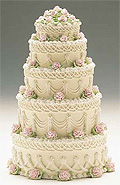 This would go on well after five in the afternoon. After that the crowd would start to disperse, only to come back in the evening for the cake cutting ceremony. This is only attended by close relatives and friends. This time the newlyweds would appear in western evening clothes. There would be another grand dinner for all, and then the newlyweds would cut the wedding cake and distribute to all. After that, it's time to open all the presents, much to the awe and envy of everyone present.
The night would not stop there. In weddings where there was a live band, the band would be there again to play songs that would reflect the mood of the occasion. It's not unexpected that the bride and bridegroom be called upon on stage, and they'd normally be a sport and sing, usually a duet number. After that the band might play a few catchy dance tunes, and usually it would end up with the close relatives dancing merrily. For some, the night ends there. For others, there's still the dishes to do.
So much for weddings of the past. Now, a typical wedding will be prepared in the comfort and coolness of cozy, air-conditioned ballrooms of five star Hotels. Instead of being served by polite relatives, you are now being served by school leavers masquerading as waiters, who would badly conceal a pained expression each and every time you ask for a glass of iced water.
Of course, there's still the wedding cake and the good old pelamin, but chances are that unless you are really close to the newlyweds, or carry titles like Datuks, you are not going to be called upon to shake hands with them. Most people come, eat at a table with people you don't know (and who don't know you), and go back. All within a period of two hours. So painfully smooth. And equally impersonal. No real fun. No real rejoice.
And of course, no Silat Pulut.
ZAIM AL-AMIN sits on so many MCKK boards we have lost count. Since he started writing for us, we wonder whether he is a recently married man, or newly single. He sure believes in love, romance and weddings. Then again, we could be a jaded lot.


