




The state of art
It is sad to say that when it comes to the topic of Malaysian art and artists, responses from most Malaysians often enough range from blank stares to looks of polite bewilderment to monosyllabic enquiries.
In this culturally-devoid, speculative age of Britney Spears' growing belly and Victoria Beckham's shrinking waistline (amongst other mindless media frenzies), the somewhat deeper subject of art rarely takes centrestage. In fact, most write off art as a field reserved exclusively, and indeed affordable only, to the elite circle of individuals who have had exposure to Western lifestyles and cultures.
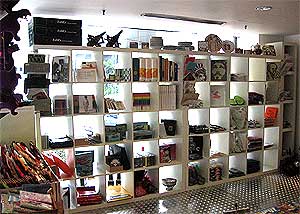 The core of this problem, believes Galleriiizu owner Izuldin Hani, is the lack of proper education at the school-level on the subject of art and more importantly, art history.
"Art history is often looked upon as a subject that is uninteresting and only fit for the art-buffs. Many fail to realise that there is so much more to art then merely what one sees on the surface. Most works of art have cultural, social and political implications."
At a press conference a week ago to commemorate the end of a highly successful seven-month long art exhibition, Hani addressed the main problems facing the Malaysian art industry. He firstly cited the lack of awareness on how to buy art as the primary reason why sales of art pieces are at an all-time low. There are hundreds of graduates of art from private and public universities being churned out each year, most of whom at some point intend to showcase their artistic talent by producing art pieces.
"To me, there is no point having excess supply but almost no demand," argues Hani.
"I often ask my patrons, are you buying for investment, for decoration or are you a collector? Most fail to distinguish between the three and do not understand how art pieces are priced."
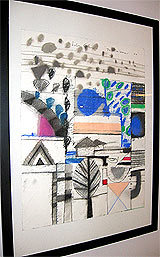
One may wonder why, for instance, a contemporary abstract piece much akin to a child's drawing that depicts a lone teapot amidst random illustrations of trees and lakes constitutes a price tag that runs to the thousands. What is the symbolism of plain neon strokes on a black background? Or more generally, why is Picasso considered one of the greatest artists of all time?
 In Hani's opinion, these questions can only be answered by one who has been sufficiently educated on the subject of art, and this is where the folly of our exam-oriented education system is evident. Art as a subject is part of the curriculum from Standard One till Form Three and in fact, students are required to purchase art text books that do contain facts about the evolution of art in Malaysia, Malaysian artists, and the different styles of art. However, it is not one of the subjects tested in the UPSR or PMR examinations and as a result, most students find it bothersome and a waste of time, whist art periods are displaced by other more 'solid' subjects.
Parents, grandparents
But does that ultimately mean that one has to be formally educated on the subject of art in order to be able to appreciate it? Another gallery owner in the Klang Valley, Rafizah Rudy, of Maya Gallery vehemently disagrees. According to her, there is no problem of reduced demand when it comes to purchasing art.
"Where do people get the impression that one has to be educated and well-learned in order to buy paintings? This is a complete misconception as the market for art is constantly changing. Even when a person chooses how to redesign her house, it is a form of art."
 Rafizah maintains that pricing is very subjective in art. "A degree is not a qualification for higher prices. We price on the kind of skill and technique used in the piece."
On art becoming increasingly categorised as a 'chore' by students and teachers alike because of the subject's non-exam property at the primary and lower secondary levels, Rafizah opines that exams are very regimented as it is and making it an exam subject might just serve to further decrease and 'kill' a student's attraction for the subject.
"Besides, art is not the easiest of subjects as it requires discipline and patience so there is no point having an exam for it. Students who major in art eventually tend to be the more rebellious kind who crave to express themselves and defy conventional academic rules," she noted.
Why, if at all, point fingers in the direction of the education system? Rafizah believes that parents, too, have a role to play in exposing their children to art.
"I have parents and grandparents calling me to ask what kind of art is being displayed at my gallery and whether their children or grandchildren will enjoy a visit to the gallery. This is extremely positive if we're talking about exposure of art to kids at a young age."
Internal problems aside, even the Malaysian art market is not spared from the regional economic dominance of China claims Hani. Due to its sheer size, the Chinese art market generates close to 1.8 million graduates of professional art per year, most of whom are willing to sell their art for a much lower price. To add to that competitive factor, there are a countless number of talented non-professional artists from China and Vietnam in particular who produce generic art pieces that garner greater demand due to their simple, literal themes and low rates.
"I'm being frank when I say that if nothing is done to protect the Malaysian art industry, our talented Malaysian artists will cease to have a career," said Hani.
 Rafizah begs to differ. She does not think that the Chinese market poses a great threat as the majority of Malaysians who buy art prefer to buy local art. This is simply because locals find Malaysian art easier to relate to in terms of the themes portrayed.
"Malaysians tend to like to buy Malaysian art. Moreover, there are many pieces which are reasonably prices," claims Rafizah.
Perhaps then, prospects are in fact not so gloomy for the Malaysian art industry.
"We are a relatively new industry. In Indonesia, people grow up with art and are brought up to appreciate their own kind of art. This is not the case in Malaysia. We're new so it is inevitable that we will be faced with problems. But we are a growing industry."
Rising stars
There was one point of consensus between both gallery owners nonetheless. This pertained to the issue of government support of the art community. Hani claimed that government funds for art galleries and societies intent on promoting the local art scene are fast diminishing. "Almost always, if given at all, funds are directed towards theatre companies or cultural dance groups whilst Malaysian painters and abstract artists are usually sidelined."
 "Art has to be a long-term vision of the government and society in general. We still do not see this in Malaysia. There is no proper infrastructure in this country when it comes to art," said Rafizah.
Of course, the art scene is shrouded in other more controversial problems. According to a source who wished to remain un-named, close to eight million ringgit was given to the National Art Gallery last year for 'refurbishment' but the overall calculated net cost for the project came to a mere three million.
In the end though, the common goal of both individuals is to highlight the Malaysia art scene to the general public through the establishment of their respective art galleries and the nurturing of rising stars in the local art landscape.
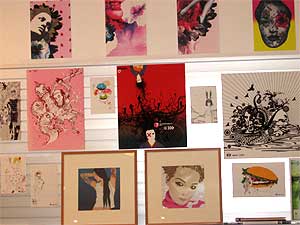
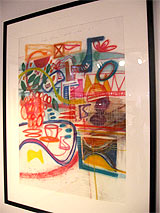
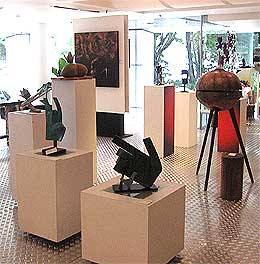
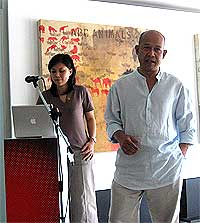 In fact, Izuldin Hani founded Galleriiizu to generate a platform for up-and-coming Malaysian artists to showcase their work. Now into its seventh year, Galleriiizu has just completed a hugely successful series of seven art exhibitions ranging from purist art to digital art aptly titled '7 art disciplines, 7 exhibitions, 7 breathtaking events.' The pictures you see here are from that exhibition.
Deemed 'edgier' than the rest, Maya Gallery paves the way for young artists by encouraging them to come to the gallery for guidance and help in displaying their work instead of going solo as an amateur.
"We seek to help the visitors of the gallery as well as the artists. After all, art is enjoyable, whether one is the artist or the spectator." says Rafizah.
VANMALA SUBRAMANIAM is temporarily with malaysiakini and yes, she doesn't agree with Wilde that 'All art is useless'.


Are you sure you want to delete this comment?
This action cannot be undone.