




A tale of survival for the Coliseum
Since opening almost a century ago Malaysia's oldest cinema has survived Japanese occupation, the wrecking ball, and now a government closure order after a rare public outcry saved one of the country's best-loved buildings.
Since opening almost a century ago Malaysia's oldest cinema has survived Japanese occupation, the wrecking ball, and now a government closure order after a rare public outcry saved one of the country's best-loved buildings.
The Coliseum, which opened its doors in 1921, is one of the few heritage buildings still standing in the capital Kuala Lumpur, as most others have given way to shopping malls and office blocks over the decades.
Its fortunes have waxed and waned, but it found its niche despite the rise of the multiplexes and Hollywood blockbusters, and until now the show has gone on, except for a pause during the Japanese occupation of World War II.
Then last month it looked like the curtains would close forever when the government announced it would forcibly acquire the building and turn it into a heritage centre.
Chua Seong Siew, whose forefathers built the Coliseum, was ordered to vacate within one month and offered compensation of just RM500,000 (US$142,857).
The decision triggered an almost unprecedented backlash from the Malaysian public, who flooded newspapers with letters hailing the cinema as a cultural icon and recalling their fond memories of movie-going days there.
Intact and healthy
Malaysia's national heritage foundation said the Roman-style building should be retained not just for its architectural value but more for the place it has earned in the hearts of Malaysians.
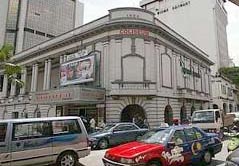 "The 'soul' of the Coliseum Cinema is intact and healthy - a fact reinforced by the response from the Malaysian public who normally may not be compelled to react to planned changes to historic sites," it said.
Malaysian filmmaker Arivind Abraham wrote that the Coliseum was more than just a cinema.
"To filmmakers, the Coliseum represents a vital part of our art. It is a reminder of what a cinema once was, before we got caught up in the uniform architecture of cineplexes," he said.
After talks with Chua, Malaysia's minister for arts and heritage Dr Rais Yatim issued a rare climbdown, saying there was now "no question" of the government taking over the 888-seat cinema.
Chua, 68, said the Coliseum will continue to screen movies, and that he would work with the government to spruce up the building and instead turn an adjacent space into an arts and culture centre.
Chua said he hopes the Coliseum will continue its legacy in Kuala Lumpur, even if he is no longer around to manage it.
"My family has owned it for the past 86 years. I cannot foretell the future, but I hope so, I hope the family will continue to own it and upkeep it."
Vintage feel
The Coliseum showed first-run Western films until the 1960s, when audiences began to dwindle after other cinemas mushroomed in the area.
In the 1960s, Chua's mother decided to switch to Malay movies instead, mainly those produced by the country's legendary film producer and actor, P Ramlee.
"For at least a quarter of a century Coliseum was the top and most popular hall for Malay films, from around the 1960s ... to the 1990s," Chua said.
Its fortunes then dipped with the start of the cineplex era, and it has since shown mostly South Indian films catering to Malaysia's ethnic Indian minority.
The cinema is closely associated with the nearby Coliseum Cafe and Hotel which is featured prominently in tourist guides for its vintage feel.
Famed author William Somerset Maugham stayed there and it was featured in Anthony Burgess' The Malayan Trilogy .
"The place is 84 years old, and so is the staff (seriously, some have worked here their whole lives)," says the Frommer's Guide . "The place is legendary, and someday it will be gone and there will never be anything else like it."


Are you sure you want to delete this comment?
This action cannot be undone.