


Solar cost breakdown and pricing guide
Rooftop solar installation by United Solar Energy Malaysia Sdn Bhd in Ampang, arranged in a KLCC-inspired layout.
Solar prices in Malaysia can be confusing.
One company may quote RM18,000. Another may quote RM30,000. Both may claim to offer a similar system size.
So naturally, many homeowners ask the same thing: why pay more?
But with solar, the cheapest quote is not always the smartest one.
A rooftop solar system is not a small household gadget. It sits on your roof for the next 20 to 25 years, exposed to heat, rain, haze and changing weather while staying connected to your home’s electrical system.
So before choosing the lowest price, homeowners should understand what is actually included.
What Goes Into a Solar Price?
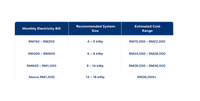
Residential solar systems in Malaysia can generally range from around RM15,000 to RM40,000, depending on system size, electricity usage, roof condition, equipment selection and whether battery storage is included.
A fully installed system may also range around RM3,000 to RM4,500 per kWp, depending on equipment and installation complexity.
But these numbers are only a guide.
Solar pricing is not just about panels. A proper system includes solar panels, inverter, mounting structure, cabling, protection systems, monitoring tools, installation works, design, manpower and application processes.
Each part affects how effectively, reliably and even safely, the system performs.
That is why two solar quotations with similar system sizes can still produce very different prices.
When Cheap Looks Too Good
A cheaper solar package is not automatically bad.
But homeowners should ask what is being offered, what is excluded and what may have been reduced to make the price lower.
Is the panel brand reliable?
Is the inverter quality the same?
Is system monitoring included?
What mounting structure is used?
Are protection systems provided?
Who handles the application process?
What warranty is offered and how will it be managed over the years?
What happens after installation?
These questions matter because a cheaper system may only look cheaper at the beginning.
If poor installation, unreliable components or limited after-sales support will greatly reduce system performance and down the road, the “savings” may quietly disappear.
Battery Storage Changes the Value
Battery Energy Storage Systems (BESS) can increase the total cost of a solar package.
But it can also change how much value the system gives back.
BESS stores excess solar energy generated during the day so it can be used later, especially at night or during higher-usage periods.
For some homes, solar-only may already be enough. For others, especially households that use more electricity at night, Solar + BESS may offer stronger long-term value.
This is why homeowners should not only compare package prices.
They should compare monthly savings, payback period, lifetime savings and whether the system fits how the household actually uses electricity.
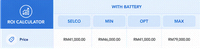
The cheapest system is not always the best. The biggest system is not always the best either.
The right system is the one designed around your home.
Price Is Only One Part of the Decision
Solar is often sold through numbers: system size, price, savings, and payback.
But homeowners should also look at the parts that are harder to see on paper.
Workmanship matters. Safety matters. Monitoring matters. Warranty support matters. After-sales service matters.
A solar system is expected to generate electricity for decades. If the company disappears after installation, homeowners may be left dealing with performance issues, warranty claims or maintenance problems on their own.
That is why price should not be the only deciding factor.
The Best Solar Package Is the One That Keeps Performing
As rooftop solar becomes more accessible in Malaysia, homeowners should stop asking only, “How much does it cost?”
The better question is: “What value will this system continue to deliver?”
A cheap quote may reduce upfront cost. But a well-designed solar system should reduce electricity bills, perform reliably and give homeowners better control over their energy usage for years. Programs like Solar ATAP, along with financing and flexible payment options, are making solar more accessible to Malaysian homeowners.
When it comes to something installed above your home for the next 20 to 25 years, the best investment is not always the cheapest one.
It is the one that keeps delivering value long after the installation team has left.
To discover how solar energy can help reduce electricity costs and improve energy independence, explore the solutions offered by United Solar Energy Malaysia at www.unitedsolarenergy.com.my
This Sustainable Energy Series is in collaboration with United Solar Energy Malaysia (USEM).
The views expressed here are those of the author/contributor and do not necessarily represent the views of Malaysiakini.


