




(title is missing)
Since the Barisan Nasional's (BN) 2004 electoral victory under the new leadership of Abdullah Ahmad Badawi, there has been growing public perception of distrust for their representatives.
Since the Barisan Nasional's (BN) 2004 electoral victory under the new leadership of Abdullah Ahmad Badawi, there has been growing public perception of distrust for their representatives.
Is this dissatisfaction real among the citizens? If so, how will it affect the results in the forthcoming general election?
One of the questions currently tossed around is whether the Chinese community will continue to give their overwhelming voting support for the BN as they did in 2004?
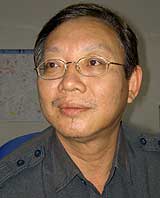
Specifically, this Malaysiakini interview with former MCA research and planning department head Stanley Koh focuses on the second largest BN component party, MCA.
What are some of the main problems characterising MCA under the leadership of Ong Ka Ting as he personally faces increasing pressure to deliver the Chinese votes to BN?
Malaysiakini: In your view, will MCA be able to maintain, or even improve on, its electoral performance in the 2004 general election? Do you have any general forecast or comments?
 Koh:
I am tempted to go back to MCA's electoral history to illustrate the roller-coaster results of previous general elections which I won't. Basically it would be meaningless and irrelevant too. Firstly, I leave it to the experts, like historians and academicians to do the historical analysis. I mentioned irrelevant because the current Malaysian political landscape and scenario have changed drastically since the Abdullah administration took over from the previous leadership under Dr Mahathir (Mohamad). The current MCA leadership patronage towards the current top Umno leadership also differed much compared to those of previous MCA presidents. It's like comparing a peanut now with a coconut of the past.Having said this, I think Malaysians particularly the urban Chinese community is now more interested to watch the Ong leadership. Don't you think so?
Koh:
I am tempted to go back to MCA's electoral history to illustrate the roller-coaster results of previous general elections which I won't. Basically it would be meaningless and irrelevant too. Firstly, I leave it to the experts, like historians and academicians to do the historical analysis. I mentioned irrelevant because the current Malaysian political landscape and scenario have changed drastically since the Abdullah administration took over from the previous leadership under Dr Mahathir (Mohamad). The current MCA leadership patronage towards the current top Umno leadership also differed much compared to those of previous MCA presidents. It's like comparing a peanut now with a coconut of the past.Having said this, I think Malaysians particularly the urban Chinese community is now more interested to watch the Ong leadership. Don't you think so?
I like to bring back the focus relating to your question. If my memory is correct, MCA under Ong’s leadership in 2004 won 31 out of 40 parliamentary seats. At the state level, 76 out of 90 seats. I think it is factually acknowledged that the 77.5 percent achieved at parliamentary level in 2004 was below the 80.0 percent achieved in 1999 general elections. In terms of comparing the popular votes between 2004 and 1999, there was only a net gain of 0.9 percent.
Of course, for the sake of party propaganda and publicity soon after the 2004 general election, the Ong leadership highlighted the historical victory of Kota Melaka parliamentary seat for the first time defeating former DAP secretary general Kerk Kim Hock with a razor blade margin of 217 votes. The party also won all the state constituencies in the states of Perlis, Kedah, Trengganu, Pahang and Johor with improved majority votes. There were also two unopposed state seats on nomination day, namely Subang Jaya (Selangor) and Pokok Assam in Perak.
Your question is whether MCA can repeat or even improve on the 2004 electoral success in the next general? For a start, many will agree that in 2004 the political scenario of strong support towards Abdullah was a refreshing popular wave that helped MCA surf comfortably to a home-run in 2004.
Much water has since flowed under the bridge. Unfortunately the political environment has produced much polluted water, so to speak. Hence, the MCA president is in desperate times and increasingly faces much more pressure and difficulty in delivering the Chinese votes this time. To the voters, the perceptions are much more negative. Of course, he might not even admit it openly. I don't think I need to elaborate on the specific litany of grievances and serious national issues that have surfaced under the Abdullah leadership. Unfortunately, much of the past political developments have also affected the interests of the Chinese community. Many felt that despite the voting support for MCA in 2004, the leadership under Ong has failed to effectively address many of these grievances notably Umno's arrogance and racial discrimination. You can see for the past month, the BN machinery and propaganda are working overtime in terms of damage control. Hoping to reverse the prevailing negative perceptions and raise new hopes for voters.
So particularly in recent weeks, Malaysians have watched comically the "changing of the mask" of the Umno leadership. The stinging remarks have now changed to melodies deliberately made more suitable to the ears of the non-bumiputera community.
But if MCA continues to focus on the threats of opposition PAS as perceived to be against the Chinese community, it is fighting a shadow game. Basically Umno has done more socio-political damage to other minority communities compared to PAS. I am sure all these facts will be disseminated by the opposition parties in the coming campaigns soon.
Foremost, I think to the community, the MCA leadership has failed to restore the dignity of the Chinese community. It has failed to explore new forms of engagement and cooperation with Umno as a respectable senior partner while its traditional models of political participation is running out of steam. Critics pointed out that Ong lacks charisma and the political standing to break out of his mediocre leadership cocoon since taking over from Dr Ling Liong Sik in 2003. Some even labelled him as a mere errand boy who has to fight hard for specific requests benefiting the Chinese community. Rightly or wrongly, the image of MCA is a deciding factor to whether the party is capable of maintaining its 2004 electoral performance status. Personally I don't think MCA can improve on its past performance. Not forgetting there are more than a dozen marginally won state seats in 2004 which the party leadership now considers as "grey" or even "black" areas. Adding on to this, it is already a foregone conclusion that there will be no landslide victory for BN this time round. Nonetheless, it is often said that desperate times call for desperate actions and there is great suspicion that the next general election may not be that clean as proven in the past two by-elections of Machap and Ijok.
You mentioned the Chinese community is not happy with MCA's leadership role. Can you elaborate on this?
Yes, I cited the Chinese community. Maybe, I should say, certain segments of the Chinese community. I refer to the "thinking Malaysian Chinese" or those conscientious ones who reject all "sorts of bribes, goodies, candies or ice cream". Of course including those intelligent voters who can discern "spinning propaganda" and political gimmicks by political parties irrespective of the political divide. Fielding new candidates as a justification to inject new blood, so they say. Sending out specially trained rhetoricians (public speakers) during the campaign period to impress voters. Sending out veiled threats to ensure voting support. They will do anything with "fishing baits" to divert attention from their failed performance, broken promises in order to shift voters' attention away from more serious and fundamental issues of the day. Of course, millions of gullible and foolish voters fall for these traps almost in every general election. I'm saying this from the point of wisdom and not from a political viewpoint.
Not surprisingly, in the recent past even MCA members had expressed their unhappiness and even openly questioned the party president's silence during a time when a host of controversial issues surfaced in 2006. The top MCA leadership was forced to undertake a closed door explanation tour to several major cities, pacifying party members in 2006. At a briefing to MCA Selangor’s rank and file, Ong mentioned that his leadership circle had worked very hard since 2004 but unfortunately came under a political haze in 2006 caused by a series of controversial issues. Some of the examples of incidents cited included the prime minister's son-in-law Khairy's contentious remarks made in Penang, Zakaria mansion case, an Umno minister remarked "no new Chinese school would be built", the "kerishammuddin" issue and Lee Kuan Yew's open statement on ethnic marginalisation etc. Not forgetting then, the Umno's policy on micro restructuring and other open debate on the NEP achievements by bumiputeras etc. There was so much frustration displayed by MCA grassroots at the briefing. Doing business for the Chinese community is still getting more difficult by the day. You can check it out easily.
 Hence I have written previously in one of my articles to
Malaysiakini
that Umno under the Abdullah administration has caused more problems to the Chinese community compared to PAS. I hope the thinking Chinese Malaysian is waking up to the empty platitudes and electoral promises on racial equality, national unity etc. What goes around does come around. In the past, MCA used to criticise DAP for sharing the same bed with PAS but MCA suddenly realises that sharing the same bed with Umno is producing even worse nightmares.
Hence I have written previously in one of my articles to
Malaysiakini
that Umno under the Abdullah administration has caused more problems to the Chinese community compared to PAS. I hope the thinking Chinese Malaysian is waking up to the empty platitudes and electoral promises on racial equality, national unity etc. What goes around does come around. In the past, MCA used to criticise DAP for sharing the same bed with PAS but MCA suddenly realises that sharing the same bed with Umno is producing even worse nightmares.
Of course, the MCA president gave his version to justify his silence in public. If he had adopted a confrontational approach towards Umno over those controversial issues, do you think Umno will allow more Chinese schools to be built or approved Chinese schools to be re-located. We have to understand that the official sanction for more new "Chinese schools" is one of the major trump-card for the MCA leadership in the coming general election.
Why do you think (Umno Youth chief and Education Minister) Hishammudin (Hussein) would turn up at the MCA HQ to deliver the promise of six new Chinese schools and more than a dozen relocated school projects? Looks like keeping silent on many controversial issues does pay off. Of course, keeping silent or defending the BN spirit was only a decoy of the past. Adding to this, I think MCA will also release its own general election manifesto soon…more promises and pledges to dilute the accusation that MCA lacks a political vision for the Chinese community.
Moving on to the question of the MCA leadership selecting its candidates for the coming general election. Do you foresee any open squabbling within the party?
In the 2004 general election, there were some undercurrents of squabbling and even sabotaging in a few cases. Inevitably, these cases were brought before the party's disciplinary committee. Nevertheless, compared to earlier leaderships, there had been vast improvement, meaning less. All these surfaced over the dissatisfaction on the choice in candidates' selection. The president is given sole prerogative powers by the party's central committee in the selection…a long standing practice naturally.
Compared to previous leaderships, Ong however operates under a more "cloak and dagger" approach. I would say, secretive and more manipulative, to accomplish his hidden agenda. Maybe you prefer to use another word, "strategically". I think to him, it is a compliment to call him a strategist in his own right. I am not making a personal judgement on his character or leadership trait.
 There are still veteran candidates now who don't know (not informed) of their electoral status. Whether they will be re-nominated or not to stand in the coming general election? Some have obviously been informed through third parties as rumours but not directly by the president himself. There is an unspoken fear towards the party president in view of his character that those affected are reluctant to ask or lobby this time round. I think the probability of an open confrontation over the choice of candidates will be contained.
I think this is compounded by feedback that Ong also used the selection of candidates as a weapon to consolidate his power base in the face of party elections after the national polls. I have said, as a strategist, it is very logical. It is more lethal when a leader operates with utmost secrecy. A reliable source even said that the party president had probably planned (strategising) a couple of years ago.
The source speculated less than a handful of trusted political lieutenants were involved in putting the secretive plan into order for the coming general election and party elections.
I think Ong is no longer the simple village boy riding around with a bicycle as portrayed in his publication, "The Man and his Ideas". I also don't believe his political ascension to the party presidency was a natural blessing from heaven and merely through hard work. Many smarter and hardworking MCA leaders had been tossed aside and waylaid. I'm saying this as a former housemate of both the Ongs, Ka Ting (president) and his brother Ka Chuan (secretary general) in the 80s when we were serving under the leadership of Tan Koon Swan (former Wilayah MCA chairman and later became president in the mid-1980s). On my part, I blame my pure destiny that I have to follow Ong's political career very closely over the past 29 years.
Of course, I can say, I don't really know the Ong of the 1980s anymore. It is rare to find politicians not undergoing the metamorphosis process in changing characteristics. I remember a friend passing me a copy of a cartoon years ago. At the beginning stage it was a face, a primitive face. It underwent a process of change. As the illustrated politician gathers more power, his mouth grew longer and after some years, the end result was the caricature of a crocodile head. More arrogant, less forgiving, more revengeful, more dishonest and hypocritical etc. Of course, I am not implying that all politicians undergo that process. I know of some who have maintained their human decency despite the top posts they hold over the years. It's up to you to judge them yourself. For others, once in power they become obsessed in stamping their own legacy within the party and project a pretentious public image for political purposes. Yet again some may even abandon their former mentors or loyalties and forget them in no time. I think classical Chinese history is full of these types of dubious characters. Some even beheaded their "comrade brothers in battle" once they became emperors. Modern typed politicians in power are no different in nature. Some hide behind religious faiths, openly associating with religious Buddhist organisations, deliberately made known their practices but once in politicking, put on different masks and exert their authoritative powers without much mercy.
I think the majority among the party rank and file already know the character of their party president. Hence, the posture of silence, at least before the list of MCA candidates is released. Some sources vouched the selection of candidates is a major strategic move for Ong positioning his "pawns" like in a game of chess. More so, to weaken his rivals in the face of the party elections to be held after the general election.
Is the selection of candidates based on the recent ruling of service tenure, the limitation to serve based on a ruling?
Koh: In the Malaysian Bolehland, there is abundant evidence to show that whatever rules made for whatever reasons can be bent. Double standards and exceptions are the actual rule. Just to accommodate nepotism and cronyism and passing the leadership baton from father to son, brother to brother or even from father-in-law to son-in-law. Just like someone saying nobody is above the law and we often find the privileged few close to the top leadership escaping the crutches of the law.
A wise or unwise selection of candidates really do shape the destiny of a political party. We should by now learn from experiences, the fateful sufferings of a nation resulted by anointment of political successors. Or for that matter on party presidency posts…and consequences from abandoning the principles of true democratic choice of candidates do bring negative karmic effects. This year is 2008, and contrary to the foolish belief that "8" is "fatt" (meaning prosperity in Cantonese). This year is actually a year of karmic tribulations. Politicians better behave themselves, the karmic effects will be speedy and just, unlike man-made laws. It is irrelevant for me to explain here. Why? Let these politicians find out themselves. Ha…ha!
Do you see MCA rallying to new causes and even perhaps "doing politics" differently in the event of MCA losing more seats and votes?
I think the incumbent MCA leadership is already trying hard to project an image. They are fighting for recognition, respect and dignity. Whether the community projects they are implementing are eventually accepted by the community is a different story. There are limitations as to what MCA can or cannot do. I think we are all familiar with Malaysian politics. There are more qualified people than me to give a discourse on this. The MCA leadership naturally rejected rallying to new causes adopted by the opposition parties and NGOs particularly on issues relating to rights and equality of opportunity for all Malaysians. And current concerns on judiciary independence. Some of these issues, MCA is actually quite politically impotent towards some of these fundamental issues. So they played longstanding trump-cards like Chinese education, helping the business community to be more competitive and a host of other projects under its nine-point projects.
I am not saying that community projects are unimportant. Equally important is the political vision as espoused during Tan Koon Swan's presidency tenure. But if you look into the leadership circle under current circumstances, MCA does not have many capable leaders now. Over the years, we saw many departures. Some are forced to leave after much in-fighting. At the top leadership we can only consider Wong Mook Leong, lawyer by profession and more senior to the party president who has served under several past presidents since the Lee San Choon era. He is not a threat to the Ong brothers. But those who were, have left, including those involved in the past MCA crisis under the Ling regime...like Lim Ah Lek, Lee Kim Sai, just to mention a couple of names.
The most recent, Dr Chua Soi Lek. A political observer quipped that those more senior to Ong would finally have to exit, be replaced by new entrants and aspiring new leaders. Perhaps, this is called injection of new blood but probably more easily controllable by incumbents like the Ong brothers. Chua's tragic exit to some was like a "durian" from the sky….for Ong and his core supporters. It was like removing a thorn from its side. It is common knowledge that Chua is considered a threat in the partisan politics within the party. I don't want to comment on the moral side of the argument at this juncture, maybe when the time is right in future. But coming back to MCA's rallying new causes. I don't think the incumbent leadership is much capable in bringing the community to new heights of accomplishments.
One last question. What is your advice to the Chinese voters?
I think I am not in any position to give any advice. Personally, I can only speak for myself. I think I will use my vote wisely and conscientiously. I also think BN is heading towards a crisis of legitimacy, lacking any process or commitment of reforms under the current premier. Although most will tell you that their voting rights a secret. To me, I feel the party candidate is more important than voting along party line.


