




A(H1N1): First local transmission detected
Malaysia has recorded its first case of A(H1N1) involving a person who had caught the virus within the country, says the Health Ministry.
Malaysia has recorded its first case of A(H1N1) involving a person who had caught the virus within the country, says the Health Ministry.
Health Ministry director-general Ismail Merican said the patient, a 17-year-old girl, had caught the virus from another patient who had tested positive last Saturday.
"She had no travel history to any country with confirmed swine flu cases," Ismail said in a statement.
 Ismail also said five new cases were detected over the last 24 hours, bringing the total to 23.
Elaborating on the local transmission case, he said the student had shown symptoms such as flu and cough on June 14 and developed fever the next day.
She was subsequently taken to the Universiti Malaya Medical Centre (UMMC) and later referred to the Sungai Buloh Hospital.
Ismail said she had not been declared as having had contact with an infected person.
"Because of this, she was not monitored or quarantined. This has led to some 20 others being exposed to possible infection," he said.
Ismail stressed that it is crucial for all those diagnosed with the virus to cooperate with the authorities and inform them of individuals with whom they have come into contact to prevent the virus from spreading.
“Legal action can be taken under the Prevention and Control of Infectious Diseases Act 1988 if they fail to give complete information (about their contacts),” he added.
According to Ismail, all the other 22 cases reported in Malaysia so far became infected while travelling abroad. Cases have nearly tripled over the past week from nine to 23.
Stern warning to private clinics
The government has urged its citizens to defer travel to countries with reported swine flu cases, while authorities have also installed thermal scanners at the country's entry points to help detect cases.
 Ismail also issued a stern warning to private health clinics to refer patients to public hospitals for further investigation, if they have returned from A(H1N1)-hit countries and display symptoms of the virus.
He was commenting on the 22nd case detected, where the individual had visited a private clinic but was not referred to the hospital.
Instead, the victim, who had returned from Manila, admitted himself to the UMMC and has since tested positive for the deadly virus.
Up to the time the ministry released its statement, 931 individuals had been screened for the virus. Apart from the 23 individuals who have tested positive, 38 are awaiting test results.
As at 9pm yesterday, 139 individuals who had come in contact with the patients are under home quarantine. They have not displayed symptoms of infection.
Don't visit hospitals with A(H1N1)
The ministry is also discouraging the public from visiting those hospitalised with A(H1N1). Children below 12 years of age are barred from entering a hospital unless it is to seek treatment.
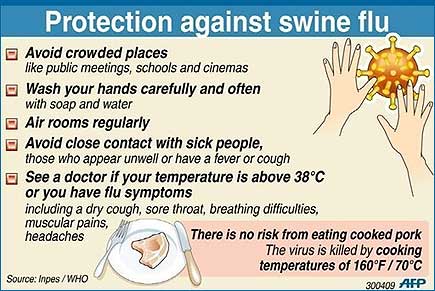 The ministry has also directed that all visitors to public and private hospitals be screened.
Ismail reiterated his appeal for public cooperation to postpone travel to A(H1N1)-hit countries unless absolutely necessary.
Last week, the World Health Organisation raised its global alert to a maximum six, saying swine flu had reached pandemic status because of its geographical spread, and warned countries that already have large number of cases to prepare for a fresh wave of infections.
Swine flu has now infected 35,928 people in 76 countries since the disease was first uncovered in late March, and 163 people have died, according to the latest WHO data.


Are you sure you want to delete this comment?
This action cannot be undone.