




Expert: Expect H1N1 deaths to spiral
An expert on infectious diseases warned of an escalation in the number of deaths resulting from the A(H1N1) influenza as there is possibility of the virus becoming resistant to drugs currently available in the market.
An expert on infectious diseases warned of an escalation in the number of deaths resulting from the A(H1N1) influenza as there is possibility of the virus becoming resistant to drugs currently available in the market.
Professor of Medicine and Infectious Diseases Dr Adeeba Kamarulzaman of Universiti Malaya Medical Centre (UMMC) also said efforts to eradicate the pandemic is being hampered as information on the full extent of infections across the country is not forthcoming.
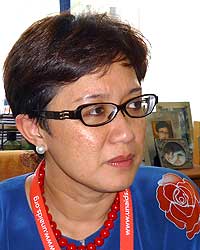 "There would probably be a lot more deaths as more and more people are infected. The haze will also worsen the condition of those in the high-risk group down with the virus," said Dr Adeeba (
left
).
"There would probably be a lot more deaths as more and more people are infected. The haze will also worsen the condition of those in the high-risk group down with the virus," said Dr Adeeba (
left
).
She added that in UMMC, those who died as a result of the virus also suffered from severe lung diseases. Dr Adeeba urged doctors to pay particular attention to those in the high-risk group..
She also said that there is a likelihood of the virus mutating at some point and becoming resistant to the drugs in the market.
"We only have one or two drugs to treat H1N1 and it is the kind of virus that can mutate at any point in time and form a resistance to existing drugs currently used to treat those infected."
Dr Adeeba said more doctors are needed at government hospitals than at private centres at the moment because the public health system is overstretched.
'Doctors overwhelmed'
"We are getting around 500 to 2,000 patients daily at the trauma and emergency units and primary care clinics. However, only 30 percent or less display influenza like illness.
 "Inevitably, it will cause doctors to make mistakes as the system is so overwhelmed that those really in need of medical attention might not receive it on time," she said.
"It's a tough judgement call. There has to be a "delicate balance" between dispensing medication to those with severe symptoms and sending home those who have mild symptoms.
"Majority of the patients would display classical symptoms such as high fever, cough and sore throat. That is as good as anything to pickup from," she added.
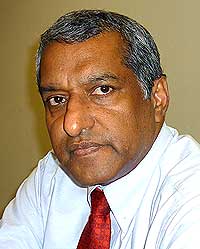 President of the Association of Private Hospitals Dr Jacob Thomas (
right
) echoed Dr Adeeba's sentients, saying that doctors are facing a difficult task and some cases go
unreported
.
President of the Association of Private Hospitals Dr Jacob Thomas (
right
) echoed Dr Adeeba's sentients, saying that doctors are facing a difficult task and some cases go
unreported
.
"Several died because of lung diseases but were tested H1N1 positive after post mortems were conducted," he said.
Without actual number of cases being known, resources such as medical personnel and anti-viral drugs may be spread thin soon.
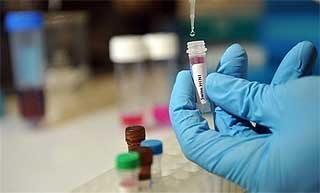
The rapid test kit, as advocated by the Health Ministry, is not a good idea as it gives a "false sense of security, said Dr Adeeba. "It detects about 25 percent of cases at best. We do not do those tests."
Health Minister Datuk Seri Liow Tiong Lai approved the use of these kits as he claimed it could diagnose patients in15 minutes and was about 70 to 90 percent accurate.
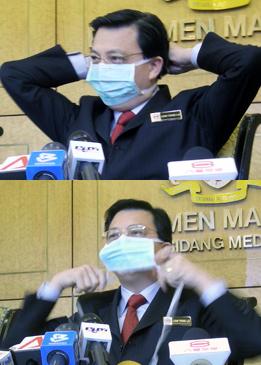 Dr Adeeba also said that face masks were not useful in preventing the spread of the virus but what was important was to practise personal hygiene and observe the quarantine period.
She cited a report by the Centre for Disease Control in Atlanta which says mask-use by either infected patients or health-care personnel does not prevent the transmission of viruses.
"While the mask is effective in preventing those already infected with the virus from spreading it, it actually does nothing to prevent healthy people from getting the disease," said the report.
If this true, the recent exercise by the authorities to make face masks a controlled item, seems useless and redundant.


Are you sure you want to delete this comment?
This action cannot be undone.