




Hungry ghosts in Permatang Pasir
Yesterday's decisive opposition by-election victory in Permatang Pasir is among the most important markers of national sentiment since March 2008. In this semi-rural constituency in a Malay-majority area, Pakatan worked together to secure a victory that they knew they badly needed.
Yesterday's decisive opposition by-election victory in Permatang Pasir is among the most important markers of national sentiment since March 2008. In this semi-rural constituency in a Malay-majority area, Pakatan worked together to secure a victory that they knew they badly needed.
 The stakes were high for all of Pakatan's component parties and the ability to secure essentially the same share of the vote that they received in 2008, 65%, shows that when push comes to shove, Pakatan can deliver electorally.
Umno will claim that this loss was expected, in the heart of the opposition leader's constituency, but this campaign revealed serious cracks within Malaysia's dominant party and points to the limits of negative racially-biased campaigning.
The opposition was able to reign in the ghosts that haunted their campaign after a lackluster performance in Manek Urai - failure of effective cooperation, loss of Malay ground, threats of cutting into the non-Malay ground and the challenge to the unity to the opposition as a whole - while Umno remains haunted by the legacy of factionalism promoted under Dr Mahathir Mohamad and, more fundamentally, its inability to reform and transform itself into a party that moves beyond the racial one note that is out of tune with the majority of voters nationally.
Racial campaign
Like the Permatang Pauh parliamentary by-election almost a year ago, this election coincided with the month of the hungry ghosts and like that campaign, it was a nasty, personal campaign. The news of the Umno candidate, his professional and personal scandals, made the campaign a non-starter for Umno from the beginning, but it also forced the BN to dig further into the box of attacks. From traitor to puppet labels were placed on all the major leaders in Pakatan, often with different logics.
While the opposition highlighted the issue of qualifications, on the ground it joined the mud wrestling for votes. For example, the leader of the Umno campaign, Ahmad Zahid Hamidi was questioned for his meeting with a representative of Israel. Character and mystery haunted the BN, as " zalim " or cruelty took center stage for the opposition.
Attention this time round moved from Altantuya, featured in last year's Permatang Pauh parliamentary by-election and the process of Perak takeover in Bukit Gantang to the death of Teoh Beng Hock. The parties appealed to emotive issues that reflect the current tenor of Malaysian politics, a move to the personal and a discourse dominated by race.
More than any by-election since he assumed the premiership, Najib took center stage. The reason is that the campaign was national, not local. The campaign was devoid of local issues, in part due to the fact that the state seat fell within the constituency of the opposition leader Anwar Ibrahim.
 Prime Minister Najib Abdul Razak's 1Malaysia campaign was featured prominently, with few locals understanding the campaign beyond the symbolism of inclusion. The racial messages on the ground conflicted with BN's national label or multiethnic inclusion.
Many voters highlighted the conflicting messages they were receiving, and most went with who ultimately they found the most credible or were more comfortable with. As an opposition stronghold since 1999, this gave the opposition in Permatang Pasir the advantage.
Umno's strategy followed the pattern that has become entrenched post-March 2008, an effort to win back the Malay votes through an appeal to Malay unity and call that the Malay community is under threat. The message is appealing to traditional Umno core supporters, but in this semi-urban constituency with cordial ethnic relations, voters were not buying it. Negative campaigning is not working.
High stakes for Pakatan
For the opposition parties, the ability to address the increasingly racialised rhetoric posed a major challenge, particularly in light of the frequent spats among opposition parties over racially-linked issues such as beer and pig farming.
The opposition turned to the core of its 2008 campaign, highlighting multiethnic inclusion and featured the working cooperation among the coalition parties in Penang. Permatang Pasir was an electoral litmus test for the coalition beyond the effectiveness of its multi-ethnic message.
 For PKR, the contest reflected the strength of its leader. A loss of ground for Anwar among Malays would have added traction to the message that he was "betraying" the Malays and called into question his leadership nationally.
For PAS, this state seat is their only stronghold in the state, and a loss would have devastated the party in Penang. For DAP, who will rely heavily on the performance in this state for the electoral future, the contest was a referendum on their state leadership.
All of the component parties of Pakatan had a lot to lose and the intensity of the campaigning reflected the high stakes.
A loss of support would have had devastating implications for the opposition. The spirits of division in the opposition were roaming in the shadows. The issue of Malay unity was haunting PAS internally - as the question of whether the party should stay with Pakatan, go it alone or join Umno remained on the table. It was particularly acute after Manek Urai cut into PAS support among Malays through the use of a racially oriented campaign.
For now, Permatang Pasir has served to strengthen leaders within PAS that articulate a strong tie to Pakatan and shows that if PAS wants to extend its support outside of its traditional Malay heartland Pakatan remains the most viable avenue.
The spirit of division extended to DAP, as pressure over religious principles and cultural practices had floated to the surface in the form of pig farming in Kedah and beer drinking in Selangor.
The non-Malay BN parties jumped on these issues to drive home a point that PAS was challenging non-Malay rights through restrictions and intolerance. The announcements of Hassan Ali on polling day only reinforced the alienation of non-Malays and liberal Malays that this route will take.
For now, these issues that have the potential to deeply divide the opposition have been put aside as the opposition attempts to showcase that while differences will exist in their broad umbrella, they will be discussed and "managed". The path of compromise will not be easy when these issues are seen as black and white questions of rights and religious missions.
The declaration of the scandal-ridden Kedah Lunas assemblymen as a pro-BN "independent" had minimal impact on Permatang Pasir voters. Its timing was intended to send the message that PKR representatives are not reliable and foster uncertainty and suspicion within the ranks of the opposition, as the trauma of Perak was apparently foreshadowed in Kedah.
For voters, tired of the politicking and fed up with the tactics of cat and mouse games that bypass their mandates, the actions of one man had little impact on their lives. Yet, they know that sadly the defection games will continue in what clearly is a strategy to destabilise opposition state governments.
The sad fact is that BN fails to understand that any short term gain in a defection only strengthens the opposition long-term as it selects stronger, more loyal candidates, and works together as a unit more effectively.
The strong Pakatan cooperation in Perak is illustrative of the long-term impact of the BN strategy of state government destabilisation. In Permatang Pasir the threat of another state government "falling" only served to strengthen the cooperative campaigning by opposition component parties.
Repeated electoral patterns
The results in this by-election reflect continued solidification of broader voting patterns over the past few years. First, the opposition is performing more effectively in semi-urban seats, particularly compared with rural seats.
Part of this has to do with the fact that the opposition's appeal among lower and middle income semi-urban voters has been growing, as the machinery of patronage that BN relies on to distribute "goodies" has weakened and the sheer number of voters has taxed the capacity of BN to deliver.
The other fact is the alternative sources of information are permeating these areas like never before. While Permatang Pasir is not yet "wired" as the Penang state government has promised will happen, it has access to the internet and these messages extended to the villages of Tanah Liat and Kampung Pelet, usually in the form of a printed article. Alternative media continues to shape the political terrain.
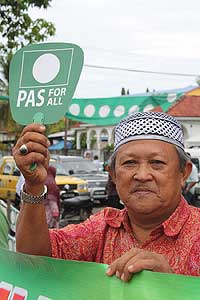 Since March 2008 the opposition is winning in mixed areas. While Permatang Pasir was a 75% Malay-majority seat, the share of non-Malay vote was substantial. Indian voters, numbering 246, did not affect the final outcome in this constituency. It was the Chinese who mattered.
The opposition continues to win the overwhelming majority of Chinese votes and in this case picked up votes slightly.
In the Chinese area of Cross Street, for example, the share of Chinese support increased 5.6% when compared to March 2008, while in other Chinese areas the gain was only 1%.
The BN campaign that focused on 1Malaysia and "giving Najib a chance" did not have traction in the context of Teoh Beng Hock’s death, unease with Utusan Malaysia 's reporting and shrill of the Umno Malay rights campaign on the ground.
In mixed areas, especially semi urban areas where people know each other well like Permatang Pasir; it is a mistake to believe that you can segment your campaigning to specific communities.
The opposition campaign had greater consistency comparatively across races, although it would be a mistake to say that they did not have their own "ethnically" focused messaging.
Part of the reason the BN failed to win back votes stemmed from the weakness of its non-Malay component parties. Najib Abdul Razak’s government, unlike Abdullah Ahmad Badawi's and Mahathir's, has done little to support these parties, choosing to by-pass these parties in its engagement with non-Malays. The MCA and Gerakan were given different areas to cultivate and neither yielded a sprout of increased support.
Gerakan worked all out in the campaign, hosting popular "free" dinners galore, while MCA similarly tapped into their local machinery through its grassroots networks and gave out tasty packages of biscuits and useful bags of fertilizer.
Permatang Pasir voters took the "gifts" and continued to support the opposition despite real concerns about their cultural rights to drink and eat as they have done for generations.
Deep internal factionalism in both parties in Penang limited MCA and Gerakan effectiveness, but it was the failure of the BN nationally to work as a coalition where non-Malay component parties have a voice that was the most damning for these parties. They were seen by voters as fighting themselves and thus providing little genuine representation.
The question of Malay voting has dominated coverage of this campaign, understandably since the issue of Malay rights has been so prominent under Najib's government. When the dust settled in the emotive campaigning, the Malay vote stayed the same. PAS and Umno won their core supporters, with the Malay vote essentially split down the middle.
Umno made small gains in some areas where the goodies were more effective, poorer areas, while PAS won some areas where the candidate was unpopular and there was dissatisfaction with how Umno selected the candidate.
These minor movements do not point to a major shift. The reality is that Malays are divided, and Umno has lost Malay ground from its base pre-2008. Given that this was Anwar's parliamentary constituency, it is important to note that the high share of Malay support towards the opposition in this by-election is likely inflated from national trends. Irrespective, Umno continues to lose traction among its traditional share of Malays.
The reason has to do with the third macro national trend that persisted in this by-election, the defection of younger voters to the opposition. Umno used its tried technique of bringing young Puteri members into the village for home stays, a personal touch that connects, yet it did not yield the support among younger voters that Umno needed.
Most Permatang Pasir voters were cool in this relatively quiet campaign, unfazed by the "outsider invasion", but it was the younger voters that were the most worked up on issues. There was noticeable anger towards Umno among younger Malay voters, who highlighted corruption and the failure of the party to provide opportunities for advancement within the party.
They also raised the serious issue of lack of jobs, especially for Malay males. The issue of livelihood was the fourth major trend in the campaign. When voters were asked what mattered - they responded with the same issues that have persisted - the economy, notably jobs, equal opportunity, education and crime.
While racial issues were more important and prominent, they co-existed with real life concerns that affected the non-politicised majority of voters.
Many voters found both the opposition and BN campaign largely devoid of issues that "mattered." Addressing fear or insecurity was prioritised over delivering the goods. There was palpable political fatigue among voters who are fed up with political games and want their leaders to govern and solve "real" problems.
Umno's Pandora box
While the results mattered most to the opposition in what was termed as "do or die" situation by some despite the low key public expectations that were touted publicly, the results will haunt Umno longer. The campaign results showcased some of the serious challenges the party faces.
The choice of candidate highlights that there is a lack of leadership in Penang Umno. This was the result of Mahathir's leadership, in that he did not allow a younger generation to rise from within.
The candidate selection process - carried out from outside Penang and led by influences with little ties on the ground - is illustrative of the obstacles the party faces in regenerating. The failure to connect with the young and attract untainted talent is a long term problem that has repercussions for the caliber of future national leadership.
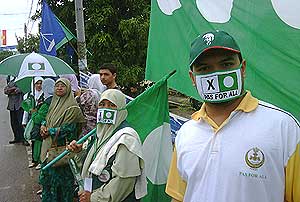 While Umno has tried to improve its machinery - and this was evident in Permatang Pasir - a major challenge for Umno is credibility among voters.
Its hardcore supporters will stay with them, especially the older generation, but the younger voters are questioning everything.
They resent the patronising tone of some of the Umno leaders and expect more from their government. On the ground there were real concerns about the management of the campaign by Ahmad Zahid who has yet to prove himself nationally as a leader who can be trusted. Many of the campaign messages were too incredulous to accept.
While Umno is not alone in facing the issue of credibility, as this is also an opposition challenge especially for Anwar, it is particularly acute for the dominant national party.
In opening up a Pandora box by relying on racially-based campaigning tied to fear and insecurity, Umno is creating an even greater challenge for itself. In its fight to win back the Malays it has lost the national picture of itself as a national party governing the entire country.
Traditionally Umno has based its legitimacy on maintaining stability, but the current campaigning thrust lacks this core. 1Malaysia aims to provide a rubric for a national picture, but it lacks substance, and in the context of racially based campaigning any traction. The other core technique is patronage - and yes, the goodies poured in Permatang Pasir.
Money and promises of becoming the Anak Emas (Golden Child) flowed with estimated running as high as RM100 million. The reality is that no where near that was spent and most of this was unmet promises, but the inability of the traditional vehicle to woo voters in a by-election only serves to reemphasise the need for Umno to move beyond its old paradigms of political engagement.
The by-election will soon fade into oblivion as a new one takes its place. This is the year of by-elections. The opposition has the benefit of putting to rest some ghosts promoting internal division which will weaken it nationally, while the BN - particularly Umno - remains having to face the monster it has failed to battle effectively - the need to reform from within.
Politics is full of individuals hungry to hold onto or win power. In remains to be seen that whether after this month, attention will focus less on appeasing the spirits and more on addressing the problems that voters really care about.
BRIDGET WELSH is associate professor of political science at Singapore Management University and observed the by-election in Permatang Pasir. She can be contacted at bwelsh@smu.edu.sg.


Report this comment
Are you sure you want to delete this comment?
This action cannot be undone.