




A flower for the Penan
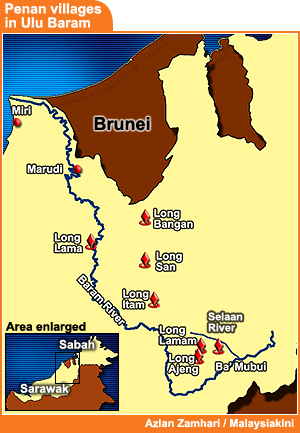
COMMENT This is a record of my struggle for and with the Penan people, specifically with a group of 15 villagers, now still living in the remote jungles of the Baram region in northern Sarawak. The year was 1993.
COMMENT This is a record of my struggle for and with the Penan people, specifically with a group of 15 villagers, now still living in the remote jungles of the Baram region in northern Sarawak. The year was 1993.
The protest movement that we started has since grown in strength, and thanks to the reach of the Internet, the cry of pain from the far flung, God-forsaken forest can now be heard everywhere. Though I have given up active politics due to ill health, many new Green warriors have joined the fray and kept the issue alive.
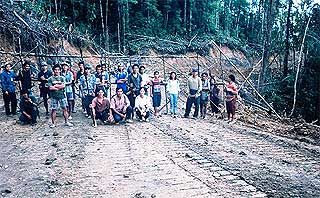 It is not easy to keep the Penan issue alive. The Penans live in remote forests, and we have to cover great distances to overcome the physical and cultural barriers to connect the Penans with the rest of the world.
But I believe the Penan struggle ought to be the burning national issue of the day, partly out of ultimate concern, with which we should engage ourselves in a national conversation, and partly because unless Malaysians as a whole take some action in support of the Penans, the Penans will be left to rot in the jungle “ like wild animals ”.
The issue also has implications for the politics and economy of Malaysia as a whole. The export of timber is the largest source of income for Sarawak, and various taxes derive from logging. The industry supports a great deal of development expenditure, not only for Sarawak but also for the entire country.
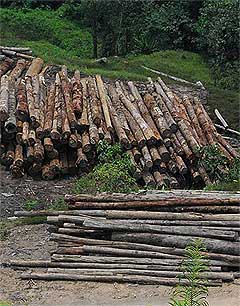 For many decades, income from taxation of logs has kept the Malaysian economy afloat. But the demand for Sarawak logs has caused the Penans indescribable misery, because of unjust economic policies that emphasise rapid development of timber resources, rather than promoting the interest of the Penans.
One of the oldest tribes in the world has been made into the sacrificial lamb to be offered at the altar of state timber interests. The more the timber industry prospers, the more the Penans in the Baram area suffer. They continue to languish until today.
Minor victories
For too long, the world has neglected the Penans, the most persecuted members of Malaysian society. Why this is so is simple. The Penans do not have strength in numbers; there are only 12,000 Penans left in the entire world.
Many of them live in isolated locations and are unable even to register to vote. They also have little access to the print and electronic media. In a country dominated by racial considerations in all things, what is there for anybody to gain, politically, to give support to the Penans?
 But since the 1980s, I paid close attention to the plight of the Penans, partly because I was in charge of the environmental portfolio within my opposition party.
From the 1980s onward, I was also involved in the prolonged struggle against the logging companies and their political masters, because I considered environmental protection a necessity that could guarantee the future of humankind.
Even today, I still believe that reduced logging and the protection of non-renewable resources such as timber hold the key for human survival and the proper development of Sarawak.
In the 1990s, my battles with the timber interests had brought me to various indigenous communities throughout the Land of the Hornbill. Hampered by difficulties in travel and communications, it was a challenge to organise the local communities into a grassroots movement. These problems are still the biggest obstacles to organising rural communities today.
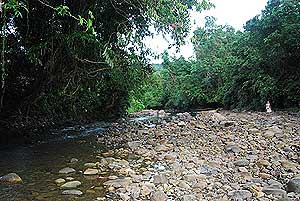 But after much trial and error, we began to achieve minor victories in stopping logging in various parts of Sarawak. My greatest victory was in freezing officially-sanctioned logging activities in the protected forests of the Gunung Gading national park, and our protest resulted in the timber licence being withdrawn.
Everywhere we went, we had to confront rich and powerful timber companies and their political masters.
In this fight for justice, we received very little assistance from the local and the national media. The unfree Malaysian newspapers and mass media were indirectly controlled by interest groups that could manipulate public opinion by suppressing all news coverage of the pro-green movement.
Silent no longer
 Fortunately, throughout the 1990s until today, the anti-logging movement has been supported actively by a group of national and international NGOs.
These NGOs are mostly socially-conscious and politically-aware activists who devote long years of their lives to agitating for meaningful reforms in the larger political scene.
The Internet in recent years has allowed us to spread our message more rapidly and to reach a wider audience. The poor Penans and the other suffering Sarawakian natives are silent no longer. Websites like Malaysiakini have offered the world a channel for alternative news and views on logging issues in Sarawak.
At this very moment, the issue is being kept alive on the Internet by an alliance of 36 NGOs based in Sarawak and elsewhere. The coalition includes:
- Asian Forum for Human Rights and Development (Forum-Asia)
- The Centre for Orang Asli Concerns (COAC)
- Malaysian Bar Council
- Sarawakians Access (Saccess)
- Suara Rakyat Malaysia (Suaram)
- Tebtebba and the Asian Indigenous Women’s Network (AIWN)
- Women’s Aid Organisation (WAO)
In recent months, this pro-Penan NGO alliance has published detailed cases of the rape of Penan girls by timber industry workers in Sarawak.
This injection of new blood into the line up of pro-Penan NGOs has strengthened the political struggle of concerned citizens seeking justice in Malaysia’s opaque political climate.
Now allow me to take your mind back to 1993, a time when the world could not care less about the Penans. It was then that I received a personal SOS from the Penan in Baram and their faint, plaintive cry for help reached my office in Kuching.
This is the whole story, and my personal testimony to the Penans’ bitter quest for justice under the Malaysian sun.
SIM KWANG YANG was member of parliament for Bandar Kuching, Sarawak from 1982 to 1995. He can be reached at sky8hornbill@gmail.com.
THE PENAN SERIES
Part 1: A flower for the Penan
Part 2: A distant cry for help from the jungle


Report this comment
Are you sure you want to delete this comment?
This action cannot be undone.