




Studies of all civilisations would enrich us, says bishop
Catholic Bishop Paul Tan Chee Ing said the move to make Islamic and Asian Civilisation studies (Titas) compulsory for students in private universities represented an "unwarrantedly narrowed engagement with the best that has been said, thought and done in this world."
Catholic Bishop Paul Tan Chee Ing said the move to make Islamic and Asian Civilisation studies (Titas) compulsory for students in private universities represented an "unwarrantedly narrowed engagement with the best that has been said, thought and done in this world."
"Islamic and Asian civilisations have given much that is of value to human civilisation but that's not the whole of the story," opined the head of the Catholic Church in the Malacca-Johor diocese.
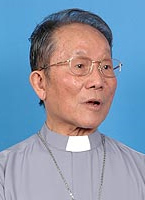 Bishop Paul Tan said the Greek, Roman and Judeo-Christian civilisations have also given much that is of value to humankind and the need to know what these contributions have been would go a long way to producing graduates who have some familiarity with the "good, the true and the beautiful".
He said whenever the question is raised of what a good education is, a theory of the universal good is inevitably invoked.
"In these days, it's hard to arrive at a consensus of what this theory of the universal good is because, not infrequently, what is moral in one culture may be immoral in another," he elaborated.
The prelate held that in such conditions, it is better to allow the young to learn about the core values of as many cultures as possible so that they have a better assumption of what a theory of the universal good would be.
"Absent such a theory, people will wind up with moral relativism which is corrosive of what is the good, the true and the beautiful," argued the bishop.
Survey other civilisations, too
The Jesuit-trained prelate said a good tertiary education should aim to develop students' capacities to write and speak clearly and effectively, to deal competently with number and figure, to think critically and constructively, to judge discriminatingly and observe carefully, and to appreciate and respect personal and cultural differences.
"To achieve this end, a broad-gauged familiarity with the best that has been said and thought in this world would be a better preparation than a narrowed engagement with one or two civilisations," offered the bishop.
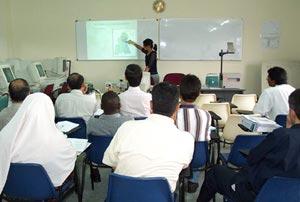 "To just confine studies at the tertiary level to one or two civilisations would prepare the ground for the rise of ethno-centrism and its religious correlate that are not healthy for the development of the rounded person," he cautioned.
"By all means, undergraduates ought to learn about the contributions of Islamic and Asian civilisations, but a survey of other civilisations and their contributions would further enrich the imagination and deepen insights into human nature and motivation," he asserted.
He said that, properly speaking, universities ought to be citadels for the disinterested contemplation of truth.
"There's no freedom like the one that's conferred by knowledge of the truth and there's no bondage more enslaving than the truth's suppression in the interests of politics," argued the bishop.


Are you sure you want to delete this comment?
This action cannot be undone.