




Malaysian conduit bypasses EU arms controls
A coalition of 55 European non-government organisations (NGOs) has claimed that the European Union (EU) arms code contains weaknesses that have enabled countries like Malaysia to add to the indiscriminate dispersion of weapons globally.
A coalition of 55 European non-government organisations (NGOs) has claimed that the European Union (EU) arms code contains weaknesses that have enabled countries like Malaysia to add to the indiscriminate dispersion of weapons globally.
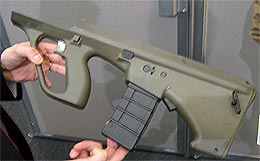 In a statement issued recently, the coalition pointed out that Austrian gun maker Steyr-Mannlincher has
signed an agreement
with the Malaysian government to manufacture its weapons.
In a statement issued recently, the coalition pointed out that Austrian gun maker Steyr-Mannlincher has
signed an agreement
with the Malaysian government to manufacture its weapons.
"Malaysia has aggressive export plans for these arms which would not be subject to the EU Code," said the coalition, whose members include UK-based Oxfam, Saferworld and Amnesty International.
The coalition also identified Germany as having played a role in breaching the controls, as its diesel engines have been incorporated in armoured personnel carriers subsequently arriving in China and Burma.
 In April, Deputy Prime Minister and Defence Minister Najib Abdul Razak
said
Steyr-Mannlincher - Austria's top arms producer - "will transfer fully the licence to manufacture and export Steyr rifles and pistols in the global market to Malaysia" and that the move would generate revenue.
In April, Deputy Prime Minister and Defence Minister Najib Abdul Razak
said
Steyr-Mannlincher - Austria's top arms producer - "will transfer fully the licence to manufacture and export Steyr rifles and pistols in the global market to Malaysia" and that the move would generate revenue.
The Defence Ministry has not responded to comments from malaysiakini on the matter although it requested a copy of the report, 'Taking Control: The Case for a More Effective EU Code of Conduct'. The report was released in The Hague on Sept 29.
'Set example'
The coalition used outcomes of new research from a 'control arms campaign' to show how EU export controls are being bypassed to allow arms and components to fall into the hands of human rights abusers.
"These cases demonstrate that, despite the adoption of the EU Code in 1998, export controls across the EU still contain many weaknesses and loopholes," it claimed.
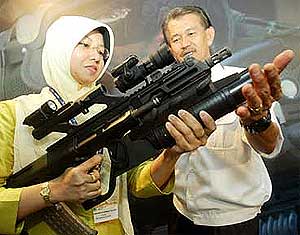 A conference is underway in the Netherlands between the NGOs and EU officials to review the code.
However, the coalition said "there does not appear to be the political will to implement the changes needed to make a difference".
"Between 1994 and 2001, the EU exported nearly US$10 billion worth of arms to developing countries - approximately one-third of all the arms deliveries to these countries," it said.
The coalition will present its recommendations during the conference. These include tightening criteria, regulating licenced production abroad, applying the code to weapons components and strengthening arms embargoes.
"For far too long the (code) has failed to stop arms from going where they shouldn't be allowed. This new research illustrates the urgent need for the EU to control its arms trade in a responsible manner," said Oxfam policy director Justin Forsyth.
"Every year we see hundreds of thousands of people killed by arms. Europe should be a model for the rest of the world to follow."
The report said EU arms controls are not strong enough to prevent weapons from falling into the wrong hands and that the code should be "strengthened without delay".


Report this comment
Are you sure you want to delete this comment?
This action cannot be undone.