



How arguing on drying laundry led to Science Café KL
MALAYSIANS KINI Once a month on Wednesday evenings, a small group of science enthusiasts gather at a restaurant at the Publika shopping mall in Kuala Lumpur.
'Enthusiasts' is an accurate way to describe the attendees.
MALAYSIANS KINI Once a month on Wednesday evenings, a small group of science enthusiasts gather at a restaurant at the Publika shopping mall in Kuala Lumpur.
'Enthusiasts' is an accurate way to describe the attendees.
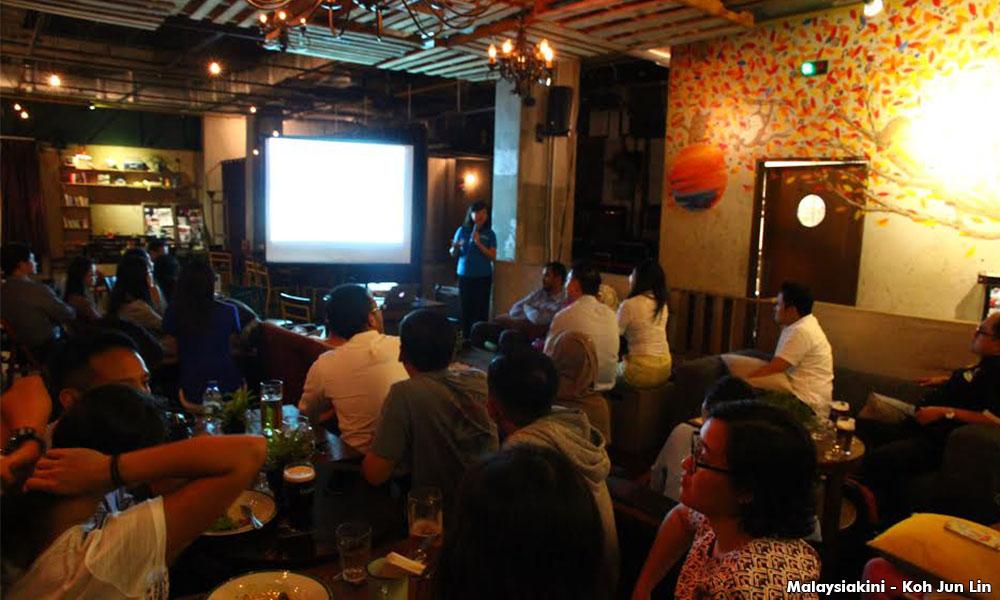
When asked by a guest speaker if anyone worked in the fields of science, technology, engineering or mathematics, none of the 40 in attendance at last month's gathering raised their hand.
A few admitted to having their last formal science lesson at university; the rest were evenly split between having their final lesson at secondary school or pre-university levels.
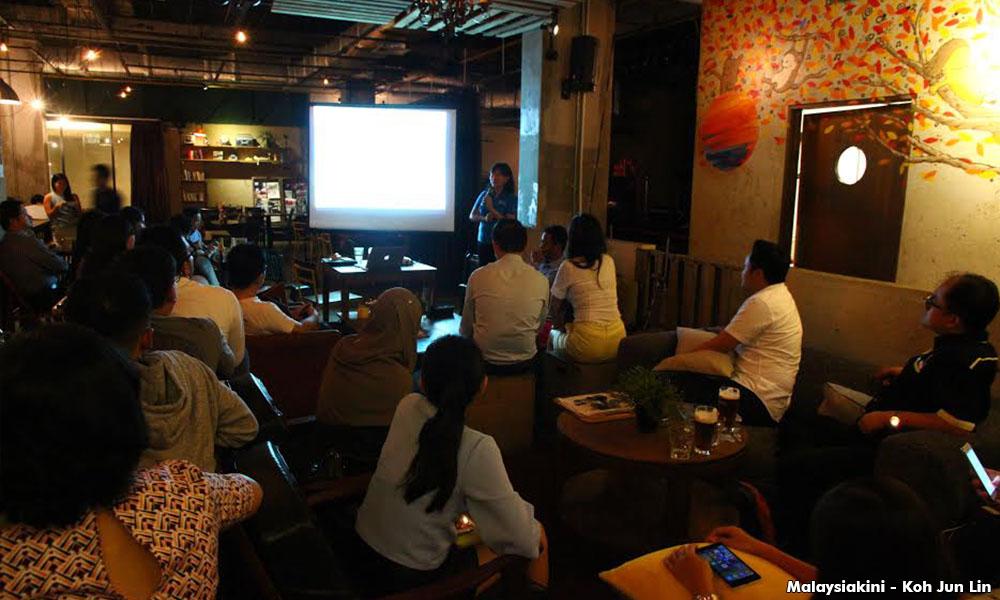 Nevertheless, everyone listened intently as the speaker described DNA’s role in causing cancer, how understanding this has affected how cancer is diagnosed and treated, and what research is being done in Malaysia to further understand the disease.
Welcome to Science Café Kuala Lumpur, a gathering held at Publika's The Bee’s outlet on the second Wednesday of each month, since March this year.
Previous talks have tackled topics such as biosensors, quantum physics, climate change, and more, drawing between 25 to 50 people on each occasion.
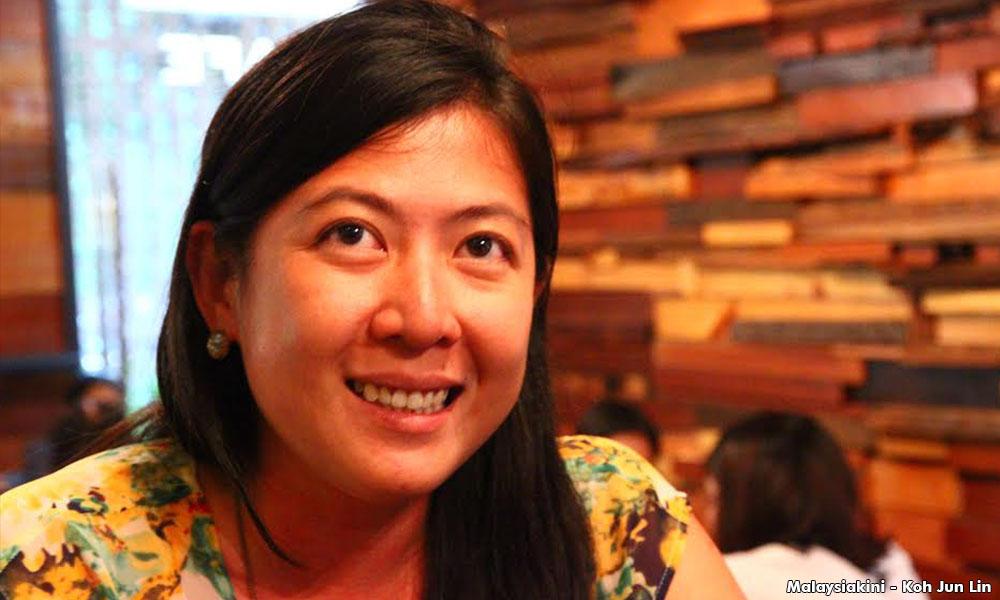
The person who pulled the event together is Yeoh Liu Yi, a manager at a major infrastructure company who returned to Malaysia earlier this year, after more than a decade of studying in the UK and working in Singapore.
So how did someone a PhD in behavioural finance, a masters in finance and a bachelor’s degree in management, end up organising a monthly gathering discussing all things science?
Here, edited for brevity, is Yeoh’s story in her own words.
I USED TO FALL ASLEEP IN CLASS. But even so, I think it is because of the way our schooling system is set up. It wasn't as engaging then because you were often just copying lab notes and lab results. You were literally just copying them down and drawing the setup of the experiments and things.
Sometimes you are not even running the experiments, but you copy the (results of the) experiments; so it's more difficult to understand what was actually going on.
 I think it was also very different from now where students have a lot of access to documentaries, to online resources, to YouTube videos.
Anything you want to know about, there is probably a YouTube video about. So in those days it was a little bit different.
I DIDN'T DO VERY WELL IN SPM for science subjects. I think my best score was like a C3 in chemistry. After SPM, I studied for a diploma in economics at HELP College.
So I went the traditional route of studying accounting, finance and management, I think those are the key things that your family wants you to do.
I think at that time, I probably tried to study sociology, but again my family wanted me to study something that would lead to a secure job. Traditional roots. I wasn't very good at it anyway. I wouldn't have made a very good living out of it to be fair.
IT WAS DISAPPOINTING FOR ME. Until today, I have an A-Levels physics book sitting in my room. I never got through it, even though when I do my work now I'm very interested in the power sector and power generation.
How does a wind turbine work? Why is it more or less efficient than solar production? How do all these translate to energy? How does it get transmitted to you?
All these aspects are technical and my job doesn't require me to understand it thoroughly, but you always feel like your knowledge is incomplete.
So I still have my physics book that I truly think I should try to get through. I got a textbook on renewable energy and it starts off with the technical stuff that I would really like to understand.
I DATED A PHD STUDENT FOR A VERY LONG TIME, he was pursuing a doctorate in electrical and electronic engineering, and whenever we use to have arguments, they tend to be very technical, like, “When are we drying our laundry, why are we hanging it inside the flat in winter?”
I can't remember which way it was already. I thought it would make more sense to dry the clothes outside during winter, and he said it would make more sense to dry it inside.
This was a serious argument, you know. We really argued. We didn't have a dryer. That would have solved a lot of our problems.
So in that relationship, our arguments were always like that, and I think that was what compelled me to buy that A level physics book, going like, “Hey, I'm totally going to learn this and when we have an argument, it would be on the same understanding.”
So needless to say, I haven't gone through my A-Levels physics studies so that relationship did not work out.
I USED TO GO THIS CAFÉ at Tanjong Pagar (Pigeonhole Café) in Singapore because there was just really good music – plenty of local bands and touring musicians passing through Singapore playing the stuff they wrote.
The café also hosted the Science Café every last Thursday of the month and that was how I first got to know about the Science Café in Singapore.
So I went to a few of those and it was really good. It was very relaxed. Very informal, very interactive, very small, very intimate group.
You had scientists coming by, researchers typically from the National University of Singapore, talking about what they were doing.
Then one day on the off-chance, I was meeting friends of friends on a typical night out in Singapore. It turned out one of the girls there, was one of the organisers of the Science Café and we became friends.
So maybe a year later I moved back to KL and I was new back in town. I had only been back for five months. At that point, I didn't have a job yet.
So, I really missed those sessions and I thought it would be great and I could see there was a crowd of people in Malaysia - like-minded friends who would enjoy something like that. So that's how it started.
ONE OF THE NICEST THING ABOUT BEING IN KL is that people are receptive, they are open.
My sister, Xin Yi, does this really, really fantastic program called Sembilan. It is an art residency program. It is to support the local art scene, to encourage young artists, Malaysian artists. Give them a space, and an opportunity to display their work.
She moved back to KL earlier than I did. My mum and dad are also in KL.
Xin Yi once told me that Malaysia is one of those places where if you wanted to, you can make things happen and make things work.
On the back of this, I thought, ‘Hey, I think if I were to try and get this running, I think it will take off.’
So I got in contact with that friend of mine in Singapore and she pointed out certain things, like how to get it set up, and things to look out for.
 One of the key things being that you need to make sure that it's about proper science subjects and research, and not pseudoscience.
Sometimes I will send her the topics, share with her that this is what we are doing next, and she will give feedback. So that’s kind of helpful.
THE SPEAKERS ARE VERY OPEN-MINDED, they are very keen to reach out. The venue sponsors as well, are very open-minded. They’d take a chance on you and give you the space.
The response was very, very positive. I have people who send me notes that say, ‘Oh, this is exactly what we need in KL’.
Our younger students will be so excited because there is a gap, like, you start off with a concept that you really enjoy – science. It is a serious subject, and then you see what people do with it.
Then you go backwards and go ‘Oh, in order for me to be discovering new cancer cures, which is so cool, I need to understand my biology and chemistry first.’ So they work backwards and hopefully they would make those choices as our next generation of scientists.
Hopefully forums like this will bring all these into the foreground for people to participate, and in the long term, they would continue to be subjects of interest for people to pursue.
People like me, we just put it together, so you also have people like that who coordinate, who project-manage. So effectively, that is all I’m doing. I’m just creating that platform.
IF I’M GIVEN A SECOND CHANCE to study something else, I wouldn't. No, because honestly, I don't think I have the aptitude. I think we have certain things that we are good at, and there's no point in forcing the matter. I'm very happy with how I understand the world by these channels.
That’s why I organise the Science Café, because this is the channel that I can access information that I'm comfortable with, and it is effective for me, right?
But then there are people who are incredibly good at science and math, at technology, and things like that. It would be a shame if they didn't use their skills.
For me, I am quite sure that I'm not.
MALAYSIANS KINI is a series on Malaysians you should know.
Science Café KL is held at 7:30pm on the second Wednesday of each month, at The Bee, Publika. Its next session on Aug 10 will feature psychologist Steve Janssen, who will speak on the topic ‘Why does life appear to speed up as people get older?’
Previously featured
What if Hang Jebat never stood up to the sultan?
'Am I going to die?' - student journo reports from conflict zone frontlines
Snubbed by Masterchef, M'sian youth wins over refugees in Greece
The radicalisation of Mandeep Singh - from suits to streets
M’sia’s accidental Bob Dylan says he's no guitar warrior
How a bloody nose led youth on the road to Greenpeace
Razlan Rafii - Umno 'thug' or misunderstood modern man?
Saving Pekan Ampang, the small town in a big city
How the Malay indie publishing mafia sparked a reading renaissance
'Subversive' book club thrives in Shah Alam and beyond
Meet Syed Saddiq, your freedom of speech crusader
'It's not just punk rock, it's punk ideology'
Paramedic goes 'white to black' to lead medic team at Bersih 4


Are you sure you want to delete this comment?
This action cannot be undone.