


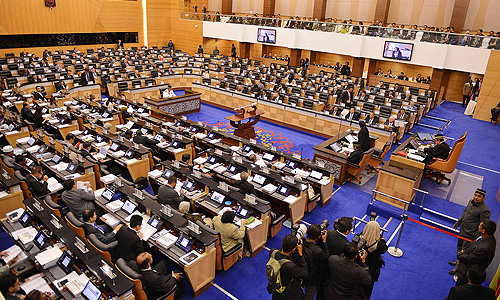

Abolish parliamentary affairs ministers' post, urges lawyer
The post of the minister in the prime minister’s department in charge of parliamentary affairs ought to be abolished, a forum was told today.
The lawyer Nizam Bashir - who was presenting a paper on behalf of the former de facto law minister Zaid Ibrahim - said the government should wield its large majority in the Dewan Rakyat to make immediate reform to the Parliament’s standing orders, and strengthen the speaker’s position.
The post of the minister in the prime minister’s department in charge of parliamentary affairs ought to be abolished, a forum was told today.
The lawyer Nizam Bashir - who was presenting a paper on behalf of the former de facto law minister Zaid Ibrahim - said the government should wield its large majority in the Dewan Rakyat to make immediate reform to the Parliament’s standing orders, and strengthen the speaker’s position.
“The speaker must be a member of the Dewan Rakyat, and must be capable of being fair and just in discharging his duties of an impartial parliamentary umpire. It goes without saying that in playing the role of an umpire, the speaker must not show any bias as this would spoil the good work of the reforms.
“He must be brave to defend the honour and integrity of the Parliament. On no account must he or she be a plant of the Prime Minister’s Department who is content to take directions from the minister in charge of parliamentary affairs, which itself is a post that must be abolished,” he said at the closing of the forum organised by the Malaysian Economic Association today.
The forum held in Kuala Lumpur was themed ‘National Economic Governance: Role of Parliamentary Committees’.
He said the Parliament ought to be an independent body capable of managing its own affairs and setting its own budget, particularly through the House Committee chaired by the speaker, who in turn is appointed by the MPs.
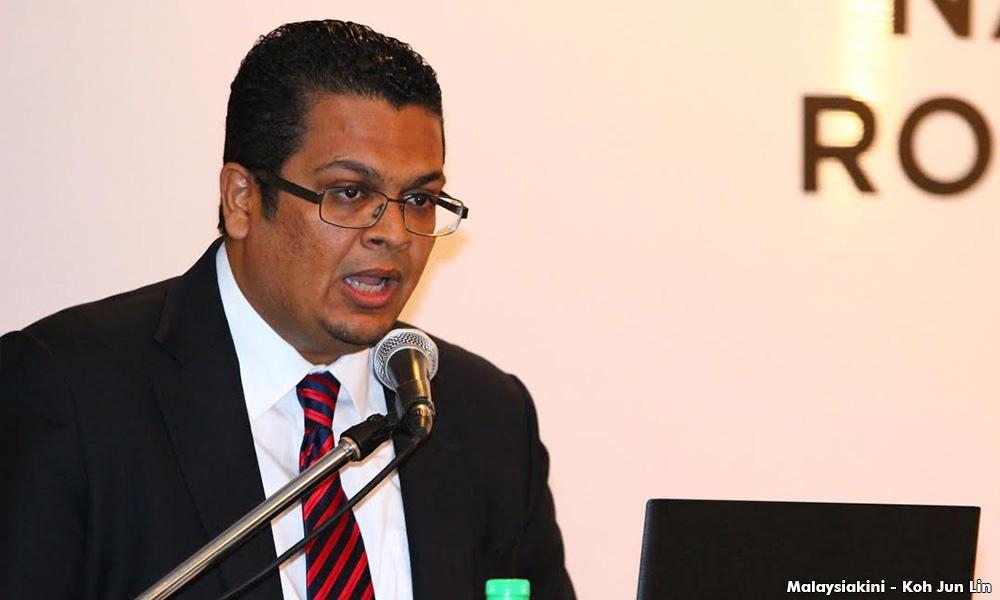 However, Nizam (photo) said this is unfortunately not the case in Malaysia.
“This is unfortunately not true in Malaysia. Our Parliament is an extension of the Prime Minister’s Department, and parliamentary affairs are overseen by a certain minister in that department.
“The speaker is nominally appointed by the Dewan Rakyat, but is fact is decided by the prime minister, on who serves in that role, and decides how much funding the Parliament needs,” he said.
The minister in Prime Minister’s Department post mentioned is currently held by Azalina Othman Said, who is also the current de facto law minister.
Meanwhile, Nizam said the new laws and amendments to existing ones should come from a parliamentary select committee on law, rather than from the Attorney-General’s Chambers.
“Parliamentarians are called lawmakers precisely because they are responsible for making laws, not just saying ‘aye’ to laws drafted by someone else,” he said.
He added that the Parliament’s Standing Orders should be amended such that the prime minister cannot change the members or the chairperson of parliamentary select committees, as had been done during the Public Accounts Committee (PAC) as it was investigating the 1MDB scandal.
Nizam was referring to the cabinet reshuffle on July 28 last year, where PAC chief Nur Jazlan Mohamed and four other BN PAC members were appointed as ministers and deputy ministers, meaning that they would have to relinquish their posts.
The move followed the transfer of the then attorney-general Abdul Gani Patail from his post allegedly due to ill-health, at a time he was a part of a special task force probing 1MDB. The task force was disbanded immediately afterwards.
Nizam added that the opposition’s role in the Parliament should also be strengthened, such as by ensuring that they are proportionally represented in parliamentary select committees, and allowing a set number of days in each parliamentary session where they can set the agenda.
“The opposition in the British House of Commons has 20 days in each session under its rules. In Malaysia, we don’t even give a single day to the opposition to debate matters of its choice,” he said.


Are you sure you want to delete this comment?
This action cannot be undone.