




Of concert tickets and police corruption
After their urine tested positive for drug abuse, three suspects being held at a police station were told to purchase tickets worth RM200 for a police concert if they wanted the opportunity to post bail.
After their urine tested positive for drug abuse, three suspects being held at a police station were told to purchase tickets worth RM200 for a police concert if they wanted the opportunity to post bail.
This was among numerous complaints contained in the 607-page report by the Royal police commission, which was released to the public today.
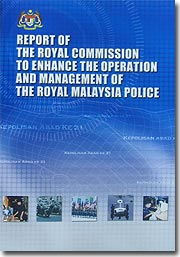 Twenty-two pages of the
report
, completed 18 months after the commission was tasked to look into ways of improving the police force, was devoted specifically to 'prevalent' corruption in the force.
Twenty-two pages of the
report
, completed 18 months after the commission was tasked to look into ways of improving the police force, was devoted specifically to 'prevalent' corruption in the force.
According to the complaints, corruption occurs at all levels in the force and fear of testifying in court hampers prosecution.
On why rank and file personnel remain tightlipped on the corruption among their superiors, the commission pinned the blame on procedure.
Procedure requires that such reports be made through their chain of command, which may include the affected corrupted superior officers, it said.
"As a result, the rank and file officers preferred to remain silent rather than risk their careers," said the commission.
Luxurious lifestyle
The report stated that corrupt police officers live in the lap of luxury, a lifestyle way beyond their means.
These officers receive bribes in cash and kind as well as other forms of entertainment such as having guest relation officers entertain them.
According to the commission, traffic policemen, investigating officers, detectives, prosecuting officers and enquiry office personnel were those more prone to corruption.
The report also highlighted the practice of intra-department corruption.
"It is not uncommon for police officers to bribe other officers to gain an advantage such as being transferred to 'gold-mine' postings," it stated.
The 'gold-mine' departments and divisions are commercial crime department, traffic, criminal investigation department (covering secret societies, anti-vice and gambling), narcotics department, logistics department (procurement and development) and deployment and promotions division.
Members of the public complained that corruption is rampant in police lock-ups as well.
"Many complainants alleged that detainees have to pay for additional food, to receive and make phone calls, see family members or friends and be placed in good cells."
 The report said the inspector-general of police had placed the disciplinary branch directly under his purview since March 25 last year in order to personally oversee all investigations into breaches of discipline and ensure that appropriate punishment is meted out.
The disciplinary branch has also maintained that "it was only the perception of the public that corruption was rife as the public expected high ethical standards from the police, who are supposed to be the guardians of the law".
The branch indicated that the number of arrests by the Anti-Corruption Agency as compared to the total police population is "not alarming and under control".
Lie-detector test
Meanwhile, the commission made 10 recommendations to tackle corruption in the force. This include subjecting those suspected of graft to a lie-detector test and asking them to declare their assets. The test should be conducted on a yearly basis.
The commission also suggested that the public be allowed to pay traffic compounds at all banks and post offices.
Apart from educating and training police personnel at all levels, it was also proposed that the police here emulate their Hong Kong counterparts and set up a complaints bureau in the disciplinary branch.
The report was drawn up by a team of commissioners led by former chief justice Mohd Dzaiddin Abdullah, following extensive gathering of feedback on the state of police operations.


Are you sure you want to delete this comment?
This action cannot be undone.