




Mega-incinerator relocated 200m from site
After three long years of struggle, the residents of Kampung Broga, Semenyih, have emerged marginally victorious in their battle against a controversial incinerator - the authorities have decided to relocate the plant 200 metres from its original site.
After three long years of struggle, the residents of Kampung Broga, Semenyih, have emerged marginally victorious in their battle against a controversial incinerator - the authorities have decided to relocate the plant 200 metres from its original site.
 Original plans were to carve a sizable portion of a forest reserve for the mammoth incinerator - one of the biggest of its kind in the world. Now, the new site sits on a piece of agricultural land instead.
This new plot of land will overcome many geographical flaws of the original site, many of which ware identified by the residents in their lawsuits against the authorities.
Among the problems with the original site were that the incinerator was to be built on a rather steep slope creating the possibility of landslides during construction and that the area was part of a crucial water catchment area.
Yet the residents remain dissatisfied with this minor adjustment - they argued that the new site is also unsuitable for three key reasons:
-
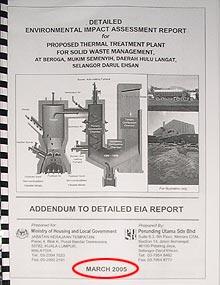 According to the addendum to the detailed environmental impact assessment (EIA) report released on Dec 8, the new site will cover three hectares of terrain on hill slopes with gradients exceeding 25 degrees. Construction on such slopes contravenes Department of Environment (DOE) guidelines and a cabinet directive banning such hillside development as it may contribute to landslides and erosion.
 The incinerator's fluidised-bed gasification and ash-melting plant has a capacity to process 1,500 tonnes of solid municipal waste daily. It is considered the largest of its kind in the region.
The RM1.5 billion incinerator was earlier relocated to Broga from the heavily populated southern suburb of Puchong after stiff protest from the residents there.
Kampung Broga, a 100-year-old picturesque agricultural backwaters of mostly vegetable farms, is about 60km from Kuala Lumpur and six kilometres from the Malaysian branch of Nottingham University.
Land size slashed
According to the EIA report for the new site , the total area for incinerator project has been slashed from 166 hectares to 39.7 hectares.
This is because the new site will not have a landfill meant to bury slag and ash, a highly toxic by-product of the incineration process.
Residents have expressed fears that the toxic landfill may pose environmental and health hazards.
 The EIA report states that 20 percent of solid waste that undergoes the incineration process would be turned into slag and ash, but it made no mention on where and how the toxic material will be disposed.
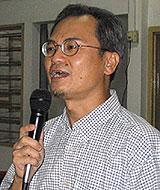
DAP NGO bureau chief Ronnie Liu ( right ), who met Broga villagers last night to express his party's concern over the matter, calculated that 240 tonnes of toxic waste materials might have to be transported out of the village daily.
"The hazardous material being transported out of the incinerator will pose a danger to both villagers and others," said Liu.


Report this comment
Are you sure you want to delete this comment?
This action cannot be undone.