




The Ming Court Affair, Pt 2
special report Resentment towards Taib Mahmud by PBB grandees like Noor Tahir, Salleh Jafaruddin and Wan Yusof, stemmed from what was viewed as the chief minister's favouring of a new and select group of crony capitalists who were seen as monopolising contracts awarded by the government.
special report Resentment towards Taib Mahmud by PBB grandees like Noor Tahir, Salleh Jafaruddin and Wan Yusof, stemmed from what was viewed as the chief minister's favouring of a new and select group of crony capitalists who were seen as monopolising contracts awarded by the government.
The seeming favours shown to mandarins of the Foochow community - a clannish and monopolistic group whose money financed the Sarawak United Peoples Party (SUPP), a Chinese-dominated organisation that was an important component of Taib's BN coalition - was seen by the PBB malcontents as particularly niggling.
The disgruntled lot took their grouses to Rahman Yakub, Taib's uncle, who in 1981 was appointed governor as his nephew replaced him as CM. Rahman had expected his elder sister's son to be compliant with his political prompting but Taib had other ideas, clearly evidenced by his choice of Ahmad Zaidi to replace Rahman as governor in 1986 when the former's term had ended.
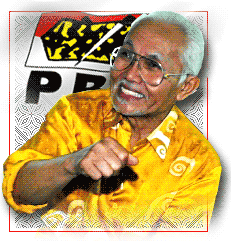 The relationship between Rahman, a Melanau, and Zaidi, a Malay of Indonesian extraction (ethnic differences, however negligible, loom large in Sarawak's bewildering mlange) had soured from the 1960s when Zaidi's past connections with Indonesian nationalists in their fight against the Dutch counted against him after Sukarno launched his Ganyang Malaysia (Crush Malaysia) campaign in 1963.
Rahman, a law graduate, and Zaidi, an agriculture degree holder, were the few graduates among locals when the British moved to consolidate their administration of Sarawak in the 1950s after Charles Vyner Brooke ceded the territory to them in 1946. Because local tertiary-qualified talent was so rare, competitive spite within this pool was of no small import.
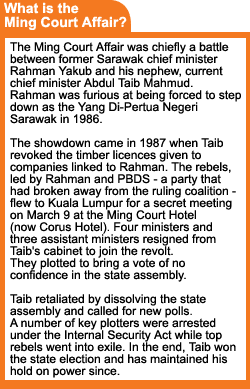
The widespread disaffection against Taib reached an apogee by the first week of March 1987 with the gathering of potential rebels at the Ming Court Hotel in Jalan Ampang in Kuala Lumpur.
Logging licences
Twenty one years before, Kuala Lumpur had also been the focal point of a cabal out to oust Snap's Stephen Kalong Ningkan as chief minister. Perhaps the most potent factor in the immediate prelude to the Ming Court gathering was James Wong's exasperation at Taib's tardiness in renewing logging licences the Snap titan had to 60,000 acres of mangrove timber and 100,000 acres of hill timber in Limbang.
This exasperation saw Snap's state assembly and federal parliamentary representatives joining the disaffected from PBB and PBDS to plot the ouster of Taib, leaving only SUPP grandees conspicuous by their absence.
By the end of the first week of March 1987, it only remained for Daniel Tajem to join the cabal to raise the incipient mutiny to an unbridled rebellion. As the motley bunch of anti-Taib rebels gathered in Ming Court, Deputy Chief Minister Tajem, who was in charge of agriculture and community development, was in Mukah for a farmers' organisation function.
He officiated and flew back to Kuching the next morning, a Saturday, growlingly aware of ominous murmurings of mutiny in KL. On arrival at his two-acre home in Jalan Urat Mata in Kuching, he hovered by the fish pond in the sprawling garden, more intent on his eldest son's 17th birthday party that evening than on mutinous goings-on in KL.
Tajem's reverie was interrupted by a call from Liap Kudu, Leo Moggie's principal private secretary. Kudu said party chief Moggie wanted Tajem to fly out to KL soonest. Tajem said he would see Leo after the federal-level BN pre-council meeting, to be chaired by Deputy Prime Minister Ghafar Baba, scheduled for Sunday afternoon in Parliament.
 Tajem had been elected PBDS MP for Batang Lupar the previous year (1986), besides being the state assembly representative for Bukit Begunan. In the event, Ghafar's meeting lasted a mere 30 minutes.
Tajem instructed George Entigar, his secretary, to book him at the Shangri-La Hotel while the Rumah Sarawak chauffeur drove him on to Ming Court where, in the coffeehouse, Moggie was huddled with Edmund Langgu, the PBDS MP and federal deputy minister.
"Tun Rahman wants to see you at his home," was all that Moggie said to him. Tajem proceeded to Jalan U Thant, an upper-class suburb in KL where in the hall of Rahman's bungalow he could see Edward Jeli, Wan Yusof and Salleh Jafaruddin standing in conspiratorial knots. From an adjoining room wafted the voice of Noor Tahir, soon to be an important element in the plot that was racing to a denouement.
Upstairs, a waiting Rahman told Tajem a majority of the state assembly's 48 members had agreed to sign a petition to the governor that they no longer had any confidence in Taib as CM and that they wanted a new man in the post. Tajem demurred, arguing that the procedure was improper.
He said he had helped draft the state assembly's Standing Orders a few years before and that, based on his understanding of the rules, it would be better to petition the Speaker for a special sitting where a resolution expressing no confidence in Taib could be tabled.
British passport
Tajem had known Rahman since 1960 when the then deputy public prosecutor had given lectures on law to the former who was a trainee in the Sarawak Administrative Service. Rahman, who early on had developed an eye for spotting ability in his wards, had sponsored Tajem's application for a British passport when the latter prepared to go to New Zealand in 1962 for law studies.
At that time only a Division One officer, which Rahman was by dint of his DPP status, could sponsor passport applications. But those early days of ease in the relationship were replaced by wariness when Tajem, elected to the state assembly in 1974 on an opposition Snap ticket, was at odds with Chief Minister Rahman on a host of issues.
Rahman, on becoming CM in 1970, had invited Tajem to join the government but the latter declined to leave private practice. However, in 1980, four years after Snap joined the state BN coalition, Tajem joined Rahman's cabinet. A shrewd Rahman knew that against some adversaries co-optation was better than preemption
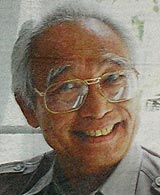 While Rahman and Tajem (
pix
) were arguing the finer points of procedure on how best to oust Taib, Tajem could hear the clatter of a typewriter from an adjoining room. Presently, a man appeared from inside whom Tajem recognised as a lawyer, a Chan by name. Tajem reiterated his reservations about the ousting procedure.
While Rahman and Tajem (
pix
) were arguing the finer points of procedure on how best to oust Taib, Tajem could hear the clatter of a typewriter from an adjoining room. Presently, a man appeared from inside whom Tajem recognised as a lawyer, a Chan by name. Tajem reiterated his reservations about the ousting procedure.
From the scads of conversation with both Rahman and Chan, Tajem gathered that Noor Tahir, a PBB assemblyman, had been detailed to forward the petition with a probable 30-plus signatures to Governor Zaidi. As the exchange between Rahman and Tajem tapered off, the former slipped him a brown envelope, saying Tajem should use its contents for party expenses and could expect more.
A by-now discontented Tajem asked Adam, the Rumah Sarawak chauffeur, to drive him back to the Shangri- La. On the way, he discovered the envelope given him by Rahman contained three hundred RM100 dollar bills. He gave the envelope to Paul Kadang whom he met as he arrived at the Shangri- La. Tajem told Kadang, the PBDS executive secretary, to use the money for expenses incurred by the PBDS headquarters.
He then retired to his room and left strict instructions with Entigar that he was not to be disturbed.
To be continued


Report this comment
Are you sure you want to delete this comment?
This action cannot be undone.