




Chinas economic growth a birds eye view
China, the world's fastest growing economy, will be able to overcome its bottlenecks and sustain a nine percent annual growth rate in the next 10-20 years, said a top economic adviser to the nation's central government and Communist Party of China.
China, the world's fastest growing economy, will be able to overcome its bottlenecks and sustain a nine percent annual growth rate in the next 10-20 years, said a top economic adviser to the nation's central government and Communist Party of China.
Prof Justin Lin Yifu, founder and director of China Centre for Economic Research, told a conference in Kuala Lumpur last Sunday that China was now the fourth largest economic entity, trailing behind the United States, Japan and Germany.
The conference, jointly organised by the Associated Chinese Chambers of Commerce and Industry of Malaysia, Malaysia-China Chamber of Commerce, Malaysia-China Friendship Association, China-Asean Eexpo Secretariat (South-East Asia) Representative Office and others, attracted some 700 participants.
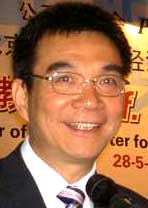 "If measured in terms of Purchasing Power Parity (PPP), China is actually the second largest after the United States," he said.
According to Lin, since the implementation of the reform-and-opening-up policy in 1978, the size of China's economy increased 12 folds on the basis of an annual 9.6 percent GDP growth rate and eliminated absolute poverty for 230 million people.
Lin said: "The elimination of absolute poverty for 230 million people in China is our contribution to the reduction of poverty of the world".
Moreover, he added, the annual growth rate of China's trade volume now stands at 17 percent - which represents a 68-fold increase over the last 27 years - and China is now the third largest trading entity after the United States and Japan.
Beneficial to neighbours
He said China's continuous and sustained economic growth is beneficial to its neighbours, especially members of Asean. According to him, China's decision not to devaluate the reminbi in the immediate aftermath of the1997-1998 Asian financial crisis was "a sacrifice" on the part of China for good neighbourliness.
However, Lin was also very frank in acknowledging some limitations, shortcomings and bottlenecks of China's economic growth which include the growing income and wealth gap between the rich and poor, uneven development between urban centers and rural areas, lack of natural resources and raw materials, excessive reliance on labour-intensive industries, aging population, increasingly keener competition resulting from further opening up of the economy under the WTO regime and negative impacts on natural environment.
He said the uneven distribution of income, wealth and opportunity between the rich and poor as well as between urban centers and rural areas have not only caused social discontent and resentment but would also hinder the full development of a domestic consumer market for the expanding volume of goods and services produced within the country.
According to him, the central government recognized the consequences and implications of uneven development and embarked on a massive project called 'Construction of a New Socialist Countryside' to uplift the standard and quality of living among the rural population.
He also opined that the authorities in China are capable of managing social discontent and resentment resulting from the uneven distribution of wealth, income and opportunity because incidents of protest are still relatively limited in numbers and that there is no sign showing that isolated protest incidents would or could link up to become a nationwide movement.
"Yes, there have been increases of reported incidents of unrest in the countryside but we must always remember that there are three million rural villages and 1.3 billion people in China and that the media, by its very nature, only reports negative happenings but not positive ones," he said.
"China's central government has also been very concerned about the issue and it has now an effective nationwide network of information and communication to be kept informed of happenings outside Beijing," he added.
While acknowledging the problem of bad debt in the banking system, Lin, however, expressed confidence that the system would not explode or implode because that was "predicted" by some "alarmists".
Caused anxiety
On the international strategic environment that might affect China's economic growth, Lin pointed out that the world today was faced with an unprecedented situation of having only one superpower dominating the global scene.
"It is clear that China's fast growth has caused anxiety and a sense of insecurity in the United States and it has also resulted in organized campaigns of public opinion to demonise China in attempts to slow down or disrupt its development," he said.
However, he also pointed out that China's fast economic growth is actually beneficiary to US and the world because it guarantees stability and security of a nation of 1.3 billion people and hence a large portion of the globe.
He also said that there are many areas where China and the United States could further cooperation for mutual benefits.
On the cross-straits relations between Mainland and Taiwan, Lin said that it was politicking in Taiwan that had caused the slow-down of economic integration.
"For some years before 1996, many businessmen from Taiwan shifted their labour-intensive industries to the Mainland but due to political considerations, the administration in Taiwan began to discourage that and it had caused the economy in Taiwan to suffer from the inability to move up-scale industrially," he said.
On whether China's economic growth would result in political reform and greater democratisation consequent on the rise of a middle class, Lin said that as compared to previous eras, the realm of freedom enjoyed by the people of China had been enlarged.
"Democracy in US and the West was also developed stage-by-stage. There was a time in US, for example, when only white land-and slave-owning wealthy men could vote and democracy was only enlarged over many years by progressive inclusions of women, workers and non-white minorities," he remarked.
The three-hour public lecture by Lin was delivered in Mandarin but there was technical arrangement for simultaneous English interpretation for non-Chinese or non-Chinese speaking participants.
Lin, a Taiwan-born holder of doctoral degree in economics from the Chicago University and first Chinese economist invited to address Cambridge University's Marshall Lectures was also a Kuomintang soldier who defected to communist China in the late 1970s.


Report this comment
Are you sure you want to delete this comment?
This action cannot be undone.