




Another call to lift S'pore travel ban
Another Malaysian has urged the Singaporean government to lift the persona non grata order against him, which was imposed 41 years ago.
Another Malaysian has urged the Singaporean government to lift the persona non grata order against him, which was imposed 41 years ago.
Kuala Lumpur-based businessman Cheah Moon Cheong, 66, nevertheless said he would not send a letter of appeal to the Singaporean authorities.
"The order has never been justified by the Singapore government. I do not recognise its legitimacy and I would not submit any personal application for the order to be revoked."
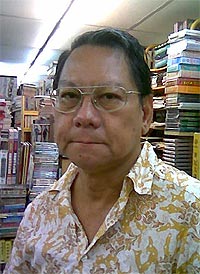 The order was issued when the then 25-year-old Cheah was studying in the island republic.
"I now travel to China every month and also to other parts of the world. I'm busy with my business these days, and Singapore does not matter much to me," said the owner of a Chinese-language book outlet.
However, Cheah revealed that he was allowed to enter Singapore twice in the late 1980 and early 1990 as "a corporate representative" of a well-known China-based Chinese-language book publishing house.
"The company applied to the Singapore government to enable me to attend an international exhibition of Chinese-language books as its business representative," he said.
"But the two occasions were an exception and I think the business-minded Singapore authorities had to 'give face' to a major China-based business concern," he added.
Cheah conceded that not too long after the order was served on him in 1965, he had appointed a lawyer to have it revoked but it was unsuccessful.
Protests against Lee Kuan Yew
Cheah, a former undergraduate in the now defunct Chinese-language Nanyang University in Singapore, was expelled from the university 45 days before his graduation in 1965.
He was involved in the widespread protest against the language-switch policy of the ruling People's Action Party of ex-prime minister Lee Kuan Yew.
Nanyang University, set up in 1955, was a Chinese-language university privately funded by the Chinese communities in Malaysia and Singapore. It ceased to exist in 1980 and its facilities were incorporated into the state-run English-medium Nanyang Technological University.
"After the expulsion from the university, I went into hiding for a while but as the repression intensified, I returned to Malaysia and found the banishment order posted to my house by registered mail," Cheah recalled.
"The order was signed by the then deputy prime minister Dr Toh Chin Chye. When he was politically marginalised by Lee in the late 1970s and early 1980s, he came to Malaysia. How ironic," Cheah said.
Detained under ISA
Upon returning to Malaysia, Cheah found a job as a journalist with the Sin Chew Jit Poh.
In 1974, he was detained for one year without trial under the Internal Security Act for alleging being a member of the clandestine "Communist United Front" responsible for writing, printing and distributing "subversive publications".
According to him, there were about 200 to 300 former Malaysian students at the Nanyang University who were served with the banishment orders.
Earlier this week, well-known veteran Chinese educationist and malaysiakini columnist Lee Ban Chen also called for his persona non grata order to be revoked.
On July 10, the Singapore government announced the lifting of the persona non grata order against Malaysia's prominent lawyer Param Cumaraswamy and environmentalist Gurmit Singh.
Similar orders against Malaysian academics Dr Chandra Muzaffar and Dr Jomo K Sundram were also lifted in 2003 and 2004 respectively.


Report this comment
Are you sure you want to delete this comment?
This action cannot be undone.