




Govt pressed to discontinue NEP
The disclosure that the bumiputera share ownership on the Bursa Malaysia hit 36.64 percent last year has proven that findings of two local studies were right, argued an opposition leader.
The disclosure that the bumiputera share ownership on the Bursa Malaysia hit 36.64 percent last year has proven that findings of two local studies were right, argued an opposition leader.
DAP secretary-general Lim Guan Eng, an accountant by training, said this shows that the 30 percent bumiputera equity ownership targeted under the New Economic Policy (NEP) has been achieved.
 Deputy Finance Minister Dr Awang Adek Hussin had revealed in the Dewan Rakyat yesterday that the bumiputera share ownership in relation to listed companies on the main and second boards of Bursa Malaysia reached 36.64 percent as at Dec 31 last year.
"What Awang Adek said has confirmed the findings of Dr M Fazilah Abdul Samad of Universiti Malaya (UM) and the Asian Strategy and Leadership Institute (Asli) report prepared by Dr Lim Teck Ghee," Guan Eng told a press conference at the Parliament building today.
Both studies - which the government has rejected - claimed that the NEP target has been achieved. The Asli report put equity ownership at about 45 percent, while the UM researcher said this stood at 33.7 percent in 1997.
"With the deputy minister's revelation, the government has admitted it is wrong and has a moral obligation to apologise to Teck Ghee. Let us seek truth from the facts," said Guan Eng.
Teck Ghee, who was a director at the Asli Centre for Public Policy Studies, resigned in protest after his report was retracted by Asli president Mirzan Mahathir, who said the methodology was flawed.
Accounting principles
Guan Eng pointed out that the government's argument that bumiputera equity ownership remained below the 30 percent target - at 18.9 percent last year - could not hold water.
The calculation is based on par value of shares involving more than 600,000 registered companies, rather than over 1,000 listed companies.
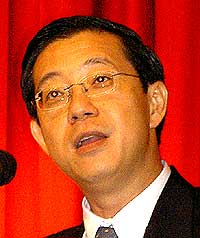 Countered Guan Eng: "Everyone knows, under simple accounting principles, that using the par value calculation is not realistic because only the market value can gives an actual picture. Also, listed companies are the ones with real value, not unlisted companies."
On the same note, he urged ex-UM economics and administration faculty dean Dr Fong Chan Onn - now MCA vice-president and human resources minister - to help explain the matter to the government.
According to Guan Eng, Fong had said market value is a real measurement in such calculations.
The DAP leader also called on the government to review the NEP, saying it should have been discontinued in 1997 when the 30 percent target was achieved, and said the focus should be on distribution of wealth.
Competitiveness at stake
Met at the Parliament lobby, Gerakan Wanita chief and Bukit Gantang MP Tan Lian Hoe said the government should not prolong the NEP by implementing racial-based affirmative action policies.
She said the figures on the bumiputera equity ownership, whether these exceed 30 percent or not, do not matter to her personally as she is more concerned with Malaysian competitiveness.
 "The NEP actually hinders the competitiveness of bumiputeras because they think everything will be supplied by the government. They are waiting to get equity without (having to be) innovative or competitive in every aspect," she said.
"The NEP should be ended soon. The more it is prolonged, the more it will keep people from moving forward - it could make them go a little backwards."
 PAS secretary-general and Tumpat MP Kamaruddin Jaffar said Awang Adek's reply has "raised more questions than (it has provided) answers".
He said the government should conduct a series of studies to probe how wealth has been distributed among the bumiputeras.
 Umno Terengganu information chief Ahmad Shabery Cheek, however, disagreed with the argument that the NEP target has been reached.
The 36.64 percent only represents bumiputera shares in listed companies and it does not encompass the majority companies which are not publicly listed, he said.
He argued that the NEP spirit is still relevant in bridging wide income disparity within the bumiputera community, but conceded that the NEP has been misused by some quarters and that the government has to look into the problem.


Report this comment
Are you sure you want to delete this comment?
This action cannot be undone.