




The 'monumental' debate
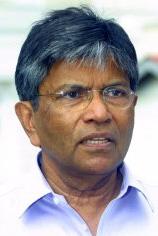
Information Minister Zainuddin Maidin - or Zam as he is popularly known - is not new to controversies.
For all the opposition parties, politicians and their supporters as well as non-governmental organisations, the name Zam is synonymous with old-fashion propaganda, especially the negative types that attempt to portray, through the controlled mainstream media, any political threats or ideational challenges to the ruling group of the day in negative light.
Information Minister Zainuddin Maidin - or Zam as he is popularly known - is not new to controversies.
For all the opposition parties, politicians and their supporters as well as non-governmental organisations, the name Zam is synonymous with old-fashion propaganda, especially the negative types that attempt to portray, through the controlled mainstream media, any political threats or ideational challenges to the ruling group of the day in negative light.
As such, he was, of course, loved by politicians from the ruling parties, including the Malaysian Chinese Association (MCA).
 However, his standing within the ruling circle began to show cracks when he was publicly attacked in the Umno-controlled newspapers like the
New Straits Times
for trying to be "the chief editor of the Malaysian media" and also not improving the contents of the government-owned Radio Television Malaysia (RTM) to compete with other domestic and international radio and television systems.
However, his standing within the ruling circle began to show cracks when he was publicly attacked in the Umno-controlled newspapers like the
New Straits Times
for trying to be "the chief editor of the Malaysian media" and also not improving the contents of the government-owned Radio Television Malaysia (RTM) to compete with other domestic and international radio and television systems.
Now, he has even upset politicians and supporters of MCA and caused a really widespread and multi-partisan uproar in the Chinese community by stirring up the very emotional as well as multi-dimensional issue of "communist monuments in Chinese graveyards" at a time when many other national issues and controversies have already put the ruling coalition, including the MCA, on the defensive.
For according to an estimate cited in a memorial service by the Chinese community in Kuala Lumpur in 2003, during the Occupation, about 70,000 people of all ethnic communities were killed, while another 80,000 perished as the result of tortures and imprisonments and also an additional 300,000 died because of malnutrition and physical exhaustion in performing forced hard labour.
It is estimated that 300,000 Chinese perished. The figure represented 17 percent of the then entire Chinese population in Peninsular Malaysia and Singapore.
Boiling point
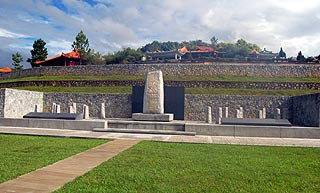 So, it is natural the issue reached boiling point a few days ago when Negeri Sembilan Menteri Besar Mohammad Hassan reportedly ordered the demolition of the monuments in Nilai Memorial Park. However, he later retracted the statement through the good office of the Negeri Sembilan Chinese Assembly Hall.
For some Chinese, Zam's statement effectively serves to equate Chinese with communism vis--vis what is assumed to be the anti-communism of the entire Malay community thus causing even more serious inter-ethnic animosity or racial polarisation.
These Chinese share with Zam the underlying assumption that communists are necessarily or by nature bad guys and that there have never been communists of ethnic Malay and Indian origins.
However, there were other Chinese who argue that there is no need to be apologetic about the historical truth that it was the communists who inaugurated, organised and operated the principal and the only effectively functioning guerrilla force, namely the predominantly Chinese Malayan People's Anti-Japanese Army (MPAJA) that provided armed opposition to the 44-month Occupation.
On the contrary, they opined, the multiethnic nation as well as the Chinese community should feel proud of these communists who chose to stay behind to fight after the colonial troops had been defeated and forced to flee to safe havens like India or Australia.
It is obvious that the second school of thought does not share the idea of Zam as well as the first group of conservative Chinese, that all communists are, necessarily or by nature, bad and can do nothing good.
History is history
As one of them observes, last year, the Russian people were allowed to publicly display the red flags and portraits of VI Lenin and Joseph Stalin in commemorative ceremonies of the 60th anniversary of the end of WWII and victory of former Soviet Union's Great Patriotic War, although the USSR had disintegrated in 1991 and the communists are no more in power.
"In China, leaders and members of the defeated Kuomintang in Taiwan, Hong Kong or elsewhere in the world are allowed or even welcome to visit the mainland to pay tribute to the party's founder Dr Sun Yat-Sen although China has been ruled by the communists since 1949," said the former committee member of a major Chinese association.
"History of mature societies cannot and must not be erased or distorted with political changes or with the passage of time," he added.
Although Zam has backed off from further debates by publicly announcing that the issue is now 'closed', he has paradoxically started in the Chinese and other communities a process of critically re-examining the nation's official history and it seems that was not what he intended as next year will be the 50th anniversary of the lowering of the Union Jack in Peninsular Malaya.


Report this comment
Are you sure you want to delete this comment?
This action cannot be undone.