




Tian Chua - Bold or reckless?
He has lost count of the number of times he has been arrested. He was also detained under the Internal Security Act (ISA) for two years for allegedly attempting to overthrow the government through militant means.
Some admire his boldness, others say he is reckless. Meet Tian Chua.
He has lost count of the number of times he has been arrested. He was also detained under the Internal Security Act (ISA) for two years for allegedly attempting to overthrow the government through militant means.
Some admire his boldness, others say he is reckless. Meet Tian Chua.
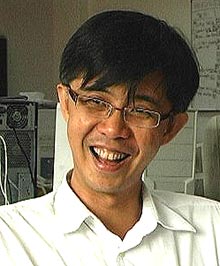 Unlike other opposition leaders, the Parti Keadilan Rakyat (PKR) information bureau chief has a tendency to attract media coverage for all the wrong reasons.
Recently, the 43-year-old politician added another 'feather to his cap' when he was arrested over an attempted murder charge.
Media reports alleged that he had ploughed through a barricade with his car, nearly running over a worker, during a demolition of squatter houses in Kuala Lumpur.
But Chua denied this and is mulling a law suit against the police and media for defamation.
Malaysiakini met him recently in an attempt to find out what makes Tian Chua tick.
Malaysiakini: Why do you attend these protests and demonstrations and get yourself arrested?
Chua: I don't think I choose to be arrested. I think it is the sad reality in Malaysia that the authorities get nervous when people group together to demand something, to question the authorities and so on.
I'm just exercising my right as a citizen to be involved, to do what I think we're suppose to do. And if the police or the authorities decide to use uncivilised ways to respond to the situation - that's very unfortunate. So it's really not my choice.
When stories about your 'attempted murder' came out in the papers, some said you were trying to be a hero. What is your response?
First of all, I feel very upset that whenever something happens, I am always targeted as the instigator or as someone who is hard to deal with. The Kampung Berembang (incident) was a case of squatters being evicted. I was there to provide support, just like many others.
I would even venture to think it was premeditated on the part of the police to handle the case the way they did. I mean, even if I did not turn up, it might have happened (to somebody else) just that probably the media won't report the case in the same way or have no scapegoat to put all their blame on.
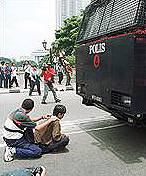 Are you the most arrested politician?
No, I don't think so. Actually I'm not sure, if you want to go by the records of the reformasi days maybe I was arrested many times but as far as I can remember, people like Tan Soo Kow and Nasir Isa were arrested on more occasions than me. There were many people who are not so well-known and not seen as leaders who were arrested many times.
Do you remember how many times you've been arrested?
(That is) a bit hard to remember. But my first arrest in the country was in 1996 or 1997 when East Timor was undergoing the Dili massacre. A friend of mine, Kamal (Bamadhaj), was killed in Dili. So I went to protest in front of the Indonesian embassy. That was my first arrest - the first time I was arrested in Malaysia.
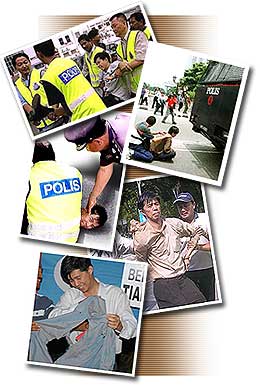 A rough estimate on the number of arrests?
Probably about a dozen times.
Do you remember the details of your first arrest?
The routine is always the same. I get arrested and the SB (Special Branch) comes and interviews, asking me things from my kindergarten days to the day before I came to the protest. Go through hours of questioning. Back then, we were silly enough to answer all the questions and then you get bail and you're out. So from there on, the rest have been the same. That was 10 years ago.
What about the more distinctive arrests?
Most of the time we were arrested during the reformasi days, that was probably the usual phenomenon. Not only me but many other Malaysians faced the same problems.
Were you charged in court?
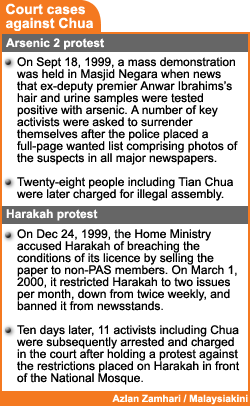 Currently, I'm facing two charges which are still on trial. One is the arsenic case. That was the time when Anwar Ibrahim was (allegedly) found to have been poisoned by arsenic and we had a demonstration at the National Mosque. The trial is still going on.
The other was the issue of defending press freedom. (PAS organ) Harakah was restricted from (publishing) twice a week to once every fortnight. We thought that was very unfair. So the reform movement gathered activists to demonstrate and I was charged for that too.
It (the case) will go on for another few months before a final decision is made.
What about the suits you have filed?
I took up two civil suits against the government and the police. One is the Apcet II case, where the East Timor conference was interrupted by Barian Nasional Youth members. At the end of the day, we were arrested and detained. So we are demanding compensation for that.
Second, I took up a case together with other detainees against our illegal detention under the ISA.
Were there any interesting or amusing moments during your incarcerations?
Most of the people who have been arrested have a story to tell. So (I) take the opportunity to talk to them. All of them will give us some funny stories but there are also some sad stories. I always find people are detained unjustly, it's a crazy situation to be in.
I think that's why I would encourage people not to be afraid of detention. What's interesting is that if we survive lock-up then we can survive anything - ISA, EO (Emergency Ordinance), anything. (Police) lock-up is normally the toughest, not in terms of the length (of detention) but the environment.
What exactly is the arrest routine like?
I think to make Malaysian civil rights a bit more meaningful, it would be good that people from high school onwards learn in real sense how to undergo arrests because that is where a lot of abuses can happen.
When young and facing an arrest situation, most of them are afraid and give up their rights and allow themselves to be abused because they don't know their rights and don't know the procedure. So that's why I would advocate that it would be good that high school students, Form 4 or Form 5, be trained and should go to the lock-up and undergo a certain simulation so that they know (what it is like).
(Imagine you are a) poor student (after) Form 5. (You decide to) take a bike and go out to have 'teh tarik'. At midnight, you get caught by the police and they lock you up for one night and you don't know what to do. You're afraid and all. That sort of routine is very simple.
The police arrest you and they'll tell you why you're being arrested, they have a right to take a statement and in the statement you don't have to reveal very much. Most people don't know about these so they are frighten and easily intimidated.
Do you promote the idea that more people should attend demonstrations and protests?
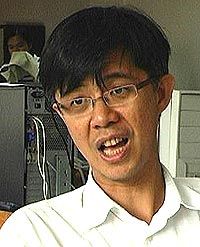 I think it is not that we should protest more or have more demonstrations. Actually, a lot of time people protest (because they have) no choice. Not that they love to protest.
Let me give you the example of Kampung Berembang. What else can they do? The villagers probably prefer to sit down at a table, have a cup of coffee and chat with the developers with the presence of the menteri besar and discuss things.
If the politicians can persuade them to move out and (convince them) that they can live in a nice environment and show them some model houses, the villagers would probably have a few suggestions and finally (they would make a) deal and move there happily. If that is the way the authorities choose to conduct (themselves), the whole issue of evictions and moving (out), there would be no need for protests.
I don't think they (the villagers) like to be dragged by the police or be forced to argue with Rela officers and things like that. I can spend my time writing press statements - that is even better. Why should we go and demonstrate?
But when there is a situation where people come early in the morning with a full force, with thugs and hammers and everything to break down your house and there's no avenue for discussion, then there is no other option but to protest, to create public awareness, to physically defend your property and life. That's natural. We can't blame them for doing that.
Are those the same views you have for the toll and petrol hike demonstrations?
Yes, I think that in a democratic society where our vote cannot influence the decision of the legislators or when it is too late to wait until the five-year ritual of voting, then the civil society is left with only one option, that is to air out immediately (the grievances) to attract attention. That's why peaceful gatherings are part of a democratic society and this is the only way they can express their views and get coverage from that.
In a mature democracy, the ruling party or the legislators as a whole should be taking this opportunity as a form of feedback. With a lot of people attending a gathering peacefully, that would give a signal as to how popular the issue is. The legislators and the government can then respond appropriately. This is part of our democratic system - to channel back our views to the people in power.
What about the role and impact of pressure groups or policy-making think tanks compared to street protests?
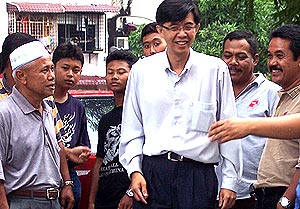 I think it's not (an) either-or (option). There are no societies that operate only with this sort of method or the other way.
I think if you use the example of war, even in countries with matured democracies like the US or in Europe, the government must choose a certain advantage or choose to select certain policies that are being forwarded by certain groups probably from arm dealers and maybe the big media groups decide to advise the leader or president that a war in Iraq is good or a war in Iran is good for the country.
And the leaders decide to take this risky advice and the people should have other options to show that this is not the right way.
So this is why I say that it's not either-or. I mean, of course, a good leader will say I want to hear all views and make a judgement over what is best for the country. That is assuming that those in the leadership are always making the most rational decisions, but in reality that's not always the case. So the people must have other options to air their views.
Obviously different politicians have different ways of doing things. What do you think of politicians who never attend protests?
I think everyone has a role to play. I don't think we can make comparisons like that. I'm not a politician who always goes to protest, it happens that in this country it is not easy to break through the media control. Many people spend hours and days and months doing research and trying to present to the authorities or decision-makers with what is the best for the country.
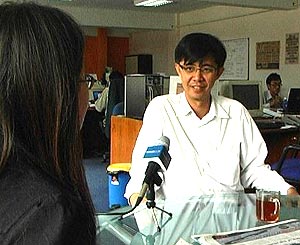 Even the opposition must do that sort of work and also receive those sort of inputs so that we can better ourselves if we have a chance to govern.
Unfortunately, those sort of things don't get coverage in the media. The media tends to take up issues which look interesting and controversial.
I think certain media like to portray the civil society or civil rights groups and the opposition as being inclined towards violence. So they give big coverage to things like that.
If I do a PC (press conference) and try to analyse the trend of the economy and why the government shouldn't use EPF (Employees Provident Fund) to buy RHB Bank, maybe I won't get anything (media coverage).
But in contrast, if a RHB staff comes out to picket and say "this (takeover) is wrong, this is outrageous, we shouldn't allow EPF to buy over RHB because this is against the principles of good governance", that will get some coverage. So in that sense, it is necessary to publicly air your views so that there will be attention.
Do you feel the media focused on you and your personality more than the fact that houses were being demolished in Kampung Berembang?
Yes. That is precisely what I regret so much and I think it was done deliberately. Instead of talking about the conflict of interests, where a state government gets involved with a development project and instead of the plight of the villagers who have been there for generations and not getting a fair deal, they (the media) talk about Tian Chua trying to murder someone. That charge was so deliberately crafted in order to divert attention.
Was this especially evident in the photos that were published?
Yes. I think that was precisely it, they wanted to give an image of a violent person. So I don't see why that was necessary. Even if the police say "come with me to the police station", I wouldn't have resisted. They don't have to manhandle me. They didn't have to tear my shirt and use so much force.
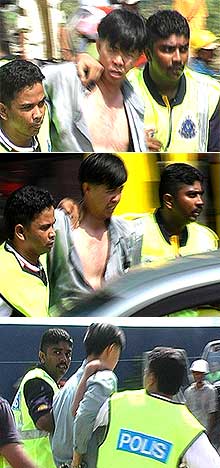 It was quite odd. Our interpretation of what was legal on that day was that the court gave an injunction to allow developers to come in and proceed with their work but they did not have the right to destroy property.
So we should allow the contractors to come in and if they want to set up their machines and clear the land, that is fine. We didn't think that they should break down the houses.
The (villagers) should have been given proper time to move out. So we defended the houses. We sat in (the last house standing) while the developers and contractors pulled down the walls.
The police did nothing. We linked arms and did not want to move. But the employees of the contractor, using very rough methods, started to attack us. So in the melee and confusion, the police started to assault (us) too. By right, they should have separated us from the contractors and their thugs but instead the police attacked us.
I was dragged in the mud, they pulled me along with my shirt (causing it to be) torn off, forced my face down on the ground, locked my hands with handcuffs and, of course, my glasses fell off. So I really think it was unnecessary. Why should they handle it this way. They could've have just arrested us and asked us to follow them to the police station or go to the police car. It was deliberate and I feel that I was targeted for such humiliating treatment.
And this happened after you allegedly tried to 'kill' a person?
That's why I think the news reports, especially the one on TV3, are very misleading. (It tried) to create a situation that the whole event was about me trying to kill somebody. That's really fictitious and malicious.
(That day) in the morning, I (went to the village at) about 8:15am. The developer was sealing off the whole area with a fence, and to me this was illegal. They cannot lock people inside and cannot stop people from going in, especially when the land status is still in dispute. I was invited by the villagers to come, observe and support them. But I was blocked, I couldn't go in.
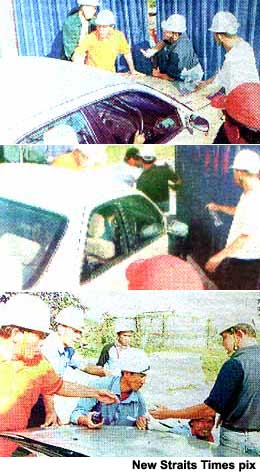 Then I got into my car and used another entrance. Then I saw a truck moving in and out. So I followed the truck to the gate and the developers tried to close the gate and I thought that was wrong. I moved slightly to the front when some of the contractors withdrew a bit and the gate opened.
So I took the opportunity to move my car into a position where the gate cannot be closed. So I was there, and there was a stalemate. Some of the workers tried to push the car out, some of them even jumped on my car. I was afraid that they might break the windscreen, it was quite rough and violent.
So I revved (the engine) a little so that they wouldn't do anything violent and they backed off. The front (was) clear, so I drove through. I did not see anybody get run over. I was aware that no one was under my wheels. Otherwise, I would not have gone through the gate.
I parked my car and no policemen came after me and said "look someone is injured and you will be taken in for careless driving" or anything like that. There was nothing. So I hung around the village for about two hours before my arrest.
We understand you were not alone in the car?
There were two others - one journalist and a freelance photographer and there were witnesses there. I challenge the police to produce the person, who was described by TV3 as 'cedera parah' (seriously injured). Show us anyone that was injured. The stories even went to the extent that the person who I 'ran' over was a police personnel who has been hospitalised with serious injuries. This is malicious, designed to spread or give the impression that I behaved violently.
Watch the nine-minute video here.


Report this comment
Are you sure you want to delete this comment?
This action cannot be undone.