


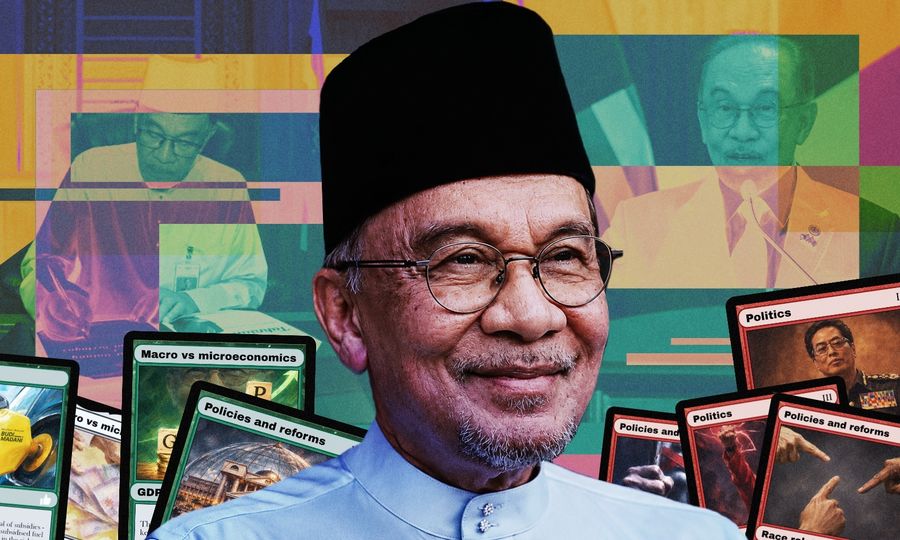

Cards on the table: The good and bad of Anwar's 4 years in power
EDITORIAL | Today marks Anwar Ibrahim's fourth anniversary as prime minister, and as he enters the final stretch of his first five-year term, it's time to lay his cards on the table.
Although his approval rating has been middling at around 50 percent this year, the Pakatan Harapan coalition he leads has been on the losing end in four successive state elections - with the last three swept by the "blue wave".
He has not always been dealt the best hand, but has Anwar played his cards right? Has his premiership made Malaysia a better place? What could have been done better, and does he still have an ace up his sleeve to win him a second term in office in the 16th general election?
Malaysiakini editors asked these questions and compiled a recap of his tenure thus far...
EDITORIAL | Today marks Anwar Ibrahim's fourth anniversary as prime minister, and as he enters the final stretch of his first five-year term, it's time to lay his cards on the table.
Although his approval rating has been middling at around 50 percent this year, the Pakatan Harapan coalition he leads has been on the losing end in four successive state elections - with the last three swept by the "blue wave".
He has not always been dealt the best hand, but has Anwar played his cards right? Has his premiership made Malaysia a better place? What could have been done better, and does he still have an ace up his sleeve to win him a second term in office in the 16th general election?
Malaysiakini editors asked these questions and compiled a recap of his tenure thus far, broken down into three components - the economy; governance and reforms; and politics.
We also have a wishlist of what Anwar should deliver in the year ahead, in the hope that he can change the game, score more victories and leave a meaningful legacy.
Economy
Budi 95
Good: While not a complete removal of subsidies - as the rich are still entitled to subsidised fuel - making aid targeted is a step in the right direction for the economy.
Lowering the quota to 200 litres of RON95 per month to minimise the impact of the Iran war on the economy is also commendable.
But: Restoring the quota to 300 litres a month while oil prices remain higher than when the limit was slashed is questionable.
Admittedly, some motorists do need a higher quota. However, the decision has been largely viewed as a populist move aimed at shoring up dwindling support for his Harapan coalition.
It also undermines the government’s own arguments that 80 percent of people use less than 200 litres of RON95 monthly, while forcing the government to foot a subsidy bill that could exceed RM40 billion next year.
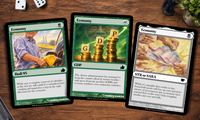
Macro vs microeconomics
Good: The Anwar administration has kept the country afloat in stormy weather, with gross domestic product (GDP) and revenue numbers even outpacing estimates.
This includes maintaining strong ties with both China and the US to keep the flow of investments and trade going.
But: People are still feeling the pinch from the high cost of living, a matter that Anwar himself acknowledges.

Grey area: While households are still struggling, the government has been slashing cash aid for Rahmah Cash Contribution (STR) recipients in favour of more grocery credits - while keeping total aid the same - for two years.
The Anwar administration hasn’t once said it out loud or explained its rationale - with details instead buried under FAQs that only talk about the new payout figures.
While it’s arguable that credits to buy household goods will free up cash and deter misuse of government aid, economists have warned that credits won’t help struggling families pay rent and bills.
Governance and reforms
Transparency
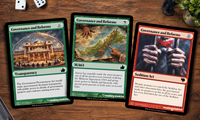
Good: The Government Procurement Act would make procurement decisions transparent, with public access to details of government projects and contracts starting next year and a tribunal system for contractors to raise issues.
It’s being touted as a fix that could prevent future mega-scandals like 1MDB.
But: Critics say the finance minister has too much power under the law, including the authority to exempt statutory bodies, local authorities or other government entities from having to follow the Act.
In progress: There’s hope for greater transparency in how the government operates once Putrajaya brings a reworked freedom of information law back to Parliament.

However, there is some scepticism about whether Anwar’s government can deliver. An earlier draft was heavily criticised for preserving the Official Secrets Act and putting up obstacles to getting information.
Institutional reforms
In progress: A lot is riding on Anwar to deliver on two major bills, the separation of the role of attorney-general and public prosecutor, as well as the prime minister term limit.
On paper, he has enough numbers to pass both, but until then, Malaysiakini will reserve judgment on marking them down as successes.
But: The bill on the attorney-general and public prosecutor separation and proposed mechanisms to allow Parliament to vet public prosecutor candidates raise a major question.
Why isn’t the same being done for the role of MACC chief and other key posts when there is bipartisan support for it?

Bad: One major reform Anwar has not done is making the Judicial Appointments Commission free of the prime minister’s influence. This is despite the Conference of Rulers telling him to do so shortly after he became prime minister.
Instead, the JAC was the subject of scandal last year, after allegations of interference surfaced. Anwar’s appointees to the JAC have also come under scrutiny.
MA63
Good: Anwar has arguably made the most progress out of all his predecessors towards realising the Malaysia Agreement 1963 (MA63) and giving more power to Sabah and Sarawak, with special grant payouts to both states at record highs.

But: While the prime minister has agreed to grant East Malaysia one-third of seats in Parliament, this should have been one of the first things he signed off on. There is no reason why it should have taken almost four years.
The exercise could have coincided with the Election Commission’s redelineation work for Sarawak state seats. Instead, it’s now another separate process that likely won’t be done in time for the next general election.
Human rights
Good: Attempted suicide was decriminalised in line with international standards that treat such incidents as a mental health issue that requires care and compassion instead of criminal justice.
Together with the abolition of the mandatory death penalty during Anwar’s first year as premier, these are key humanitarian policies that will likely have a lasting impact.
Bad: Despite promises to repeal the Sedition Act and other draconian laws, the government made no progress on this at all for years, and has even defended the use of the Sedition Act.
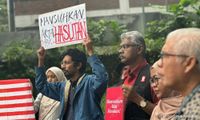
It wasn’t until Aug 29 this year that Anwar said all colonial-era laws must be abolished - although he didn’t get into specifics.
Bad: Alleged abuse by police and prison officers persists under Anwar’s watch, notably in the Taiping prison “riot” case, the death of Noorizwan Zulkefly, and the Durian Tunggal shooting case.
Constituency funding
Good: All constituencies in the country are eligible for development funding from the government.
But: Only government MPs get to manage that money. Funds in opposition seats are handled by government coordinators - not unlike how Najib Abdul Razak used to do it when he was premier.
Anwar’s insistence that MPs must negotiate with the government for funds or sign a confidence and supply agreement goes against Harapan’s GE15 election pledge towards equal funding while giving his government an advantage over opposition MPs.
It also denies opposition MPs the capacity to better serve the people who voted for them.
This could be one issue that will haunt Anwar and Harapan if they lose the next general election and are denied funding.
Clumsy policymaking
Bad: Anwar’s government has a tendency to announce abrupt policy decisions that are not ready for implementation.
Examples include removing nicotine from the Poisons List without any other replacement legislation ready, making it legal for quite some time for minors to buy nicotine products.

There was also the decision to fast-track the optional enrollment of six-year-olds into Year 1 of primary school in 2027, despite schools not being ready. A proposed screening test to determine if such children were ready was also scrapped just a week after it was announced.
The Jalur Gemilang badge was also made mandatory for students in 2025, but the government scuttled the idea in weeks.
Politics
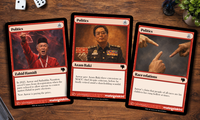
Saving Zahid
Bad: Five months into his first year as prime minister, Anwar - through Home Minister Saifuddin Nasution Ismail - saved Umno from deregistration when the party decided on a no-contest for Ahmad Zahid Hamidi’s presidency.
Now Anwar is paying the price. Zahid - who is the deputy prime minister - and his party Umno are abandoning Harapan, pummelling it in elections, and are charting a course that could see it sweep to power in the next general election by allying with Perikatan Nasional.

While Umno remains a federal partner - ostensibly due to “compliance” with the royal decree to form the coalition government - the frequent public clashes undermine government stability and Anwar’s grip on power.
Weak party management
Bad: Factionalism in PKR has been a long-standing problem, and this continued under Anwar’s premiership.
While the party president claims not to take sides, the situation came to a head in the 2025 party polls. Originally, both Anwar and his then deputy Rafizi Ramli were supposed to retain their posts.

However, Anwar did not intervene when an anti-Rafizi camp put up his own daughter, Nurul Izzah, as a challenger.
While Nurul Izzah won, it was a pyrrhic victory for the Anwar camp, as she maintained a relatively low profile after being elected before filing her resignation a year later.
Rafizi, meanwhile, has a new party, Bersama, which is nipping at PKR and Harapan’s heels.
Azam Baki, corruption
Bad: Anwar is often bellicose about graft, but his actions fall short due to political expediency - such as in the Sabah mining scandal, which even ensnared a member of his inner circle.
While two Sabah politicians, the whistleblower-cum-bribe giver Albert Tei, and Anwar's former political secretary Shamsul Iskandar Akin have been charged, other major figures implicated in the scandal, including Anwar ally and Sabah Chief Minister Hajiji Nor, haven’t had any official pressure placed on them.
The government has also been slow to act on the "corporate mafia" allegations, which another member of his inner circle, Farhash Wafa Salvador Rizal Mubarak, who was the prime minister's former political secretary, has also been accused of.
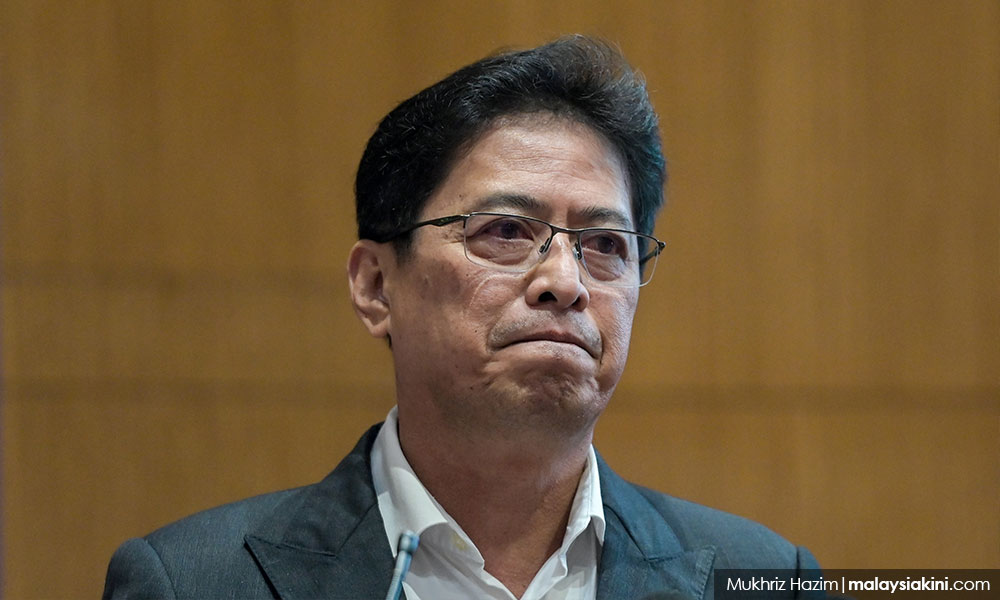
Then there’s the matter of Azam Baki, who received three extensions as MACC chief despite criticism before finally retiring amid a shareholding scandal, on top of being implicated in the "corporate mafia" scandal.
Both Azam and Farhash have denied the allegations against them.
Anwar has recently promised that he would not shield either Farhash or Azam if their names crop up in the "corporate mafia" probe, but that investigation took a long time to get off the ground.
We still don’t know what happened to Azam’s shareholding probe, even though that was completed in March.
Race relations
Bad: Anwar’s claim that people of all races are his children has rung hollow at times.
Among the criticisms are accusations that he bullied an Indian teenage student asking for meritocracy in education, his handling of the KL Hindu temple row and his remarks about “kuil haram” (illegal temple) - which he has apologised for - as well as slow responses to racially charged remarks, especially when it involves Umno.
Anwar’s position on these matters is viewed as part of his attempts to widen Harapan’s appeal among Malays. However, that has borne little fruit and has often come at the expense of non-Malays who were the coalition’s key supporters.
Wishlist
One year is not much time to pass legislation, especially when a second term is not guaranteed. That said, we believe there are some things that can be achieved if Anwar puts his foot down.
Moreover, most of these are all promised in Harapan’s election pledges for 2022.
Abolish the Sedition Act
This is a low-hanging fruit for Anwar. He has already said that outdated colonial laws should be abolished. Now he just needs to give the order so that Parliament can abolish the Sedition Act.
There’s no need for replacement laws either, as existing Penal Code provisions should suffice.
Electoral reforms
The first-past-the-post system plus unresolved gerrymandering clearly isn’t working - not just for Harapan but also for voters.
Take the Malacca polls, for example, 29.3 percent of voters in the state voted Harapan, but the coalition only won 14 percent of seats.

The solution may lie in the Electoral Reform Committee report, which was commissioned by the first Harapan government, but largely remains under wraps. Declassifying this document should be a priority.
Another easy win would be to extend postal voting rights to East Malaysians living in the peninsula and vice versa.
Equal funding and political donation laws
Anwar should honour the Harapan manifesto and grant equal constituency development funds to all MPs, no strings attached. His coalition will thank him if they’re relegated to the opposition in the future if this process is legislated.
On that same note, the Anwar administration should prioritise passing a law on political funding. We can’t allow another “Arab donor” scandal to emerge in the future, regardless of who is in power.
Institutional reforms
Anwar can empower a committee in Parliament to review the Official Secrets Act classification, except in matters of national security.

Alongside the separation of the attorney-general and public prosecutor, which is already in the works, Anwar can also legislate laws that ensure the public prosecutor, as well as top officials of the police and the MACC, have security of tenure so they are not arbitrarily cut short by the sitting prime minister.



Report this comment
Are you sure you want to delete this comment?
This action cannot be undone.