




Politics, not religion, the cause of conflicts
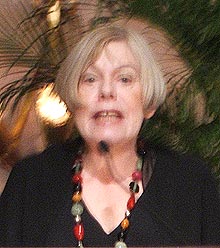
Karen Armstrong is convinced that religious conflict is caused by political tensions, and not by inherent flaws in the religion itself.
Karen Armstrong is convinced that religious conflict is caused by political tensions, and not by inherent flaws in the religion itself.
"Religious tensions are exacerbated by political warfare, and not the converse," said the well-known author, faith activist and self-described freelance monotheist in a public lecture in Kuala Lumpur today.
Armstrong spoke eloquently on the bare fundamentals of faith, insisting that all major world religions came down to the same thing: compassion.
"If we dig down to the core of all religions, we uncover the same message. It is a message of peace and justice...It is the core of all human religion," she said.
This close companionship - Armstrong refers to it as a "family resemblance" - is nullified by tense political climates all over the world, resulting in the severe breakdown between religions that has often led to warfare and grief.
Love and compassion
Armstrong hopes instead to revive discussion on the main similarity between religions, the message "love your neighbour as yourself". The author drew from a wide range of religions, quoting various sages, teachers, prophets and gurus to show that each faith has its roots in a vast love for humanity and deep compassion for the suffering of others.
 "Confucius was the first person to say that religion cannot be separated from altruism," she said, adding that the teachings of Muhammad, Jesus, Rabbi Hillel, Buddha and other major religious teachers could also be boiled down to a message of love.
Armstrong believes that the answer to the world's suffering exists within religion; the active practice of this universal compassion without regard for one's own self.
"It is not enough to enjoy religion as a nice peaceful glow." Armstrong insists. "Religion requires that we push aside our ego, overcome our revulsion for strangers, and reach out in compassion and love."
"Only then will we glimpse God." she said, adding that suffering and injustice in the world called for believers of all faiths to unite together under a banner of active compassion.
Armstrong also added that inter-faith dialogue should be action-based and not just "talking shops".
"There are often impasses due to doctrinal differences," she said, "which should not prevent believers from taking action on beliefs that they do have in common."
Value of pluralism
Responding to a question from the audience, she said she hoped that Malaysia's political climate would open up enough to allow freedom of thought and discussion among people of all faiths. Armstrong, whose book The History of God has been banned in Malaysia, urged Malaysians to consider the value of pluralism.
 "Pluralism allows us to learn from other cultures as never before," she said. "Each religion has its particular genius, and each religion also has its particular flaws and failings."
Armstrong convinces us to take a better look at other religions, putting all misunderstandings and bias aside to see each faith for what it truly is: compassion for the other.
"We will never be able to be religious in the same way again." she said.
Armstrong is in Malaysia to speak at a conference, organised by the Institute of Diplomacy and Foreign Relations (IDFR) and the Ministry of Foreign Affairs, on understanding between Islam and the western world.
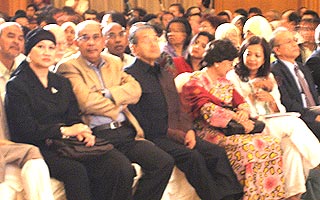
Among the audience were Foreign Minister Syed Hamid Albar and former premier Dr Mahathir Mohamad.


Report this comment
Are you sure you want to delete this comment?
This action cannot be undone.