




Floods and droughts: Future looks bleak
The country is expected to face serious challenges relating to flood and drought management in the future, said Drainage and Irrigation Department director-general Dr Keizrul Abdullah today.
The country is expected to face serious challenges relating to flood and drought management in the future, said Drainage and Irrigation Department director-general Dr Keizrul Abdullah today.
 Speaking at a seminar in Putrajaya, he said: "Per capita availability of water will greatly decrease as a result of the growing population and greater per capita use of water for a better quality of life, urbanisation and industrialisation."
According to a Bernama report, other potential problems to be faced by the nation in moving towards a developed state status include increased severity and frequency of flash floods, prolonged droughts especially during El-Nino years, water and land use conflicts, decreasing crop yield and increasing water demand for food production, pollution control, outbreaks of water borne diseases, declining aquatic biodiversity, deforestation and uncontrolled erosion and sedimentation.
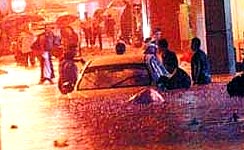
In a paper presented at the two-day National Seminar on Socio-Economic Impact of Extreme Weather and Climate Change, Keizrul said flooding was the most significant natural hazard in the country in terms of population affected, frequency, area extent, flood duration and socio economic damage.
"Having 189 river basins throughout Malaysia, the rivers and their corridors of flood plains fulfil a variety of functions both for human use and for the natural ecosystem where they are a fundamental part of the natural, economic and social system. At the same time, rivers might be the largest threat to the entire corridor areas," he warned.
As for drought, he said with Malaysia situated within the heavy rainfall region, the possibility of a serious drought is much less as compared to many other countries.
However, he said when drought occurs, haze is often a major issue which causes health problems, limiting visibility and deterring tourists and "hence, the management of drought needs to minimise the environmental impact of haze."
Indirect problems
Apart from these, Keizrul said there were also indirect problems associated with flood and drought management such as the need for appropriate institutions and legislation.
 He explained that matters pertaining to water, rivers, land and forest were under the jurisdiction of state governments while the gazetting of catchment areas was under the purview of the federal government.
"Presently, the need for gazetting of catchment areas that have been initiated by federal agencies do not always get the same level of support from state agencies.
"This may be partly due to the fact that the water catchment areas are providing state governments with much of their state revenue for other uses such as timber logging and industrial or township development.
"This situation will complicate flood and drought management in the country. To complicate matters, irrigation and drainage, including flood control, is a concurrent responsibility of both federal and state government," he added.
He suggested that development of policies, strategies and action plans to overcome flood and drought be based on a comprehensive approach taking into account a wide range of mitigating factors.


Report this comment
Are you sure you want to delete this comment?
This action cannot be undone.