




Winning over urban voters in Klang Valley
analysis As the campaign evolves in the capital of Kuala Lumpur and surrounding densely populated area of Selangor, it is clear that voting in the urban areas will be decisive in determining whether the opposition will pick up seats in the 2008 polls.
analysis As the campaign evolves in the capital of Kuala Lumpur and surrounding densely populated area of Selangor, it is clear that voting in the urban areas will be decisive in determining whether the opposition will pick up seats in the 2008 polls.
The reason are simple - two of the opposition parties, DAP and PKR, have fielded their stronger candidates in these areas and they are going all out to capitalise on the new mood of the electorate.
The energy at opposition ‘hot spots’ ceramah, from Brickfields to Petaling Jaya, is electric. The opposition is banking on the mobilisation around Bersih and Hindraf last November, the disproportionate negative impact of price hikes on inflation in the city and concerns about Mohd Khir Toyo's governance of the Selangor state government and town councils to turn voters away from the ruling Barisan Nasional coalition.
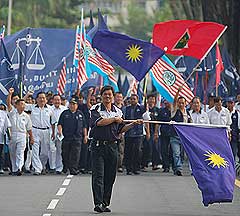 Urban voters are also the most nationally inclined, and are more informed where the BN government has not fulfilled its promises. Despite the attention that the campaign is generating, the reality is that the urban battle is an extremely difficult one for the opposition to win.
It is not impossible, however, as conditions are emerging that make the BN more vulnerable.
The obstacles to gaining support in the urban areas are significant. In my collaborative work with Ong Kian Ming, we found that urban areas (as compared to semi-urban areas) have been strongly in the hands of the BN in both the 2004 and 1999 elections.
Traditional studies of elections in Malaysia have seen the urban centre as opposition home ground, usually the home ground of the DAP. While this may be true in Sarawak, in the Klang Valley this has not been true since the 1980s. The view that the urban areas can be easily tapped is fundamentally wrong. The Klang Valley is no longer the same opposition terrain of the 1980s.
Urban areas have become a buffer for the BN because the majority of seats in the Klang Valley are mixed seats. Of the 34 parliamentary seats, an overwhelming majority have less than 60% of one ethnic group. There are less than a handful of Chinese-majority seats (over 60% Chinese).
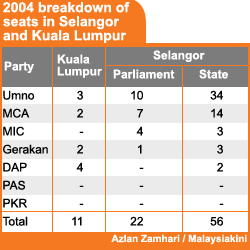 The Chinese are no longer a majority in Selangor and their share of Wilayah is also on the decline due to urban migration and higher birth rates among Malays. Appealing to mixed areas is difficult for the opposition. The DAP's appeal across races, notably to the Malay community is minimal. PAS faces the same difficulty. Even in the height of reformasi in 1999, PAS was not able to significantly woo non-Malays.
Gains for the opposition will depend on convincing voters that they can represent all races more effectively and collectively. The opposition's success in the urban areas will also depend on whether the opposition can work together with mutual respect for the differences in outlook of both PAS and DAP supporters. The painful seat negotiations within the opposition have led to an accepted ticket across parties, and the opposition is not as fragmented as it was in the 2004 polls.
Non-aggression pact
The opposition's non-aggression pact in the Klang Valley is working, and they have been able to focus on voters rather than petty infighting. Their push is toward a multi-ethnic agenda. This election, the weight of appealing to all ethnic groups will rest on PKR, and thus it is no surprise that in the nightly packed ceramah the party is consistently sending out messages of ethnic cooperation and harmony. They are speaking to multi-ethnic audiences, comprised of more Indians than ever before.
Whether this message will translate into votes is difficult to assess. In this election, the weapons the opposition has at its disposal have improved. Through SMS, blogging and the Internet, messages are getting out to urban voters with greater intensity and speed than ever before. Most urban voters are quietly assessing the campaign from their own homes.
But voters continue to have concerns about the viability of the opposition. Many Chinese have reservations about Anwar Ibrahim's record in office in areas of education and role in deepening Islam in Malaysia. Malays are similarly concerned whether their voices will be continuing to be represented. PKR is limited in how much it can appeal to one community, without alienating another and deviating from its multi-ethnic message.
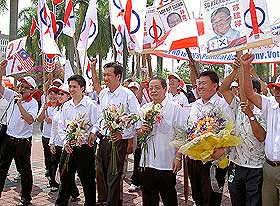 The DAP with its record number of Indian candidates is also extending its ethnic appeal, and has shown a commitment to a Malaysian Malaysia agenda. Yet, it has based itself in Penang and in individual seats in the Klang Valley, so its success will depend on the ability of individual candidates to tap the fertile opposition ground.
For all the opposition parties, moving beyond race politics involves careful messaging, that not only offers non-racially based issues, but also speaks to the unique ethnic concerns of different communities. Since the racial lines continue to dominate political identity, convincing voters of shared Malaysian identity requires delicate and difficult balancing. This is a challenge particularly for the new opposition candidates, who comprise at least a third of the candidates in and around KL.
The BN component parties base their ethnic cooperation on racial rights of specific communities, and thus have much more space to speak to both the specific issues of individual communities and convince voters that BN as a multi-ethnic umbrella that protects all races. This ability to appeal to race while in a coalition historically has given the comparative advantage in these mixed seats.
BN appealing to ethnic security
In this campaign (like previous ones), BN is appealing to ethnic security and calling on non-Malays to stay within the fold for a voice. In this climate of increased ethnic anxiety, BN faces a difficult gamble - using racial tensions to bring in specific communities while simultaneously alienating urban voters who want genuine ethnic harmony and representation.
Yet the racial overtones are quietly becoming louder. In the house-to-house campaigning, the BN focus is on the rights of the specific communities. With a degree of desperation, MCA and MIC campaigners are suggesting that this election is about their survival. They point to potentially further non-Malay marginalisation.
 Meanwhile Umno has demonised the opposition's multiracialism into an attack on Malays. It is a dangerous game that the BN parties are playing, but one that worked in 1999 and one in which they hope will work again, despite the move in the non-Malay ground against them. The difference in this election is that the ethnic base of BN to win in mixed seats is focused on the Malay community, not the Chinese.
The key dynamic in the urban areas will be the degree to which the Malays support the BN and how many Chinese/Indians buy into the ethnic security/voice survival arguments.
Beyond protecting the rights of individual communities, BN as an effective multi-ethnic coalition will be tested in this election. Over the last two years, BN has been seriously frayed by a lack of effective inter-ethnic consultation. From dismissing memoranda over religious rights to attacks on the MIC within the BN, inter-BN relations are raw and the perceptions of lack of effective representation for communities have taken root.
It is thus not a surprise that MIC is taking out advertisements to defend its record within the BN. While its leadership has not been effective in addressing the concerns of the majority of Indian community, it is not completely to blame. The BN has not worked well as a coalition in the last administration and the disdain that Umno has shown the component parties has weakened their electoral appeal.
Voters are being asked to assess whether their interests have been effectively addressed within the coalition, and despite the rise in the number of vernacular schools and gains MCA in particular has made in the areas of education, many voters have serious doubts. On the ground, some urbanites who live next door to neighbours of a different race want to "send a message" that in a multi-ethnic country, ethnic cooperation needs to be genuine, and all Malaysians should feel they are represented.
 The lack of enthusiasm of many non-Malay BN voters toward the coalition and the deep-seated ‘sakit hati’ within the BN coalition parties in how they have been treated by Umno has translated into a combination of anxiety and powerlessness. Electorally, to date this has meant that the BN lacks its verve, its messaging is inconsistent and the campaign is not as oiled as earlier elections. Even in 1999, the BN has more campaign support in its base. The energy in the BN campaign is palpably lower.
Traditionally, BN's advantage in appealing in mixed seats has been reinforced by its more effective machinery in reaching out to the individual ethnic groups. The advantage has been considerably and remains so. The reality is that the opposition does not have the ability to reach individual ethnic communities as easily and despite the non-aggression opposition pact, the level of cooperation is not even close to BN levels.
Safe seats more vulnerable
Yet, here too, there is vulnerability for the BN in this election. To date in BN campaigning, working relations within are not as strong as previous contests. The consultation over seats within the ruling coalition was rushed, and many within BN feel that the timing of the election was not made in the interests of all the parties.
It is difficult for MCA, for example, to explain to voters why Abdullah decided to dissolve parliament during the one holiday that their Chinese political base cherishes. The decision on electoral timing is reminiscent of scheduling the Umno General Assembly during Deepavali.
 The lack of honed inter-BN cooperation is compounded by the serious infighting within each of the BN parties, from the MIC and MCA to Umno. S Samy Vellu's leadership, the ouster of Chua Soi Lek and displacement of Chan Kong Choy and rise of candidates connected to Khairy Jamaluddin and continued support of the old Umno warlords over capable independents within the party have sent ripples within each of the main component parties within the BN.
Pushing candidates out of Kelana Jaya, for example, make safe seats more vulnerable. The consultation and consensus-building needed to maintain an effective machinery within the BN was not carried out before Abdullah's rushed polls.
Consequently, the BN will turn more to resources to bring itself together, smooth over infighting and appeal to voters. No question, the machinery will work better when the money comes into to BN candidates. To date, candidates are waiting, and concerned with the lack of support. They are turning to different outlets for support.
For example, in Ampang, the Ong Tee Keat is harnessing support in civil society, non-governmental groups, rather than rely on the national campaign. BN candidates are frustrated, as the long campaign has shown cracks in the BN machinery and allowed the opposition to get its message out in the urban areas more effectively.
 They are worried that when the funds come in, it may be too late to win over voters who have moved into the opposition camp. They know that the urban electorate is more disgruntled than in 2004. Moreover, they know that distributing resources and promising development projects is less effective in urban areas.
Even the strength of being a good parliamentarian, of providing service and access is less appealing in this campaign. Yet, money will continue to be the lifeboat BN will depend on. It will be expensive. The tally spent on this election has risen sharply over the first week of the campaign. To date spending has bypassed the parallel levels of largesse that Mahathir distributed in 1999.
Promises not fulfilled
Yet, this election is not 1999. Voters in the urban areas have the lesson of the promises not fulfilled from the last polls. For many, the new projects may not be enough. For some, however it will be. The final tally in the urban areas will come down to voter turnout and the support of some critical groups. If turnout is low in the urban areas, this will work to the opposition's advantage. Many traditional BN supporters may chose to stay home rather than vote for the opposition.
The outcomes in the urban core will also depend on which groups turn out and where. The key for BN will be Malay turnout, since this is the community the BN is relying the most on. For the opposition, their success will rest of Chinese turnout and new disgruntled voters.
There are also specific groups that will be decisive. Within the Malay community, the most important group will be the support of the civil servants and middle-age voters. Whether the reformasi appeal continues to resonate among voters above thirty will be decisive in the outcome.
 The opposition needs to win over some of the share of Malay vote that returned to the BN fold in 2004. They also need to win some of the civil servants. While the BN has provided massive bonuses to government employees before the polls, it remains to be seen whether financial rewards will be enough to maintain support of this group who are concerned about prices and governance.
For the BN, the key will be whether it can continue to rely on the support of urban women. The focus on bread on butter issues will go head to head with concerns about security. The BN will also need to win back a small share of Indian voters - a difficult task indeed. Ethnically, the mixed seat odds continue to work in the BN's favour.
As the urban campaign evolves, the silent majority will not attend political meetings. Decisions will be made in the coffee shops, over a family dinner, with a drink with friends after a long read of the newspapers and browse of the internet.
All the parties face the task of getting messages out that inspire enough voters to get out in vote and strengthen their positions in these private discussions. There is considerable work in the few days left in this campaign to secure the urban capital core, that arguably is as vulnerable as it was in 1999.
DR BRIDGET WELSH is assistant professor in Southeast Asian studies at John Hopkins University-SAIS, Washington DC. She is following the campaign trail in a number of states. Her next stop is Johor. She can be contacted at bbwelsh@jhu.edu
Her previous article


Are you sure you want to delete this comment?
This action cannot be undone.