


/file/publisher-c1a3f893382d2b2f8a9aa22a654d9c97/2026/08/23823ca410115fd733ac742d3c8233ff.png)

YTL AI Labs partners with AI Malaysia Takeover 2026 to champion local AI development
AI took centre stage as more than 3,500 Malaysians gathered at AI Malaysia Takeover 2026 (AIMTO_26), bringing together a diverse community of policymakers, businesses, investors, technology leaders and AI enthusiasts.
The event also marked the unveiling of the new Rakyat Digital portal by Minister of Digital YB Gobind Singh Deo, alongside conversations featuring voices from across Malaysia’s growing AI ecosystem. Speakers included Kelas Sekejap co-founders Khairy Jamaluddin and Shahril Hamdan, Axiata Group Chief Strategy & Transformation Officer Dr Rainer Deutschmann, Supabase CEO and Founder Paul Copplestone, 500 Global Managing Partner Khailee Ng, and Foong Chee Mun, CEO of YTL AI Labs.
“From October 2026, Rakyat Digital will introduce the AI Builders Hub, providing Malaysians with a hybrid pathway to apply what they have learned, experiment with AI and develop practical solutions of their own. The aim is to help more Malaysians move from learning and using technology to building solutions that are Made by Malaysia,” Gobind said.
Malaysia’s AI Economy: From Capabilities to Competitiveness
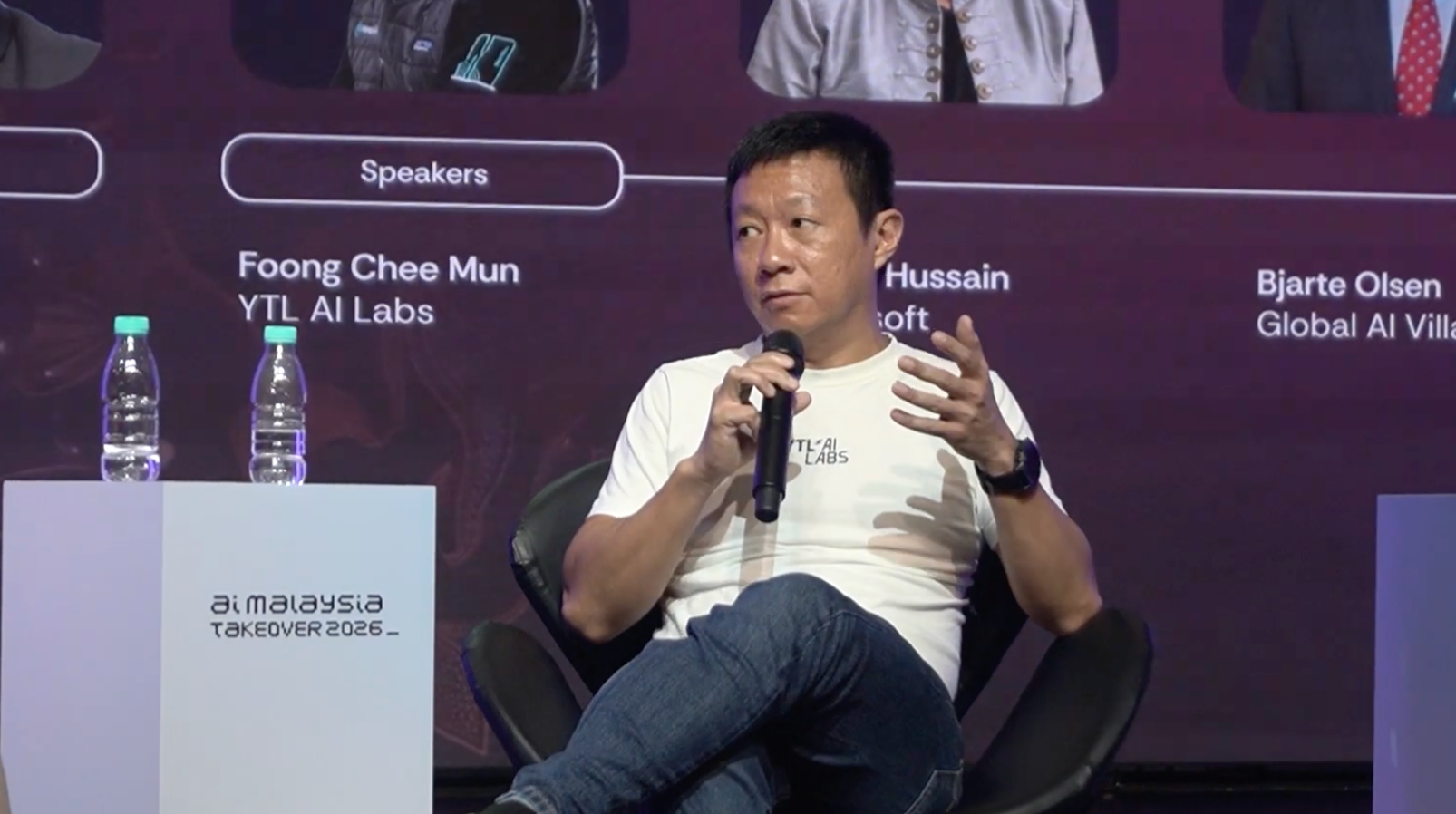
Turning AI potential into tangible economic value was the focus of the fireside chat, which brought together Foong Chee Mun, CEO of YTL AI Labs; Nabila Hussain, Director of Government Affairs and Public Policy at Microsoft; Calvin Woo, Director of the Malaysia Centre for the Fourth Industrial Revolution (MYCentre4IR); and Bjarte Olsen, Managing Director of Global AI Village.
The discussion explored the foundations Malaysia needs to strengthen as it builds an AI-driven economy, spanning infrastructure, talent, data, platforms and partnerships. Each panellist explored how Malaysia can combine local strengths with global technologies to drive productivity, resilience, innovation, and long-term competitiveness.
Malaysia has already made significant progress in building the infrastructure needed to support the AI economy. With YTL’s data centres and AI compute, alongside growing interest from global technology companies, the country is positioning itself as a key regional hub for AI infrastructure. But compute, as Foong emphasised, is only the starting point. The real opportunity lies in what businesses can build with it.
“The next step, therefore, is to strengthen the software layer that sits on top of this infrastructure. Enterprises and consumers do not interact with AI directly via compute or tokens; they experience it through the applications and platforms they use every day. For Malaysia to fully capture the economic value of its AI investments, local businesses need to develop software and solutions that can harness this growing compute capacity. As the infrastructure race accelerates, the ability to turn that capacity into useful, scalable applications could ultimately determine how much value Malaysia derives from its AI ambitions,” said Chee Mun.
“As we reflect on Malaysia’s journey from a middle-income to a high-income economy, it’s important to look at the drivers and enablers that can support progress across different areas. AI has emerged as one of those important growth engines,” said Nabila.
She further explained that global infrastructure can provide enterprise-grade platforms, world-class privacy and security, and the foundations for innovation. But these capabilities cannot substitute for local expertise and an understanding of the specific, nuanced use cases in Malaysia.
That point also underscored a broader challenge for Malaysia: ensuring that its growing pool of talent can effectively access and make use of the AI infrastructure being built in the country. For Bjarte, the issue is not simply whether Malaysia has enough talent or compute, but whether the two can be connected in ways that address real industry needs.
Malaysia therefore needs to focus not only on expanding access to AI infrastructure, but also on creating the pathways for startups, developers and businesses to turn that infrastructure into practical solutions.
From AI Users to AI Builders
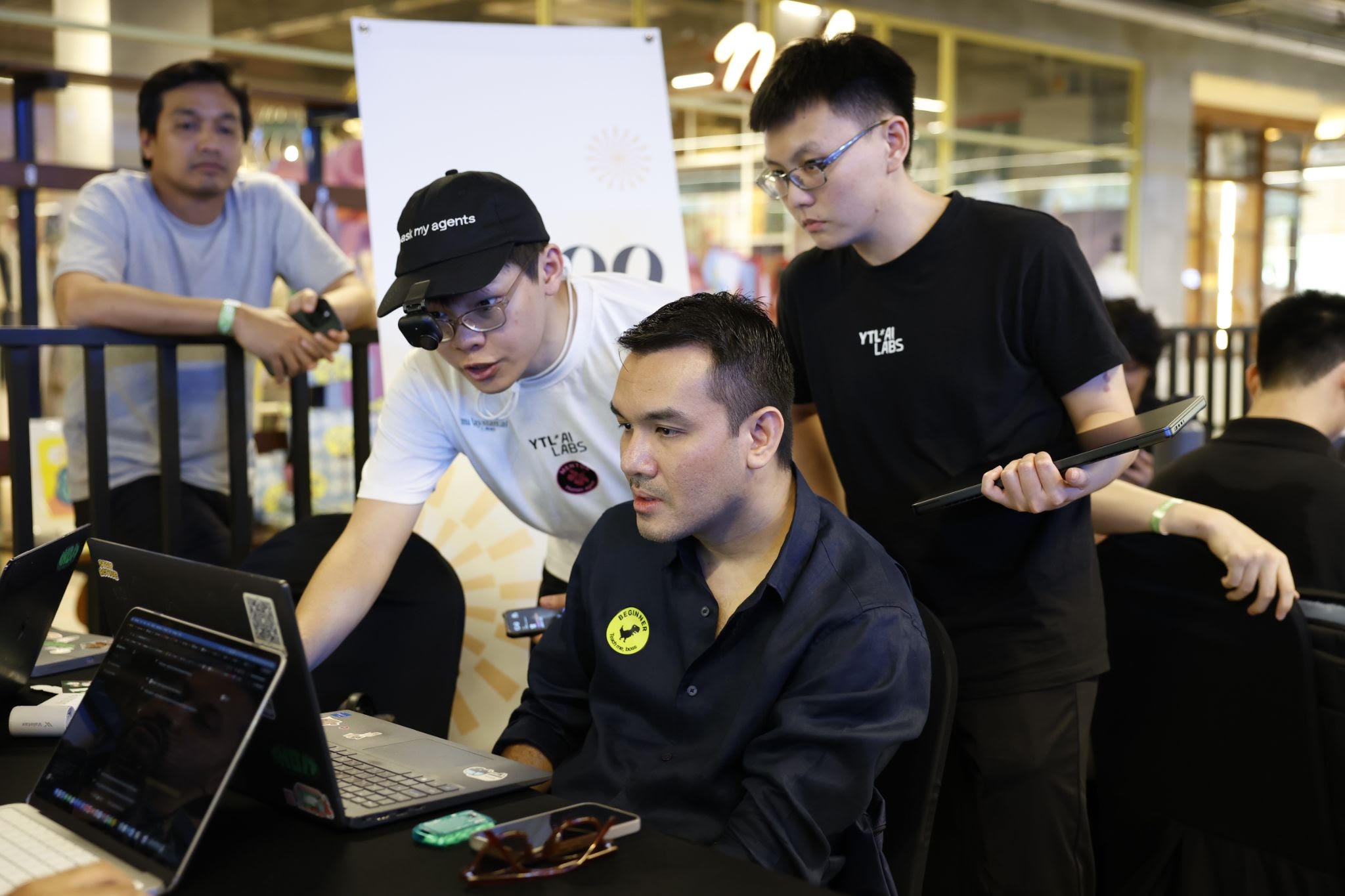
A major highlight of AIMTO_26 was the Learn-A-Thon, which attracted more than 1,000 participants ranging from AI beginners to experienced developers. With guidance from facilitators and mentors, participants transformed their ideas into working products, earning the initiative recognition from the Malaysia Book of Records for the Largest Artificial Intelligence (AI) Learn-A-Thon.
Supporting the hands-on experience, YTL AI Labs gave participants free access to ILMUchat, a Malaysian-developed AI platform designed to understand local context and enable the development of secure AI solutions on Malaysia’s sovereign infrastructure. Over the course of the Learn-A-Thon, teams created a variety of AI-powered agents, applications, games and websites, including a Duit Raya Planner to manage festive giving, a Traffic Light Simulator to model traffic flow, and Knowledge Databases that provided shared context for multiple AI agents.
Participants were also given one month of free access to ILMUchat, giving them the opportunity to continue experimenting and building with AI beyond the event. Foong Chee Mun, CEO of YTL AI Labs, said: “For Malaysia to build meaningful AI capability, more people need the opportunity to work with the technology and see what they can do with it. We want ILMU to be part of that journey, giving Malaysians a locally developed platform they can explore, learn from and build on. Initiatives like the Learn-A-Thon are an important way to bring that ambition to life.”
Building beyond AIMTO_26
YTL AI Labs will continue its engagement beyond AIMTO_26 through a three-month builder programme with KrackedDevs, giving Learn-A-Thon participants further opportunities to engage with ILMUchat and build on what they started at the event.


