




China - the silent giant miracle
As I observe the People's Republic of China plunging ahead into an orgy of nationalist pride in celebration of their 60th anniversary, I cannot help but be amazed at the economic miracle that has silently taken place in that vast and troubled land over the past 30 years.
Emerging from the economic waste and the political turbulence of the Great Leap Forward (1958 - 1961) and the Cultural Revolution (1966 - 1976), China was dirt poor and backward both socially and economically.
It was essentially an under-developed nation engrossed in endless internal political struggles.
As I observe the People's Republic of China plunging ahead into an orgy of nationalist pride in celebration of their 60th anniversary, I cannot help but be amazed at the economic miracle that has silently taken place in that vast and troubled land over the past 30 years.
Emerging from the economic waste and the political turbulence of the Great Leap Forward (1958 - 1961) and the Cultural Revolution (1966 - 1976), China was dirt poor and backward both socially and economically.
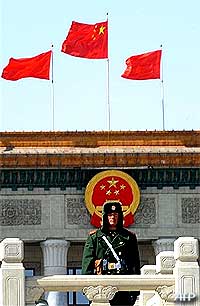 It was essentially an under-developed nation engrossed in endless internal political struggles.
Deng Xiao Ping's decision to open up China's borders and modernise the Chinese economy has given birth to an economic miracle the likes of which has never been seen elsewhere.
Today, you cannot talk about China except in superlative terms.
It is the second largest country in land area and with a population of 1.3 billion people, it is the most populous nation on earth.
Since 1978, the economy of the China has grown 70 times. Today, China has the third largest GDP in the world at US$4.4 trillion.
Per capita income stands at US$3,300, which puts China behind about 100 countries.
China now has the world's largest foreign exchange reserve at US$2.1 trillion.
World's leading destination for FDI
Its trade surplus in 2007 was US$262.7 billion in 2007. It holds US$801.5 billion in US Treasury Bonds, making China the largest foreign financier of American public debt.
China is also the world's leading destination for FDI, attracting more than US$80 billion in 2007 alone.
Its stock market in Shanghai (SSE) is raising record amounts of IPOs and its benchmark Shanghai Composite Index has doubled since 2005.
SSE's market capitalisation has reached US$3 trillion in 2007 and it is the world's fifth largest exchange.
The country is also the world's second largest exporter and the third largest importer of goods globally.
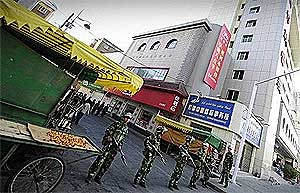 China has the world's largest number of cellular phone users (700 million) as well as the largest Internet subscriber population (395 million or 22 percent of the world's total).
Though by no means a rich country yet, China has pulled hundreds of millions of their Chinese people out of poverty because of their rapid economic growth.
Ten percent of the Chinese people live below the poverty line today of US$1 per day now, down from 64 percent in 1978.
As of 2002, 90.9 percent of the Chinese population were literate.
Literacy among youths between the ages of 15 to 24 was 98.9 percent as of 2000.
As of 2007, there were 396,567 primary schools, 94,116 secondary schools, and 2,236 institutions of higher learning, some of which were and are world leaders.
Its middle class population (defined as those with annual income of at least US$5,000) has now reached 80-150 million.
Economic and market giant
China's retail market is worth RMB8,921 billion (US$1,302 billion) in 2007 and growing at 16.8 percent annually.
It is also now the world's third biggest consumer of luxury goods accounting for 12 percent of the global share.
Born out of an armed revolution, China always has a central role for its military arm.
At 2.3 million men and women, the People's Liberation Army is the largest military in the world.
The officially announced budget for defence in 2009 was US$70 billion.
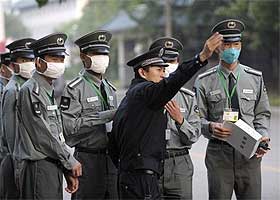 But the US has accused China of under-reporting military spending, and estimated that the real defense expenditure could be as much as US$105 billion to US$150 billion.
They are now debating in China on whether to build their first aircraft carrier.
China has always had nuclear capabilities of course, though some experts say that their delivery system may not go the distance as the Russians or the Americans.
Naturally, their foray into space exploration and plans to land on the moon by 2020 will only advance their research into military technology.
Great leap in sports, not rights
China has also emerged as a sports superpower, winning the most number of gold medals in the 2008 Beijing Olympics, which the Chinese people hosted with great pride.
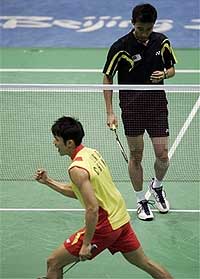 I regret to see our own Lee Chong Wei losing time and again to Lin Dan. The Chinese are just invincible in badminton and table tennis.
Today, China is increasingly given a more important role to play on the international stage.
It is one of the five permanent members of the UN Security Council, and the Chinese opinions are sought on all kinds of international forums.
The fabulous achievement as told by these amazing numbers indicates the type of transformation that Malaysia can only dream of.
Of course, we know all their problems and challenges.
The Chinese Communist Party CCP) is still enjoying one party rule and repression against human rights is well recorded.
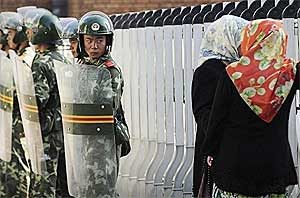 They are a long way from building a transparent, accountable, and open political system.
Their hegemonic approach to territorial integrity in Tibet, Xinjiang and Taiwan is perhaps a mixture of their imperial vision as well as the memories of their colonials past at work.
Evolution to democracy slow
The CCP is communist all but in name only.
Its legitimacy, apart from historical reasons, relied heavily on its ability to deliver development and progress to a large swathe of China's vast population.
But the CCP has also resorted more and more to a revival of Chinese nationalism, which sometimes threatens to degrade into a kind of ugly xenophobic suspicion of all things western.
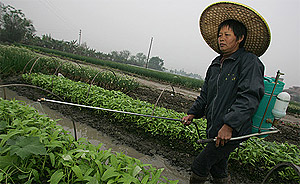 While there is impressive growth every year, and those people in or near the huge cities can share in their new prosperity, they will probably subsume to the will of the CCP.
But education does raise the expectations of the people anywhere on earth, and how the Chinese government will handle a slow evolution towards a more democratic way of life will determine the destiny of China.
Already, the Chinese government is experimenting with election at the level of the village head.
The ten-thousand mile journey must indeed start with the first step.
In their ravenous hunger for raw materials and energy, the Chinese long arm has scoured the earth, especially in Africa and South America.
The Chinese foreign policy here is guided by national self-interest rather than by international justice.
Worst polluter in the world
In Sudan for instance, China has been seen as reticent on putting the pressure on the Sudanese government to solve the problem of genocide and massive refugee presence, because of the Chinese need to extract oil from that unfortunate country.
There have been sporadic reports across the African continent that resentment against the Chinese presence has been growing because China is seen as the new colonial power.
In the case of Burma, Chinese needs for the natural resources especially oil, gas, precious stones and teak have blinded the Chinese leaders to Burma's imperative for meaningful political change.
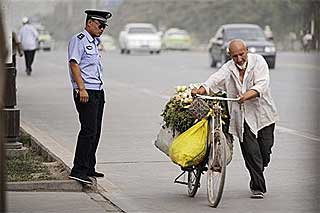 China may be the factory of the world, but the millions of smoke stacks have choked up the global atmosphere.
Today, China has overtaken the USA as the worst polluter on earth.
They have time and again turned down international demands to lower carbon emissions. They really need to develop alternative sources of energy and change their mode of production to lessen their reliance on fossil fuel.
Last but not least, their one-child policy may have arrested the problem of rapid over-population so rampant in many other developing countries like India and Pakistan.
But the policy may breed unforeseen social problem in the future.
Future Chinese citizens may just not have the sort of iron in the soul that drove their forebears, because the only child in the family is sure to be spoiled rotten.
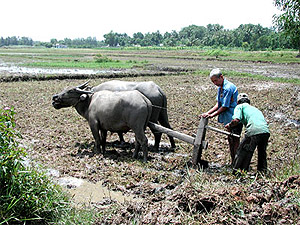 I remember the time in the post war years in Sarawak when there would be letters from China asking for help.
Hard as it was to eke out a living, my mother used to send relief packages containing cash, clothes and even food back to her kin in the old village somewhere near Swatow in Guangdong province in China.
When I went back to the old country for a visit a few years ago with my siblings, we met many long lost relatives.
They all looked well fed, had good paying jobs and good accommodations. They did not look like they needed outside help to survive.
I was glad for them and all the other suffering Chinese people who had survived the horrible turmoil of the early years to enjoy the fruits of their sovereignty.
I would never live there though. I am a Malaysian.
SIM KWANG YANG can be reached at kenyalang578@hotmail.com


Are you sure you want to delete this comment?
This action cannot be undone.