




For God's sake, stop quibbling
Once, there was a windscreen shop owner. Business had been bad for months. Unless new orders came in, he had to shut shop. Rather than mope and hope, he decided to act. So he did on one stormy night.
Once, there was a windscreen shop owner. Business had been bad for months. Unless new orders came in, he had to shut shop. Rather than mope and hope, he decided to act. So he did on one stormy night.
Camouflaged in a black raincoat, armed with a wooden baseball bat, he prowled the neighborhood. He hunted for cars parked on the side streets. One by one, he shattered the windscreens.
Over the next week, new orders came in.
Dishonorable indeed. But you get the point. That’s proactive thinking. He created the situation rather than wait for things to happen, then respond. Applied to journalism, ‘proactive’ reporters take it upon themselves to set the agenda and lead the public discourse.
Yes, journalists do influence how we think and what we talk about. Journalists do sometimes set the public agenda. And, veteran journalists do sometimes become part of the stories they write despite what many academic scholars of ‘journalistic objectivity’ are wont to teach otherwise.
 In traditional journalism, however, ‘proactive’ forward-looking reporting is the exception.
What the media offer are essentially straight reports of reactions to statements uttered by significant figures on issues spurred by recent events. For practical and economic reasons, journalists essentially compile verified facts, reliable opinions and sourced reactions.
News is a fast moving commodity shaped by immediacy and relevance to the readership market.
That’s how the ‘Allah’ versus ‘Tuhan’ issue was reported. Compressed. Delivered in digestible capsules. Reactions are reported with scant reflections on the contexts and implications.
Educate, enlighten, challenge
Our journalists could surely have done better if they had challenged conventional wisdom and gone beyond standard reporting mode to consciously package their stories with this in sight: to educate and enlighten their readers – most of whom have reacted to the issue with acrimony and spite via their blogs and letters.
A minority of informed readers has provided fair and educated commentaries on the government’s ban on the Catholic weekly The Herald ’s usage of the word, which I had hoped our online and mainstream journalists could have done in their follow-ups after necessarily reporting the straight news.
There were not many enlightening copies I can recall. The reports were often recapped dry versions of previous news led by short updates which left me, and presumably many readers too, wandering in a knowledge vacuum.
Thank Tuhan for Google. It was easy to read up on the etymology of the word ‘Allah’, used by Arabic-speaking Christians and Jews to refer to their god even before the existence of Islam.
Indeed, our journalists could have capitalized on the moment to elevate religion to a mainstream affair rather than see it as one of the no-go zones in Malaysian journalism. Diverse critical and informed views matter most in this case when it’s so easy for the ‘Allah’ issue to be politicized and exploited, by UMNO, in particular.
Mainstreaming religion in journalism
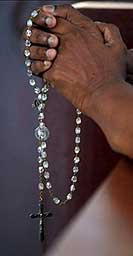 The issue is effectively being framed as an entrenched racial-religious conflict between fundamental Muslims and evangelical Christians firmed on converting the Malays.
Maybe that is so. But most probably not, when more than 60 percent of the population is Malay/Muslim, and where there are many grey areas in the enforcement of apostasy laws. It’s a complex issue, the truth of which discrete news reports cannot satisfactorily capture.
My point is that journalists can be more forward-looking in their reporting so as to better inform and educate the religious and secular public. Here lies the need for journalists to take upon themselves to be more educated in comparative religion and race studies and to do a better job in providing the facts and contexts – particularly in the Malaysian context where race, religion and politics tend to merge into one.
Let me explain what I mean.
‘Proactive’ reporting essentially refers to journalists breaking stories and exposing new insights into old issues through intuitive research and penetrating investigation. It’s where journalists take it upon themselves to critically observe and reflect on issues, understand and narrate in a way that readers, after reading the stories, will feel nourished in mind and heart.
Being ‘proactive’ is one way for journalists to reclaim their many functions: to explain, teach, serve, and create an environment where tolerance begets tolerance.
I have written about the ‘oracle’ process of reporting, an acronym of verbs, as a guide for best practice - to observe, reflect, analyse, contextualise, learn, educate/enlighten. Complementing the ‘oracle’ process are the ‘facts’ of reporting - to “factualise, advocate, connect and (re)solve”.
Applying the ‘ORACLE’ and ‘FACTS’ models to reporting the ‘Allah’ versus ‘Tuhan’ issue, journalists could tackle the stories as such:
- Observe and watch to make sense of events, issues and people in their environments. Here lies the capacity of journalists to perceive and see what others easily overlook. What do you think you know? How do you verify your observations? Observe how the Christian communities have actually used the word ‘Allah’ and ‘Tuhan’ in their Sunday sermons and hymns. Engage with Christians and Muslims to understand what the word ‘Allah’ and ‘Tuhan’ actually mean to them in their religious walk
- Reflect on what you have observed, reconcile the differences from what you have seen, heard and felt with what you had assumed. Reflect on your understanding of the etymology of the word ‘Allah’ with counsel from religious and secular scholars. Then, listen to your own counsel and conscience while composing your narratives.
- Analyse and contextualise your reflection and analysis against your research and reactions by theologians and scholars from the Islamic - Christian and secular sectors. How can you package and integrate the many perspectives and ideas on the issue to a series of stories to help readers see the bigger picture?
- Learn more about what you have uncovered and elucidate what is true from false, the right from wrong, dogma from reason. Learn and develop a critical understanding of the issue, the reasons and motivations of the Islamic authorities for claiming exclusive ownership of ‘Allah’ and likewise the Christian clergy’s preference for ‘Allah’ over ‘Tuhan’. Report and write beyond one in-depth story. Think in terms of packages, hyper-texts and sidebars.
- Educate, enlighten, and enable your readers to find out more about issues and people you have written about.
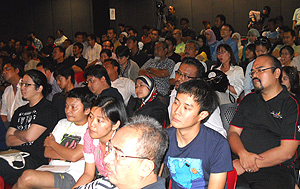 In this divisive issue, journalists and readers could work together in bringing common sense to the discourse. Reactions and commentaries which editors think are baseless, seditiously provocative and which do not contribute to informed rational discussions should be trashed. Freedom of expression does not arise in this case. Common sense does.
The 'FACTS' approach
Complementing the ORACLE process is the FACTS approach. Here’s how it works:
Factualise the stakeholders’ claims and counterclaims in the ‘Allah’ versus ‘Tuhan’ controversy. ‘Factualising’ refers to the process of ‘objectifying’ an issue by bringing to the news narrative sourced empirical data to establish a cause-and-effect explanation of the issue or event. The problem arises when journalists, by their professional creed, operate on the premise that they are ‘objective’ as long as they give ‘both sides’ of the story by citing empirical data, which, without critical reflection, often falls out of context.
Selective factualising effectively transforms statements of opinions into facts while overlooking the causes of the events. Hence, context is sacrificed because of, among other factors, the pressure of production deadlines, or in the case of the ‘Allah’ story, being overly cautious of offending the authorities.
Advocate for a more rational exchange between the Muslim and Christian clerics. Yes, connect with the stakeholders and readers to address the risks of the controversy – with its religious facets and emotive elements - being misinterpreted and exploited by interest groups for their own political ends.
Given any complex issue, we are inclined to cook up our own theories to make sense of the situation. Often, our theories are clouded by our religious passion and justified by our respective faith. Here lies the imperative for journalists to pre-empt the tendency of the public mind to indulge in conspiracy theories. This is where journalists can remind themselves of their ‘oracular’ function by testing their own theories against the facts derived from insightful penetrating research.
Ultimately, journalists’ coverage of the issue are only as good as their ability to write stories that open up new pathways to develop plausible (re)solutions to the issue. After all, a creator God’s divinity and omnipotence is beyond man’s narrow claim of ownership of a single word.
Thus, in a 1Malaysian spirit, it’s salam , shalom , omitofo , namaste and peace be upon us all in this new year.
DR ERIC LOO was a journalist and lecturer in Malaysia before migrating to Australia in 1986 to work with the papers before returning to academia. He has conducted numerous journalism training workshops in parts of Asia and Australia. He is founding editor of Asia Pacific Media Educator and has co-edited books in international journalism and cross-cultural communication. His recent books are ‘Best Practices of Journalism in Asia’ (2009); and ‘Journalism in Good Faith: Issues and Practices in Religion Reporting’ (co-authored with Mustafa K Anuar, 2009). He currently teaches journalism at University of Wollongong, Australia, and is actively involved in mentoring journalism students via UPIU , a global journalism-education site run by United Press International. He can be contacted at eloo@uow.edu.au.


Are you sure you want to delete this comment?
This action cannot be undone.