




Football and nationalism
Every time when England and Germany play a football match, it is like World War II all over again.
Every time when England and Germany play a football match, it is like World War II all over again.
The 1996 European Championship tournament (Euro 96) was held in England. While the two countries had met in previous matches, it was the first time that England played against a united Germany in more than half a century.
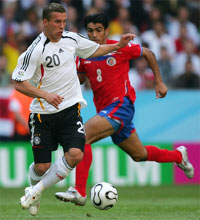 Thirty years had passed since England last won the World Cup in 1966, against West Germany at Wembley, and British nationalistic sentiments were filling everything to the brim. I had read somewhere in a tabloid that German fans were "kindly advised" to stay clear of the areas surrounding Wembley Stadium to avoid any untoward incident.
The Daily Mirror ran a highly controversial headline "Achtung! Surrender! For You Fritz, ze Euro 96 Championship is over", while England fans chanted "stand up if you won the war". If one happened to meet a Briton who actually did not support England, he must be Scottish, Irish or Welsh.
Tragically, England lost. The day after Gareth Southgate missed the penalty in the semi-final against Germany, sending England crashing out, the whole country was in solemn mourning and London was dead. The pervasive grief was keenly felt, befitting the passing of a beloved monarch, or more.
As the World Cup, the biggest football tournament on earth, gets under way in South Africa today, billions of fans are ready to once again unleash their emotions - primordial, atavistic and tribal. Unlike any other group games, football has a violent history and often brings out the savagery of man. Fans donning facial paints and hooligans rampaging the streets best testify that.
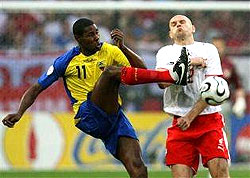 One warm evening in summer 2006, as World Cup matches were being played in Germany, an innocent young boy was knocked unconscious in Richmond Green, London, merely for wearing a Germany football T-shirt. Yes, Germany had won a game the day before, but it was against Argentina, not England.
Obsessed with WWII
Did it have something to do with the teaching of history in Britain that is unfathomably obsessed with WWII? The pre-occupation with Nazi Germany is puzzling, prompting many to criticise that intellectual laziness resulted in the tendency of British schools to teach German history through the prism of the Nazi era.
Meanwhile, the right-leaning press such as the Sun and the Daily Telegraph are responsible for the inability of the British people to let go of Britain's erstwhile empire and Germany's guilt, with all nostalgic and xenophobic feelings coming alive at football matches between the two countries.
While I do not dismiss totally the romantic idea that competitive sports may engender fraternity, chances are, they make enemies and deepen animosity. When England lost to Argentina in 1986, it was so devastating that many felt like they had never won Falklands.
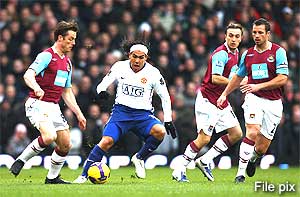 The emotional wound was exposed again in 1998, when David Beckham was sent off with a red card, until it was partially healed with England's sweet revenge over the Argentines. Of course, Beckham regained his halo by scoring the only goal for his country.
At the Asian Cup final held in Beijing in 2004, Chinese football fans drowned out the Japanese anthem and ran amok after their team lost to Japan. Prior to this, Tokyo's attempts to rewrite WWII history had soured its relations with the neighbouring countries, giving rise to the jingoistic sentiments on the part of the Chinese.
Ian Buruma, a British-Dutch writer (and no fan of German football apparently), once wrote that "even as nationalistic emotions were suppressed in polite society all over Europe, the soccer stadiums remained stubbornly in the pre-WWII world". I suppose the same observation is valid for China, Japan and the two Koreas also.
Media revolution
When Rupert Murdoch purchased the rights in 1992 to televise the English Premier League for his Sky TV with an amount of money that was far beyond BBC and ITV, he was setting a media revolution in motion.
As matches were broadcast live all over the world, the league became the crown jewel of football while its players shot to international stardom.
Yes, Beckham, Michael Owen and Wayne Rooney have Murdoch to thank, so do Cristiano Ronaldo, Kaka and Zlatan Ibrahimovic.
Strange, that while football is now the most lucrative and international sport in the world - Manchester United having perhaps the most diverse team made up of various nationalities - it fails to kill off national identity.
Economically, it is becoming globalised as never before, but remains politically divisive most of the time as it continues to provoke nationalistic sentiments.
 Brian Morris, a British anthropologist, contends that tribal consciousness is hidden deep within human nature, and can be easily aroused when the conditions "are right". I guess football matches are one such occasion when this primitive nature is "ritually expressed".
But it is not always a Us vs Them sort of thing. In 2001, the Reds descended on Kuala Lumpur and brought the city's traffic to a halt as 100,000 fans flocked to greet their stars.
To the chagrin of many a nationalist, nearly all Malaysian fans were donned in red rooting for Manchester United at Bukit Jalil. When our national team lost 6-0 and the stadium erupted in ecstasy, the verdict on Malaysian patriotism could not have been clearer.
JOSH HONG studied politics at London Metropolitan University and the School of Oriental and African Studies, University of London. A keen watcher of domestic and international politics, he longs for a day when Malaysians will learn and master the art of self-mockery, and enjoy life to the full in spite of politicians.


