




Talking in and out of turn
Was British Prime Minister David Cameron so wrong when he said Pakistan exports Islamic terrorism?
Was British Prime Minister David Cameron so wrong when he said Pakistan exports Islamic terrorism?
He said this whilst visiting India in late July. Was he wrong in arguing that foreign political leaders should not be afraid to say or call it as it is? Should he have had more political gravitas, more nous, or kept his mouth shut in saying what he did especially when he was outside Britain?
The opposition Labour Party's foreign affairs spokesman David Miliband thought so, saying that there was a gulf of "difference between straight talking and being a loudmouth".
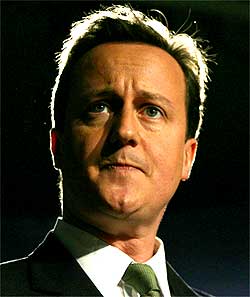 And he added this gem: that everybody has "two ears and one mouth" and that it is vital that we (presumably Cameron, too) should use these organs "in that proportion" when it comes to international diplomacy.
Naturally, Cameron ( right ) defended his position. "I think it's important to speak frankly and clearly about these issues," he said. The Labour Party tried to maul Cameron, coming hot on the heels of his gaffe in Washington over the Obama administration setting its dogs on oil giant British Petroleum, and over BP's alleged hand in freeing from life imprisonment Abdelbaset al-Megrahi, the Libyan murderer of 270 airline passengers over Lockerbie in Scotland.
It gets better. Not only was BP's oil spill in the Gulf of Mexico the worst since the Exxon Valdez disaster in Alaska but reports quickly surfaced that made BP's life worse and Cameron's political posture distinctly uncomfortable.
The London-based oil company had earlier signed a deal with the Libyan regime - a dictatorship of one of the world's worst terrorists and murderers, Mu'ammar Abu Minyar al-Gaddafi - to commence drilling for oil within weeks off Libya's coast. According to BP's own study, Statistical Review of World Energy, the north African Islamic state has 44.3 billion barrels of reserves - the most in Africa.
Tons of carrots
Miliband may be right, but it's doubtful that even he would have managed things very differently from Cameron. Dangled in front of the British government were tons of carrots. They all underline huge revenues. The Chancellor of the Exchequer is already rubbing his hands.
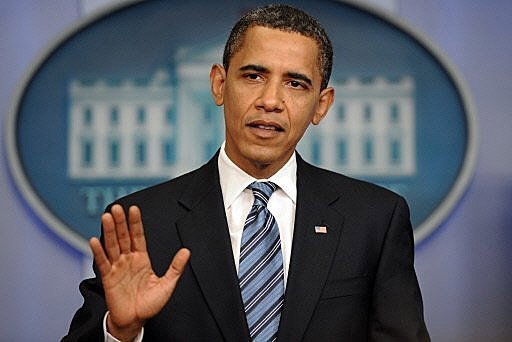 And London to a brick, even Obama (
left
) were he in Cameron's shoes, would have been pressured by American oil giants to play the game.
And London to a brick, even Obama (
left
) were he in Cameron's shoes, would have been pressured by American oil giants to play the game.
In his previous life, Cameron was a public relations consultant for television company Carlton. The Guardian says Carlton's dissolution raised the quality of British television almost overnight. Cameron would ‘smarm and schmooze' skeptical British journalists with his habitually vulgar sycophancy. But they just wouldn't buy his lines.
So what does it say about Cameron the man, on the one hand, and Cameron the British prime minister - by the skin of his teeth - on the other hand?
It says he was playing up to the Indian government, pandering to it in ways that would sicken moralists who see him stooping to get Indian businesses to sign lucrative deals with British interests.
In fact, Cameron is already overseeing a stupendous, if perverse, overhauling of the British Foreign Office. It is being corporatised. The Foreign Office's new role, apart from its old one, is to now scour the world from end to end in search of mercantilist profits for the British conservative state. After all, the British economy is virtually on its knees. And Cameron, the spin merchant, now prime minister, hasn't a clue about how to fix the old dog.
The US Congress is dreaming if it thinks Cameron will deal with BP after Obama had chewed his ears in the Oval Office. Obama was in an enviable position when whacking BP (and the British) because the culprit, this time, wasn't American. Obama, ever the populist, rehashed the Boston Tea Party when Cameron called on him.
He had points to score with increasingly cynical American voters who now think he is all talk. Even the US$20 billion he'd managed to squeeze out of BP to cover current and future damage costs to the US Gulf states affected by the oil spill is laughable. To BP and its major shareholders, that's a pittance to pay.
Politics of convenience
This is the age of the politics of convenience, massaged by spin. Like Obama and Cameron, political leaders everywhere are struggling to deal with the depths of financial crises and natural disasters that kill citizens, environments, wipe out entire communities and rob them of their livelihood.
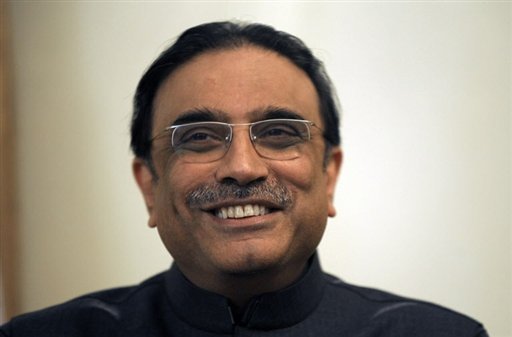 The catastrophic floods in Pakistan at July's end will see the regime of Asif Ali Zardari (
right
) plead to foreign states to send planeloads of aid. China's own massive oil spill near Dalian, and killer floods in other parts of the country, will be met by its own costs for recovery.
The catastrophic floods in Pakistan at July's end will see the regime of Asif Ali Zardari (
right
) plead to foreign states to send planeloads of aid. China's own massive oil spill near Dalian, and killer floods in other parts of the country, will be met by its own costs for recovery.
Beijing has the kind of financial reserves that Pakistan can only dream to acquire. Or for that matter the United States and Britain.
Pakistan's problems, though, are many. Cameron knows this. One is indisputable. Since 1947 it has had extremely corrupt and incompetent politicians and governments, often violent and murderous military dictatorships, and now a president whose middle name is Mr. Corruption.
Some Pakistani military top brass would like to remove Zardari from office and put him on a slow boat to China. Or North Korea. Even so, Pakistan cannot yet absolve itself from its historical wounds. Zardari's incompetence allows Pakistan's military and the intelligence service, ISI, to function beyond the regime's immediate purview. So he stays - for now.
It's clear that the Pakistani military and the ISI are supporters of the Taliban in Afghanistan, and in Pakistan of its homegrown Taliban and other Islamic terrorists, the latter now bent on re-opening the Kashmiri front against India.
Since 9/11 Pakistan's military generals and the ISI have been actively propping up and protecting the Taliban against any potential of secular regimes emerging around it and within Pakistan.
Western dependence on Pakistan in the Afghanistan war puts sections of Pakistan's military in a politically powerful position and role in national politics. They also influence politics and the war in Afghanistan.
Sublime incompetence
Zardari is incapable of reining in the military. It's not because of his sublime incompetence alone, but because he has no credibility whatsoever for his and his family's engagement in corruption.
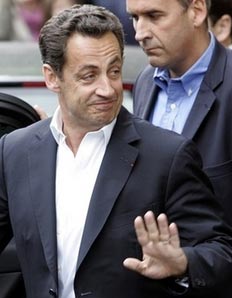 Angry at Cameron, Pakistan cancelled intelligence discussions with the British. Zardari, who was on a schmoozing mission in Paris with beleaguered French president Nikolas Sarkozy (
left
), could be told by Pakistan's generals to also cancel his official visit to Britain, though unlikely.
Angry at Cameron, Pakistan cancelled intelligence discussions with the British. Zardari, who was on a schmoozing mission in Paris with beleaguered French president Nikolas Sarkozy (
left
), could be told by Pakistan's generals to also cancel his official visit to Britain, though unlikely.
British writer Tariq Ali argues that, stung by criticisms, Pakistan's generals chose to attack the monkey instead of the organ grinder.
The world has become accustomed to frantic and idiotic outbursts by Islamic regimes whenever people like Cameron hit them.
Yet Cameron knows that the war in Afghanistan cannot be won, that another hugely embarrassing Vietnam War nightmare looms, and that Afghanistan and very possibly Pakistan look set to implode. Afghanistan's president Hamid Karzai and Pakistan's Zardari make perfect bedfellows. No question.
There's no love lost, either. And so what would Cameron have to lose by saying what he did, given also that general British feelings against radical Islamism within Britain and elsewhere remain as strong since the 9/11 attacks in New York and the 7/7 bombings in London.
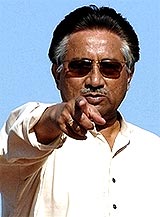 Sections of Pakistan's military continue to wear Islamic fundamentalist skin. To force them to shed that skin would be met only by bloody revenge. Former military dictator General Musharraf (
right
) found this out no less than three times when his own military enemies tried to pop him off.
Sections of Pakistan's military continue to wear Islamic fundamentalist skin. To force them to shed that skin would be met only by bloody revenge. Former military dictator General Musharraf (
right
) found this out no less than three times when his own military enemies tried to pop him off.
Members of Pakistan's military, who are also Islamic fundamentalists, including senior officers, have supporters within the Zardari regime and the military's top-most brass.
They continue to maintain their alliance with the Taliban in Afghanistan and within Pakistan's Hindu Kush region bordering Afghanistan, and all the way to Karachi and Lahore.
Frustrated by Karzai's incompetence and corruption, and by Pakistan's hypocrisy, Washington began bombing suspected insurgents on the border regions and within Pakistan's northwest frontier. But these bombings only served to further destabilise Pakistan.
Pakistani military responded by forging even stronger alliances with Afghanistan's Taliban and other domestic Islamist terrorist networks, with the other eye on India, possibly as a distraction from its handiwork on its northwestern front.
And all the while the governments of the United States, Britain and western Europe have been financing Pakistan's military and the economy, much to India's chagrin.
Exit strategy
This war is going nowhere. The west is losing it every day. It must end. Obama must come up with an exit strategy, and soon. Cameron knows this but he won't say it as openly as he should.
The U.S. will not be able to deal with another Vietnam War nightmare when the last one hasn't yet healed. And the mess of the U.S. invasion of Iraq continues to kill Iraqis, American soldiers, and bleed the U.S. federal budget.
Nevertheless, when in Washington recently, Cameron, like Blair, assured Obama that Britain would remain America's poodle, come hell or high water.
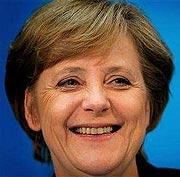 There is, however, an insidious side to Cameron. He's being the PR man again, with his usual sins of omission.
In his speech to Turkish politicians and business leaders three weeks ago, he railed against Germany's chancellor Angela Merkel ( left ), who wants Turkey to undergo self-exorcism of its brutal, murderous past of Armenians, Greeks and Jews, and Turkey's invasion of Cyprus and its brutal, murderous repression of Kurds, before Europe lets Turkey into the European Union.
And the apparently 'moderate' Islamist Prime Minister Recep Tayyip Erdogan must stop supporting the murderous Sudanese president Omar al-Bashir, who is charged by the International Criminal Court for crimes against humanity, as well as cancel al-Bashir's visit to Turkey.
Commercial opportunities
Erdogan won't budge, and Cameron won't push Erdogan, either. Instead, Cameron talked up Turkey's change toward 'democracy' and 'secularism'. He sees commercial opportunities with Turkey - and is pressing Ankara to adopt the EU's competition charter and open its market.
Cameron blasts Pakistan, but he hasn't the gall to do the same at Turkey. Presumably British interests in Pakistan are waning anyway, he senses, and, privately, he sees the war in Afghanistan as un-winnable.
Whatever happens to Pakistan and Afghanistan after the Nato alliance pulls out is their problem, just as the Americans had treated Vietnam after the fall of Saigon. But Turkey is not Pakistan. If it can pull away from its latent Islamist radicalism, past war transgressions and adopt EU economic policies, Cameron is lining up Britain to quickly benefit from Turkey's market liberalisation.
But does this mean that he is not entitled to state the simple, unadulterated fact that Pakistan does export Islamic terrorism and bloody murder? It does not, and should not.
International diplomacy has changed, radically. China pursues diplomacy with a double tongue and a myriad of paradoxical and often empty and meaningless slogans. It's frustrating.
The problem is Cameron's growing tendency towards hypocrisy. Already.
With Pakistan he didn't mince his words. And rightly so. But with Turkey, he shamelessly engaged in what The Guardian 's Nick Cohen called "wilful amnesia". Miliband is right: Cameron should listen more and shoot his mouth off less.
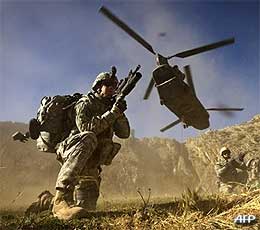 For a start he needs to read - thoroughly - the history of ethnic/tribal wars in Afghanistan and the role of Islam and of enemies from within and outside the country in fermenting its longstanding bloody problems.
He needs to understand how and why and to what ends Pakistan's military seized the political and military vacuum left behind when the Soviet Union scampered from Afghanistan and greatly humiliated the Kremlin's thugs.
If David Cameron thinks he will be a great British prime minister, somebody should slap him to wake him to hard reality. He will not. Ever. Cameron is already showing signs that he is completely out of his depth. And that's hardly surprising, given his past life as a lousy PR man.
MANJIT BHATIA, an academician and writer, is also research director of AsiaRisk, a political, economic and risk analysis consultancy in Australia. He specialises in international economics and politics, with a focus on the Asia-Pacific.


Are you sure you want to delete this comment?
This action cannot be undone.