




The stories we leave behind
I invited a colleague in the UK to examine a PhD thesis four weeks ago. As always, he gladly obliged. Later in the day he emailed, “sorry…can’t make the deadline.” He has cancer.
I invited a colleague in the UK to examine a PhD thesis four weeks ago. As always, he gladly obliged. Later in the day he emailed, “sorry…can’t make the deadline.” He has cancer.
“The timescale is getting shorter,” he said of the six months he has left to live. “Gotta try to beat the odds”.
In a journalism discussion list I moderate, which he’s on, was an email announcement last week that an Australian colleague had died from cancer – the second in six months. I wonder what my UK colleague’s thinking right now.
“Just too young to leave us,” says one of the condolences. Indeed, late 50s is considered ‘young’ by UK and Australian figures, where women are expected to live well until about 84 and men until 80 (76 and 71 in Malaysia according to WHO statistics ).
Late 50s, that’s my UK colleague’s age, and mine. It does remind me of my mortality. In academia, 50s usually mark the peak in one’s research and teaching career. Many become wise mentors to junior staff and graduate students.
In Malaysia, though, my colleagues are either on the verge of retiring or have retired – somewhat psychologically disempowered, their experience and knowledge soon cast aside.
Putting to rest the pool of Malaysian talent when they reach 55 or 58 doesn’t make much sense to me though. Some do continue on contract work. Some plan to do what they had wanted all their working life but never got to – like taking a road trip, go off the beaten track, see places where tourists don’t usually venture.
But, these moments of rediscovering one’s youth don’t usually last before the reality of feeling redundant and ‘old’ hits. That’s when we start to find an interest in reading obituaries, and hope we don’t see our friends’ photos staring back at us.
My colleagues who have passed on – most recent was Swithin Monteiro, a classmate at USM and former NST/The Star journalist; and colleagues in Australia – I think about the stories and work they have left behind for us to remember.
Eulogies for my colleague who died from breast cancer this week are filling my mailbox, each recognising her contributions to journalism research and practice. More eulogies will be written by Christmas if my UK colleague couldn’t beat the odds. He might even now be writing his eulogy, how he’d like to be remembered – knowing his wit and zest for life.
What will we remember of our leaders?
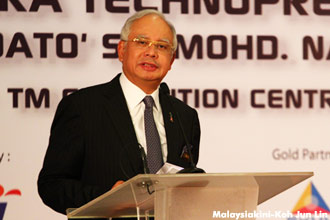 Then, I wonder about our political leaders, many now past the mandatory retirement age for civil servants. What tributes will we read when they pass on? What stories will they leave behind? Our Prime Minister Najib Abdul Razak said in a documentary
‘A Leader’s Legacy: Tun Abdul Razak’
screened on Aug 24, 2010, "I have a sense of pride knowing my father passed away in the service of the nation. There can be no other service greater than that”. Indeed.
Then, I wonder about our political leaders, many now past the mandatory retirement age for civil servants. What tributes will we read when they pass on? What stories will they leave behind? Our Prime Minister Najib Abdul Razak said in a documentary
‘A Leader’s Legacy: Tun Abdul Razak’
screened on Aug 24, 2010, "I have a sense of pride knowing my father passed away in the service of the nation. There can be no other service greater than that”. Indeed.
Justina Chen from the Center for Public Policy Studies writes that Najib is “arguably the most reformist Malaysian prime minister ever” given the many legislative and policy reforms since September last year.
That may be so. But the Najib’s administration is also stained by allegations of blatant sexual scandals, abuse of public funds, police violence, cold cases of political murders, electoral frauds, attacks on the rakyat’s right to peaceful assemblies. Will Najib leave a better legacy than his father?
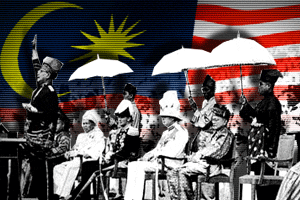 I have seen political leaders come and go, but few can I recall, except for Tunku Abdul Rahman - who left a legacy of compassion, fair-mindedness, and liberal views and criticisms of the government in his weekly newspaper column for
The Star
in the late 70s until the paper was suspended for six months in 1987 by then Prime Minister Mahathir Mohamad. What legacy will Mahathir leave behind?
I have seen political leaders come and go, but few can I recall, except for Tunku Abdul Rahman - who left a legacy of compassion, fair-mindedness, and liberal views and criticisms of the government in his weekly newspaper column for
The Star
in the late 70s until the paper was suspended for six months in 1987 by then Prime Minister Mahathir Mohamad. What legacy will Mahathir leave behind?
The future bumiputera leader
I wrote on Sept 10, two years ago: “Is there no leader worthy of the benefit of our doubt? Can the current leaders, based on their politics and choices they make today, honestly say they had fought a good fight and did what was good for the rakyat? Who will we remember as a ‘righteous leader’ who tore down the walls that continue to divide Malaysians by race, religion and class?”
 Perhaps none among the current lot. But, as a good friend reminds me – never say never nor none. The internet has provided a space for the rakyat’s discontent. We are freer today to challenge and confront, even pull a joke (thank you
Ribena Berry
) (
right
) or two in public on our political leaders.
Perhaps none among the current lot. But, as a good friend reminds me – never say never nor none. The internet has provided a space for the rakyat’s discontent. We are freer today to challenge and confront, even pull a joke (thank you
Ribena Berry
) (
right
) or two in public on our political leaders.
I’d like to think a visionary leader may one day emerge from among the millions of bumiputera JPA scholars, the graduates, many of them educated in the West and exposed to the workings of democratic governance, civil liberties and fair opportunities.
We hope the liberal education has rubbed off on them, that the new generation of bumiputera intellectuals can see how the current culture of rent-seeking, political patronage and nepotism - like cancer - is destroying the country from within, running it down to moral and economic bankruptcy.
The bumiputera intelligentsia will be instrumental in taking the reformasi agenda forward. Change ultimately must emerge from within the politically and numerically dominant bumiputera populace.
Like it or not, the Chinese and Indian minorities must work with the dominant group for the greater good instead of the narrow interests of each race. We’re all stuffed if we don’t.
ERIC LOO left Malaysia for Australia in 1986 to work as a journalist. He currently lectures at University of Wollongong, Australia, and also mentors international journalism students via UPIU.com, run by United Press International. He edits a refereed journal Asia Pacific Media Educator published by SAGE Publications (New Delhi) and conducts journalism training workshops in Asia. Email: eloo@uow.edu.au


