




CSMU: A racial issue?
"What do I do now?"
"What is the point of studying hard to get good grades?"
"What future do I have when I get back?"
"Why did they give approval and then stab our backs?"
These are questions that I am faced with almost on a daily basis and no answer of mine satisfies my nephew's anxiety and confusion a young Malaysian who feels that his academic career and future has been unfairly meddled with.
"What do I do now?"
"What is the point of studying hard to get good grades?"
"What future do I have when I get back?"
"Why did they give approval and then stab our backs?"
These are questions that I am faced with almost on a daily basis and no answer of mine satisfies my nephew's anxiety and confusion a young Malaysian who feels that his academic career and future has been unfairly meddled with.
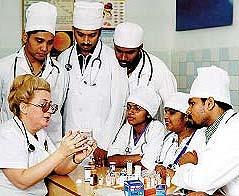
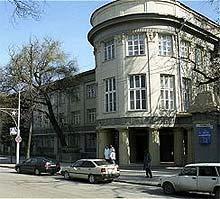
My nephew is a student of the controversial Crimea State Medical University (CMSU) in Ukraine, which has been recently de-recognised by the Malaysian Medical Council (MMC).
Examine the episode and you will come to one definite conclusion: there is really no issue. All governments and professional bodies associated with the government that set standards on professional qualifications have the right and responsibility to recognise or derecognise universities and the degrees they award.
I don't think anybody will dispute that and, in an increasingly litigatious society, this is a sound practice.
Lack of transparency
So what is the problem? It's the procedure which led to the de-recognition of CSMU.
The state of 'procedural democracy' in Malaysia is pathetic. Somehow the BN government thinks that once the election gives them a mandate to run the country, they don't have to worry about following procedures. We are governed by a "just-do-it-now-review-later, never-mind transparent-procedures, don't-worry-about-the-social outcomes" culture. Sadly, all these do not reflect any serious role for positive values in the governance of Malaysia.
Had MMC a procedure that is clear, transparent, and well-thought out, with the best interests of young Malaysians who are studying in CSMU in mind, there should have been no problem.
 Issuing clear statements of the problems in CMSU, relating these problems to the Ukrainian government and to the authorities of CSMU, the provision of a period of time for their compliance and finally making a decision to recognise/derecognise the university would have made all those involved appreciate the concerns and timely actions of MMC.
The decision to remove CSMU from MMC's list seemed not only arbitrary but also involved a series of misleading statements, questionable facts and unsubstantiated claims.
At the parliamentary roundtable meeting organised by DAP last Sunday, the ambassador of Ukraine to Malaysia was there to inform those who attended the meeting that he cannot remember receiving anything regarding the derecognition of CSMU, about the university being given time to correct critical sub-standard areas of medical education and comply within a stipulated time.
There were visits of a technical - and perhaps political - nature and there were queries and concerns of a general kind. Unfortunately, there was also a comment by the higher education minister on the high number of Indian Malaysians enrolled in the university.
Nevertheless, it seemed that there was no official communication to CSMU on what it had to in particular comply. Without clearly stated issues that the university can address, how could CSMU, or any university, comply? Comply with what?
A case of uplifting standards?
MMC and the government are also confusing the general public on matters relating to general principles and policies.
Yes, we must have doctors who are trained to meet the needs of the patient. The rights and welfare of the patient is at the centre of any health system. Again, I don't think anybody will dispute that. While MMC questions the entrance qualification in CSMU, I wonder why it does not impose the same principle relating to the qualification for entrance to medical degree programmes in Malaysia. Why are there two streams with separate criteria in our own country?
While MMC claims that the student-lecturer ratio is far too high to achieve quality medical education and therefore good doctors, it has not provided any comparative figures of student-lecturer ratios in the 344-odd universities it recognises around the world. It has not shown that in Malaysia these ratios are superior. Give the figures and let us see the problem for ourselves.
 In effect, such an important thing as derecognising a medical university where many of our young people are studying with the approval of the government, MMC did not see it fit to offer clear reasons to the public for de-recognising CSMU. This is certainly an inexcusable display of professional arrogance.
Of course, there is the issue of the "no objection" letter issued by the government and given to 'unqualified' students to study in CSMU. If there were concerns about the quality of medical education in CSMU even as early as 2001, why issue the letter and put young Malaysians in jeopardy? Does not the government understand that this would jeopardise the future of young Malaysians? This is something that really upsets parents.
My sister-in-law, a widow and a mother who is trying her best to raise two sons by providing them with medical education, has been most upset with the behaviour of MMC. "How could they do this? It makes me so angry this is so, so unfair," she said.
Sadly, this seems to reflect a recent observation by a blogger: "If it is a Malay problem, it is a national problem, if it is a Chinese problem, it is a racial problem and if it is an Indian problem, it is no problem".
Other parents whose children are in CSMU are telling their children to finish their course, and forget about Malaysia. They can go to some other country where their degrees are recognised and where their future will not be governed by opaque and undemocratic procedures.
Of course, this would please a certain section of Malaysians in power. Good riddance, they would say. As they do this, consider for a moment that the government is spending over RM40 million to offer foreign doctors, numbering over 700, to work in our government hospitals. We have young Malaysians who can offer service and save Malaysia millions of ringgit but what are we doing: finding ways to put obstacles in their path.
It is crystal clear who has created the problem for the young Malaysians studying in CSMU and for their parents. Given the fact that we do not have a political culture that encourages resignation for mistakes done by politicians and bureaucrats that adversely affect the public, it looks like this CSMU controversy is going to show us again that we have a political culture that demonises and punishes the victim.
Negative racial implications
One of the things that was so clearly articulated at the parliamentary roundtable meeting was how to "frame" the situation that has been created by MMC. Is it a problem beyond race and therefore a national one, affecting all? Or, is it centrally a racial problem, affecting the future of young Indian Malaysians? Or is it a national one even though it is an action that seems to differentially affect the young of one community rather adversely?
MMC and the government have created a situation that again (there being other cases where Indian Malaysian educational initiatives have been threatened) calls for re-defining the status of Indians in Malaysia. MMC and the government cannot now claim to be innocent of this outcome with regards to thoughts and feelings of a group of Malaysians. Very carelessly and insensitively, they have acted together to produce an event that has negative racial implications.
It is no point claiming that everything is being turned into a racial matter. Our society is built on a racial logic and critical areas of social life are based on racial decision-making processes no matter what we want to call them. Of course, people will see race at work in the CSMU episode, and with good reasons.
In fact, is it not the reason why members of the ruling BN took a pre-emptive attack by shouting "racist", strongly implicating opposition leaders and the other leaders of the Indian Malaysian community?
The whole CSMU episode has to be seen in a larger context. Is this whole episode really about patients' rights and health? Is this episode really about the quality of medical education, or education in general? Is this episode really a concern about the security of young Malaysians in the states of the erstwhile Soviet Union?
Examining the efforts to privatise and marketise healthcare in Malaysia, the problem of streaming and creating different entrance qualifications to university programmes, including medical programmes in the country, the high cost commercialisation of education including medical education, and the effort to get more students to go to Middle East, do not show any careful, sensitive and well-thought-out measures to deal with the situations cited above.
This immediately throws the whole CSMU issue on to the wider canvas of Malaysian racial politics, race-based affirmative action policies that work on exclusivity and double standards, the marginalisation of minorities, lack of transparency and accountability in governance and poorly and improperly developed procedural democracy.
The concatenation of all these factors will affect especially the young in CSMU and their parents, but all - irrespective of race and class - will have to suffer the insensitivity and carelessness of individuals and institutions that are supposed to offer them wholesome services and nurture their well-being.
A sociologist by profession, Dr M. NADARAJAH is a social researcher working on culturally embedded notions of sustainable development. He is an Asian Public Intellectuals (API) scholar and is associated with the Bangkok-based Asian Communication Network and the network of the Group of Concerned Citizens.


