


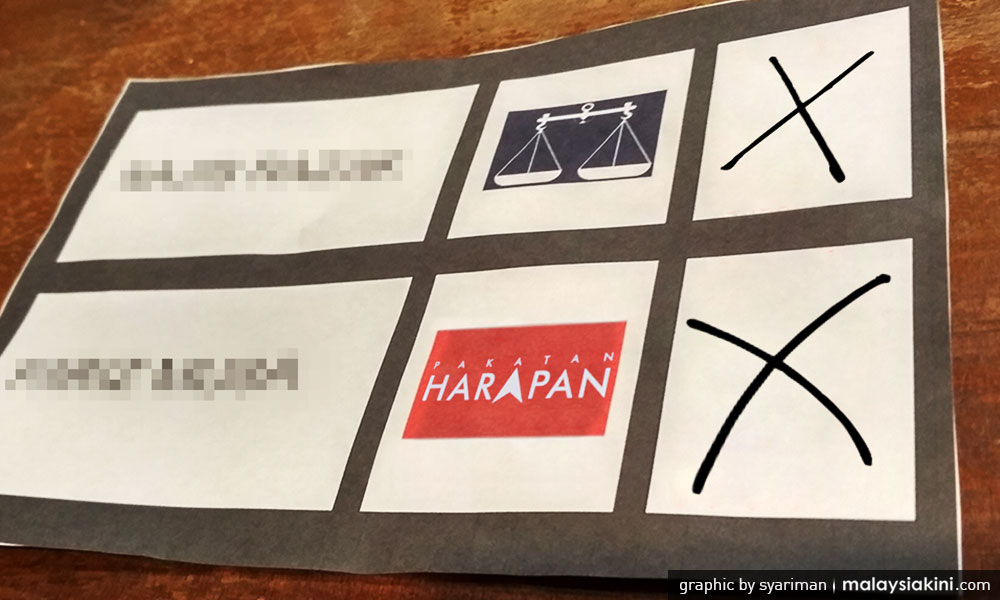

#UndiRosak - do's and don'ts in responding
Some in Pakatan Harapan are concerned about the impact of the #UndiRosak movement.
This is understandable, given that #UndiRosak supporters as well as voters who might be inclined not to vote in this general election likely consist more of people who used to vote for the opposition than people who used to vote for BN.
It remains to be seen whether this movement will have a significant electoral impact or not. But in any case, perhaps we can assess some of the ways Pakatan Harapan has attempted to address #UndiRosak.
The first ‘don’t' is quite obvious: Don’t scold voters and don’t deride them.
A Pakatan Harapan assemblyperson released a video saying “Only spoiled people spoil their votes” and “even Bangladeshis vote.”
It is a good sign I suppose that the video was eventually taken down, but had a good policy regarding non-supporters been internalised, it would never have gone up in the first place.
Harapan leaders should also go all out, both publicly and in private, to rein in all their supporters who are viciously attacking #UndiRosak supporters, in cyberspace and elsewhere.
It goes without saying that scolding or deriding voters only serves to alienate them more, and will almost certainly result in lost votes...
Some in Pakatan Harapan are concerned about the impact of the #UndiRosak movement.
This is understandable, given that #UndiRosak supporters as well as voters who might be inclined not to vote in this general election likely consist more of people who used to vote for the opposition than people who used to vote for BN.
It remains to be seen whether this movement will have a significant electoral impact or not. But in any case, perhaps we can assess some of the ways Pakatan Harapan has attempted to address #UndiRosak.
The first ‘don’t' is quite obvious: Don’t scold voters and don’t deride them.
A Pakatan Harapan assemblyperson released a video saying “Only spoiled people spoil their votes” and “even Bangladeshis vote.”
It is a good sign I suppose that the video was eventually taken down, but had a good policy regarding non-supporters been internalised, it would never have gone up in the first place.
Harapan leaders should also go all out, both publicly and in private, to rein in all their supporters who are viciously attacking #UndiRosak supporters, in cyberspace and elsewhere.
It goes without saying that scolding or deriding voters only serves to alienate them more, and will almost certainly result in lost votes.
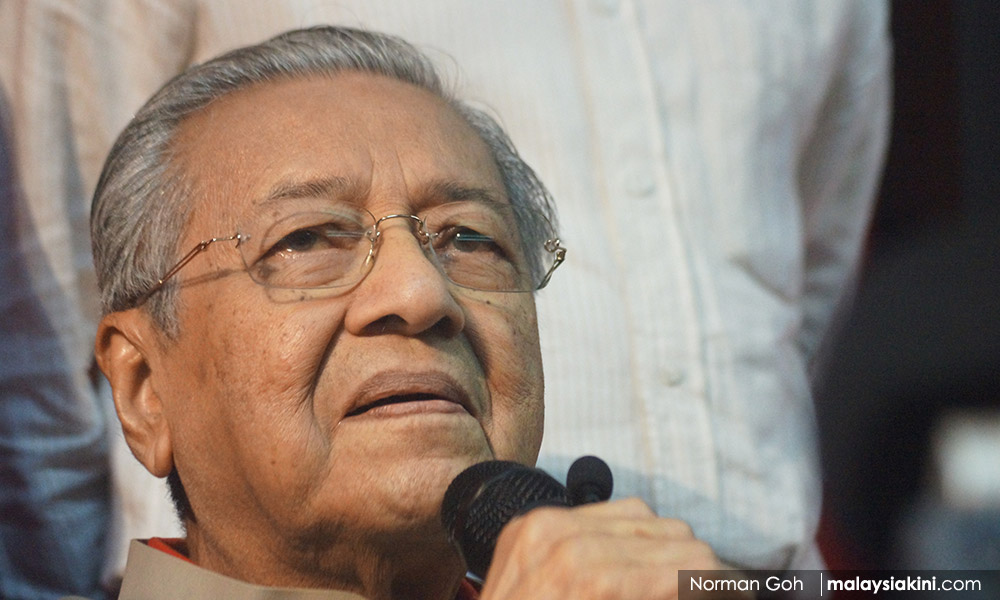
One of the slightly more bizarre responses came from Harapan chairperson Dr Mahathir Mohamed himself, who some time ago was quoted as follows:
“The former premier said he was shocked to learn there are those who feel the upcoming polls is nothing more than a contest between ‘Coke and Pepsi’ and hence there is no reason to vote.
“To drive home his point, Mahathir related a hypothetical scenario involving Proton and luxury marque Rolls-Royce.
“If asked to choose between Proton and Rolls-Royce, which one to pick? Whichever. What is the difference between Proton and Rolls-Royce? Both are motorised vehicles, nothing more than that.
“A decision is made not to buy either. Motorised vehicles can be involved in accidents. It is better to travel on foot.
“But when crossing the street, this friend is hit by a car – a Rolls-Royce. He (the victim) does not know because he is dead but the Rolls-Royce was being driven by a car thief.
“This is a fiction. But the story is similar to choosing between Coke and Pepsi,” he said.”

So, I think another ‘don’t’ in responding to #UndiRosak is: Don’t use convoluted analogies that are more likely to cause furrowed brows of confusion than enlightened ‘aha’ faces.
More to the point perhaps, this may be a good time to practice ‘Show, don’t tell’.
For example, telling someone a hundred times that you are not Pepsi to the government’s Coke has little impact, compared to demonstrating to them via deed and example that you are indeed different. As George RR Martin is fond of writing, words are wind.
Of course, this is easier said than done. Nevertheless, I believe this is what voters - especially voters not currently inclined to vote for either coalition - need to see and experience, and not to hear.
It’s not about more promises
In a similar vein, while DAP secretary-general Lim Guan Eng’s call for more youth concerns to be reflected in Harapan’s manifesto as a response to #UndiRosak is not made in the wrong spirit, it may perhaps not reflect true concerns.
I could be wrong, but I don’t think what people lack are the kind of fancy promises found in manifestos. Historically, manifestos appear not to have played a major role either in elections or after them.
Once in a while, we’ll throw up some fuss about how manifesto promises were not fulfilled, but these seldom seem to live beyond one or two news cycles.
Promises are forgotten, as easily as the urge to hold politicians to their promises - especially on non-critical issues. Thus, I doubt promising more and more, via manifestos or otherwise, will capture imaginations or inspire the confidence necessary to change minds.
Another approach making the rounds is messaging based, essentially, on fear.
The gist of this approach is “If you spoil your vote, BN is going to win or even regain its two-thirds majority in Parliament - is that what you want?”
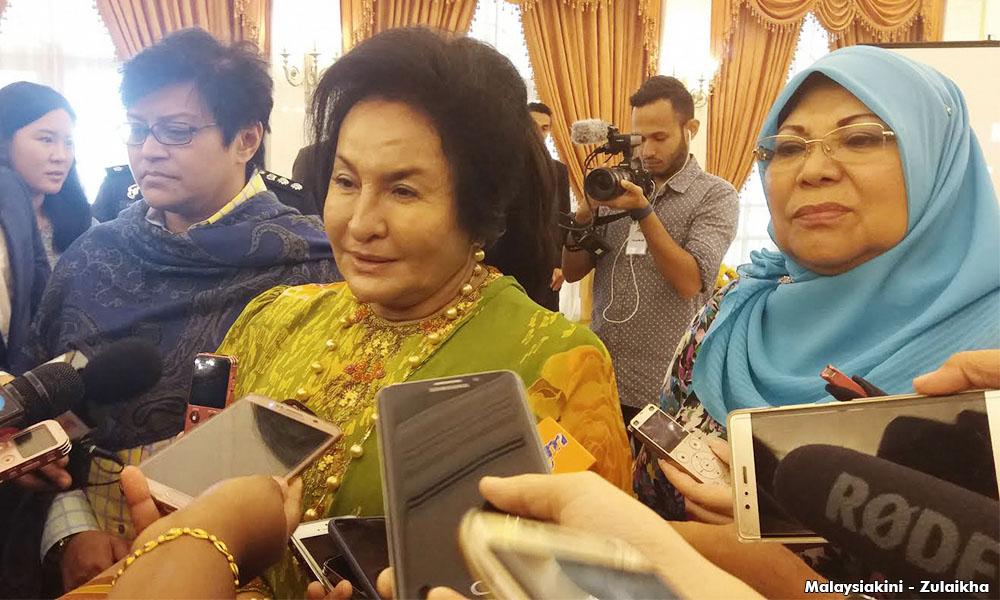
I recall getting one image over WhatsApp showing Rosmah Mansor (photo) rejoicing because people planned to spoil their vote.
I think this method also falls in the ‘don’t’ category. I think people planning to spoil their vote or not vote at all have considered the consequences of their actions.
Not liking BN is not the same as being willing to vote in someone else who does not seem sufficiently better.
Depending on making your opponent seem worse than you is only a race to the bottom. This approach is vastly inferior to trying instead to reach for the top - to not only seem like the best but to actually strive to be the best.
Hishamuddin Rais was once asked by someone at a forum, who was no fan of BN but had become disillusioned with Harapan, about the option of spoiling their vote, and he responded something along the lines of “If you want to spoil your vote, I don’t give a monkey.”
The unique expression drew laughter from the crowd, and Hisham can get away with many such things as a professional funny man. For the rest, of course, such an adversarial approach will almost undoubtedly backfire.
We can understand how distressing it is, especially for good politicians who work hard and who practice integrity every day, to hear of #UndiRosak sentiments.
However, if they can set aside the disappointment, hang in there and don’t give in to the distress, there are plenty of other ways to engage with voters, in short – act better.
For context, perhaps we also need to recap what the likely major grouses of those who are disillusioned with Harapan are.
I imagine they are particularly tired of the lack of unity and cohesiveness. It seems reasonable to assume that the reference point for many voters is the 13th general election and the state of Pakatan Rakyat then.
Like all aging people, I should be wary of falling into the “back in the good ol’ days” type of discourse, but I think it’s fair to say that five years ago, we were looking at an opposition that was more united, more cohesive and more clearly working together towards a common goal.
I’m going to guess that people are tired of rehashing all the reasons why things have fallen apart since then, so we can leave that out for now, but I think there is public consensus that some falling apart has indeed occurred.
When engaging with the likes of #UndiRosak, perhaps it is not unhealthy to at least acknowledge this fact to some degree. Doing so, instead of trying to sell everything as fine or better, may result in a better connection.
Finishing seat negotiations
As we reach the final lap, there are limits as to what Harapan can or can’t do.
Certainly, it can’t go back in time and undo the various mistakes, compounded over time, that it has made in the last five years.
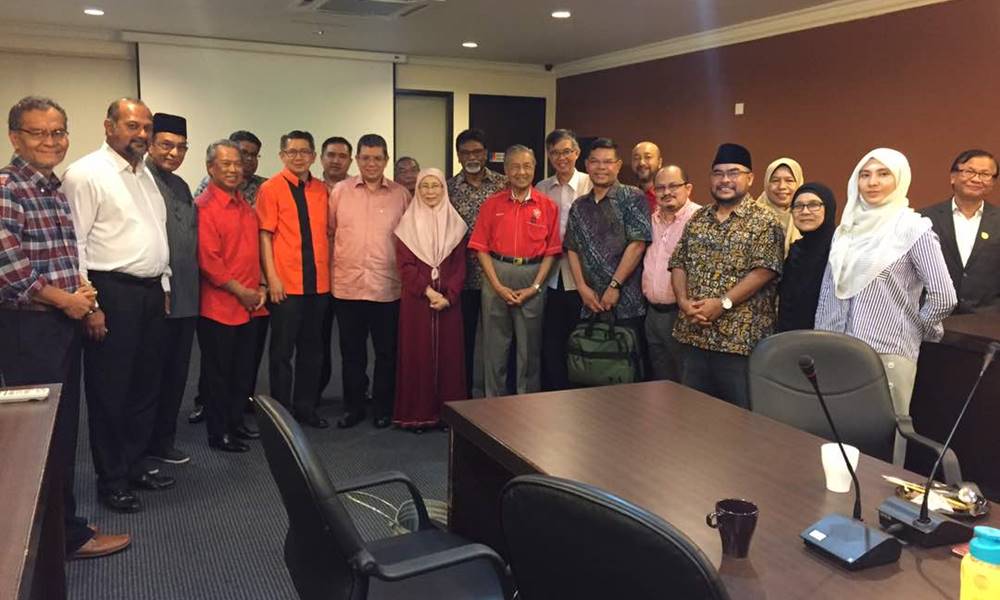
The infighting and lack of prioritisation of genuine principles and the greater good over narrow self-interest have certainly taken a toll and maybe the biggest determinant of the coming election.
That said, it isn’t over until it’s over, and I’d be the last to say anyone should throw their hands up and surrender. I think Harapan’s best hope is to address this perception of disunity head-on - not through words, but through action.
If they want to have any sort of fighting chance, the top priority should likely be putting up as united a front as humanly possible.
The kind of things that would inspire or restore a modicum of confidence at this stage would be to square away seat negotiations immediately.
This might be an opportunity for the top level of Harapan’s leadership to demonstrate that they are in fact in control of the coalition and that they have the leverage and means to finalise seat allocations in a manner which prioritises the greater good, as opposed to parochial interests.
Demonstrating a united front in no uncertain terms at this stage would do more than a thousand beautiful manifestos, or a million eloquent arguments.
The manner in which the leadership of the coalition conducts itself and interacts with one another in the public eye is - among the things still within Harapan’s control at this point - the surest way to inspire the type of confidence that can still sway votes.
If the Harapan leadership - as a united whole, rather than as separate elements - is seen not to be working together, or indeed not seen together at all, then it seems reasonable for the public to conclude that any sort of Harapan government would be as disunited as the opposition has been for the past five years.
People do not vote for people or institutions that they don’t know - “tak kenal, maka tak cinta”.
People may know what PKR and DAP are, but if they don’t know what Harapan is, and how these parties are likely to act as a unit, that severely lessens the likelihood that they will cast a confident, unspoiled vote for Harapan.
Thus, one might prescribe more public appearances together, more joint statements (preferably ones with substance), and taking every opportunity to demonstrate a truly united front.
The battle is undoubtedly already an uphill one, but if Harapan is to stand any chance at all, it must stand together.
NATHANIEL TAN will, in lieu of an inappropriate zodiac-themed joke, simply wish everyone a Happy Chinese New Year.
The views expressed here are those of the author/contributor and do not necessarily represent the views of Malaysiakini.


Are you sure you want to delete this comment?
This action cannot be undone.