




Namewee’s dogs and baying at the moon
In this Chinese New Year, I learned something new: my nine-year-old cousin hates dogs. The first thing she did when we arrived at Auntie Mei’s house was to climb up the sofa so the dogs wouldn’t lick her.
She would scream and scream when the three dogs ran around the living room, and we would all laugh and make fun of her. But she also realised in this New Year that not all dogs bite, and that she secretly finds them cute.
I know this because she sends her friends Chinese New Year messages with cute dog pictures in them. She also wears her red New Year clothes with a dog face on it. She also watched Namewee’s 'Like a Dog' video on YouTube.
Because she coexists with what she hates.
Just because you don’t like it
And that co-existence is the underlying philosophy of freedom of expression. Because freedom, as George Orwell once wrote, is the right for someone to express something, even if it’s something we hate.
This is an important concept for my cousin to learn at nine years old. No one should stop doing what they want to do just because you don’t like it.
Just because she doesn’t drink alcohol, it doesn’t mean the uncles who visit us shouldn’t drink. Just because she thinks playing blackjack is immoral, it doesn’t mean that our relatives are banned from gambling during Chinese New Year. Just because she doesn’t like dogs doesn’t mean that Auntie Mei can’t rear three of them...
In this Chinese New Year, I learned something new: my nine-year-old cousin hates dogs. The first thing she did when we arrived at Auntie Mei’s house was to climb up the sofa so the dogs wouldn’t lick her.
She would scream and scream when the three dogs ran around the living room, and we would all laugh and make fun of her. But she also realised in this New Year that not all dogs bite, and that she secretly finds them cute.
I know this because she sends her friends Chinese New Year messages with cute dog pictures in them. She also wears her red New Year clothes with a dog face on it. She also watched Namewee’s 'Like a Dog' video on YouTube.
Because she coexists with what she hates.
Just because you don’t like it
And that co-existence is the underlying philosophy of freedom of expression. Because freedom, as George Orwell once wrote, is the right for someone to express something, even if it’s something we hate.
This is an important concept for my cousin to learn at nine years old. No one should stop doing what they want to do just because you don’t like it.
Just because she doesn’t drink alcohol, it doesn’t mean the uncles who visit us shouldn’t drink. Just because she thinks playing blackjack is immoral, it doesn’t mean that our relatives are banned from gambling during Chinese New Year. Just because she doesn’t like dogs doesn’t mean that Auntie Mei can’t rear three of them.
But our government doesn’t seem to understand this. It seems that it would go so far as to find a rooster that barks than to display an image of a dog.
Many shopping malls have also decided to hide the images of dogs in their Chinese New Year decorations because of the wave of government-endorsed conservatism.
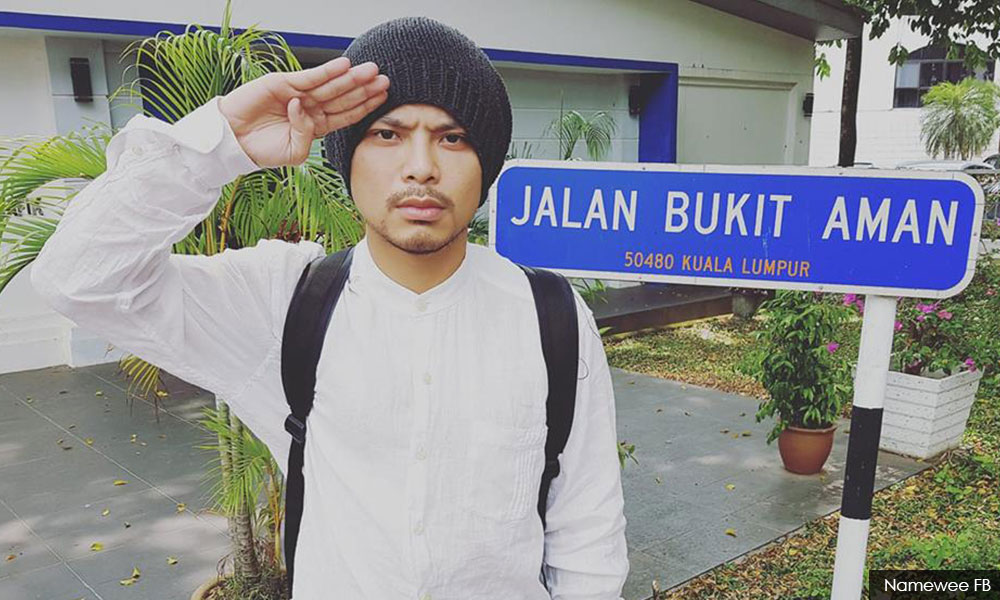
So it’s inevitable that in this shrunken space of liberty that the police would be on the hunt for Namewee (photo) for his “Like a Dog” video for allegedly being offensive to religion.
Flawed probe
First of all, the investigation appears extremely odd and misplaced. Namewee is being investigated under Section 298 of the Penal Code and Section 233 of the Communications and Multimedia Act 1998.
Section 298 is an offence for uttering words or making any sound or making any gesture or placing any object with “deliberate intention of wounding the religious feelings of any person”. Yet, nothing in the video appears religious in nature.
No word, sound, gesture, nor placement of object was even tangentially religious.
It was suggested that the video was shot in front of a mosque; yet this was not immediately clear from the video itself.
The only thing “religious” is the mere existence of dogs – as theme and prop. But surely it would be far-fetched to say that anything with dogs now are offensive to religion.
Section 233 of the CMA is a frequently used tool by the authorities. The provision criminalises the use of network facilities or network services to transmit any communication that is deemed “offensive” and could cause “annoyance” to another person.
frequently-used tool
This highly vague and grossly subjective provision allows the authorities to punish anyone who publishes anything the authorities dislike. It allows them to become the moral arbiters of what is offensive and annoying to society.
It’s also not clear what in Namewee’s video the police found offensive and annoying. Are the lewd actions offensive? Are the dogs annoying? Or is anything and everything that Namewee does offensive and annoying?
Freedom of expression
While it’s true that the constitutional right of freedom of expression in Article 10 of the Constitution is not absolute, its fundamental thrust of “I may not agree with what you have to say, but I will defend to the death your right to say it” must prevail. Otherwise the constitutional right would be rendered nugatory and meaningless.
It is absurd to suggest that if Namewee walks away unpunished, public morality would suddenly collapse and everyone would start resorting to lewd actions in public, with dogs roaming uncontrollably on the streets.
Instead, what is more likely to be the case is that if we punish someone like Namewee, there will be a chilling effect upon creativity. More and more people will self-censor in fear of legal consequences that would follow.
Since creativity requires ample space to connect dots in the boundless mind, any disproportionate and unreasonable curtailment of such freedom will make our culture less enriching.
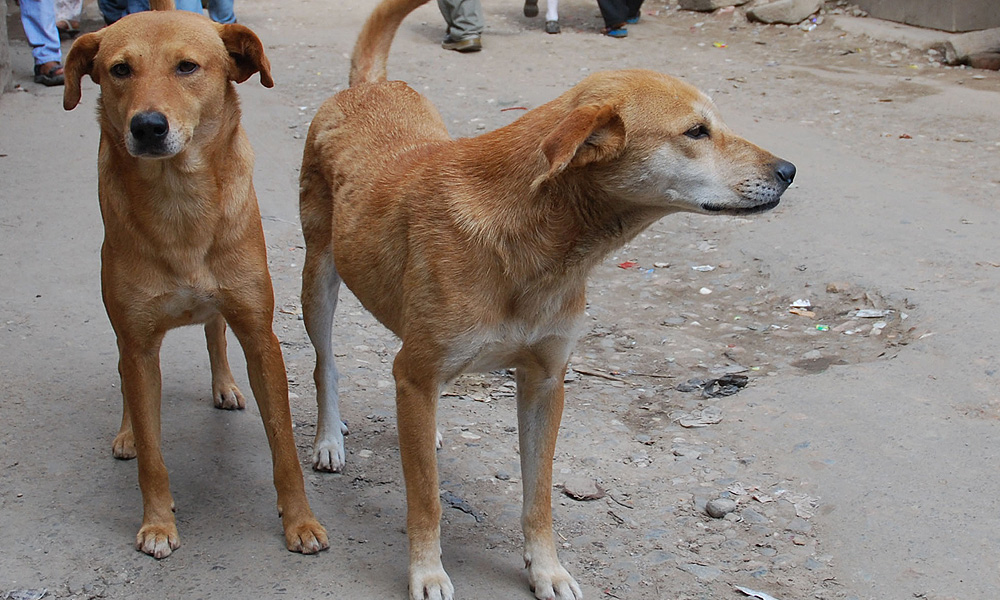
Overprotection of our fragile sensitivities have made us fearful of the outside world, that even innocent creatures like dogs become unacceptable.
Is our society better in today’s internet world if we are sheltered from content that makes us uncomfortable? How long can we shield ourselves from these things before we can be mature enough to tolerate their existence?
The last laugh
But what I fear most is that we are losing our sense of humour. We have lost the ability to laugh at ourselves.
Namewee lives in that grey zone of the serious and the absurd; the moral and the immoral; the light and the dark. He’s been known as a troublemaker since his schooldays. This rebellious streak continued until his adult life.
Some of what he publishes are indeed provocative, and some of what he does are indeed offensive. But none of these should merit legal action against his singular artistic expression.
Because a lot of his videos are actually funny. They’re offensive – but they’re funny. His fame abroad and the positive comments on his videos confirm this resonance.
And it is not a coincidence that the authorities who go after him are people devoid of humour.
And maybe Namewee’s work is here to remind us of something important: to always find humour - even in places that make us uncomfortable.
JAMES CHAI works at a law firm. His voyage in life is made less lonely with a family of deep love, friends of good humour and teachers of selfless giving. This affirms his conviction in the common goodness of people: the better angels of our nature. He tweets at @JamesJSChai.
The views expressed here are those of the author/contributor and do not necessarily represent the views of Malaysiakini.


Are you sure you want to delete this comment?
This action cannot be undone.