


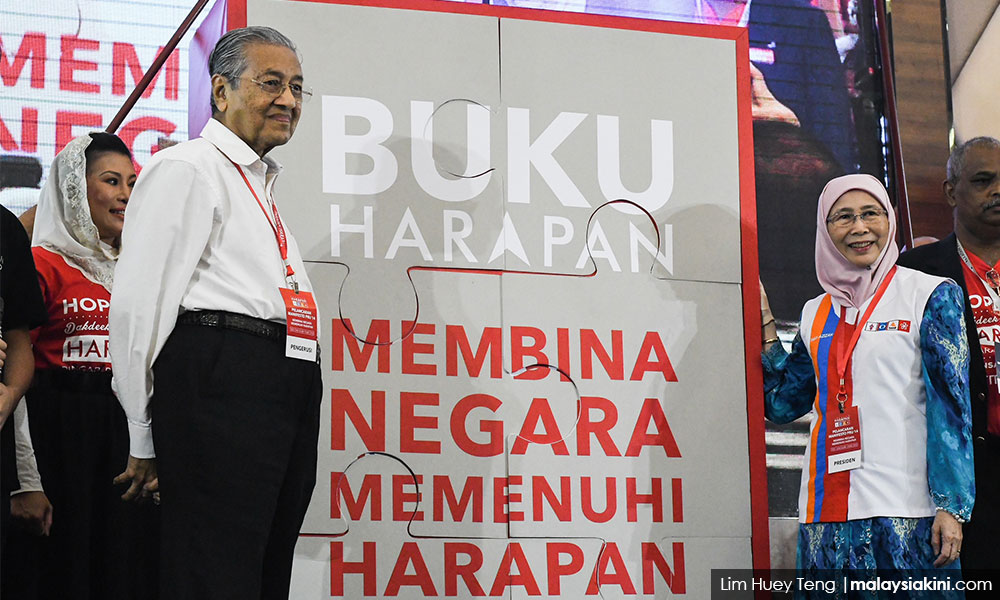

What a manifesto is - and isn’t
COMMENT | There’s been a fair bit of debate of late on Pakatan Harapan’s 14th general election (GE 14) manifesto.
This may be a good time to take a close look at what, in Malaysia at least, an election manifesto is and isn’t.
Let’s start with the "isn’ts".
I’d say that for most intents and purposes, the first and foremost "isn’t" is "something people read".
Obviously, some people do read the manifesto. I would hazard to say that the only Malaysians who read election manifestos closely from cover to (considerable) cover are the politicians and journalists.
Frankly, it doesn’t usually make for very gripping reading. Out of every point in the manifesto, there are maybe two or three things that matter a lot to you, and maybe five to 10 things that have any kind of effect at all on your day to day life.
One way to test this is, of course, via (an admittedly unscientific) straw poll. Have you read all or even most of the manifesto? How many people do you know who have read the manifesto?
If people are not reading the manifesto, then we have to question exactly how much influence the manifesto, as a whole, has an influence on the elections.
Of course, there are a few key points within the manifesto that become major talking points and core campaign issues.
However, that leaves very many more points that people may not know or care about - at least until someone tells them to.
Not a manifesto in the old, traditional sense...
COMMENT | There’s been a fair bit of debate of late on Pakatan Harapan’s 14th general election (GE 14) manifesto.
This may be a good time to take a close look at what, in Malaysia at least, an election manifesto is and isn’t.
Let’s start with the "isn’ts".
I’d say that for most intents and purposes, the first and foremost "isn’t" is "something people read".
Obviously, some people do read the manifesto. I would hazard to say that the only Malaysians who read election manifestos closely from cover to (considerable) cover are the politicians and journalists.
Frankly, it doesn’t usually make for very gripping reading. Out of every point in the manifesto, there are maybe two or three things that matter a lot to you, and maybe five to 10 things that have any kind of effect at all on your day to day life.
One way to test this is, of course, via (an admittedly unscientific) straw poll. Have you read all or even most of the manifesto? How many people do you know who have read the manifesto?
If people are not reading the manifesto, then we have to question exactly how much influence the manifesto, as a whole, has an influence on the elections.
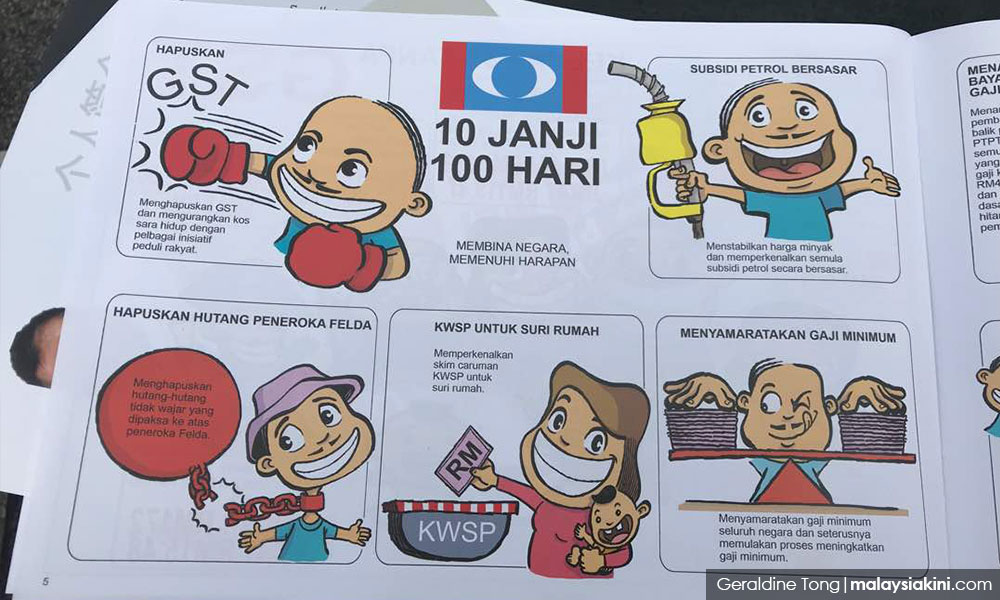
Of course, there are a few key points within the manifesto that become major talking points and core campaign issues.
However, that leaves very many more points that people may not know or care about - at least until someone tells them to.
Not a manifesto in the old, traditional sense
The second major "isn’t": A manifesto isn’t usually something that genuinely represents the entirety of a Malaysian political coalition - at least not in the way that a slightly distant idealist, like say esteemed fellow columnist Azly Rahman imagines a manifesto should.
The reason for this is that as far as I know and have experienced, a manifesto is not something that is worked on in a systematic way to maximise its representative accuracy.
In simpler words, there isn’t a whole lot of input from a wide cross-section of each party.
I think the process more commonly is one where a few of the more "brainy" people from each party are corralled together and assigned this job.
These individuals then set about the thankless task of coming up with the best they can, and their draft is then given what is probably a quick lookover by the top leadership in the coalition before it is approved.
The story told by Zainuddin Maidin (photo, below) is quite telling, and a little bit amusing. He recalls how his large team worked on the BN 1999 manifesto for over a month, submitted it to then prime minister Dr Mahathir Mohamad, only to have it completely thrown out and replaced with 10 handwritten pages produced over three hours.

Suffice to say that the process is often quite haphazard.
Mind you, politicians are fully aware that almost nobody is going to read this document, which explains why they do not focus a lot of their energy and attention to it while it is being drafted and finalised.
More to the point, politicians know that a manifesto is not what decides a voter's choice.
The nature of our democracy
On this matter, we have to recall once again the nature of our democracy.
Basically, the entire complexity of choosing who is best to lead us, and what direction we want our country to move in on so many varied, involved and complicated fronts, is reduced to the most basic definition of what it means to have a "choice" - that is, putting an "X" in one box or another.
We cannot write out how we feel about any given issue on our ballot. We cannot choose one candidate or party for one matter, and another for a different matter. We reduce every bit of our political agency nuance to that one "X".
Of course, we (perhaps sadly) don’t see the widespread revolt in Malaysia because our opportunity for exercising political choice with any genuine depth is taken away.
This is likely because most Malaysians (and most people anywhere) vote based on fairly simple sentiments.
Either you like these guys more, or you like the other guys more.
Of course, a great number of things influence which of the two (or more) you choose, but a thick, complicated manifesto is generally pretty low on that list.
I would go so far as to say that for many voters, it’s a gut decision that they do not spend a whole lot of time debating.
Do better next time
Thus far, one might be forgiven for thinking that this is an article arguing that we should not hold Harapan to its manifesto.
Such is not my intent. I write the above merely in the hope that we understand the context in its entirety.
Also, we haven’t got to the "is" part.
I think a manifesto is an excellent chance for a government to demonstrate its integrity.
If you are one of the 20 Malaysians (I exaggerate of course) who has actually read the manifesto, you’ll see that there’s a whole lot of stuff in there.
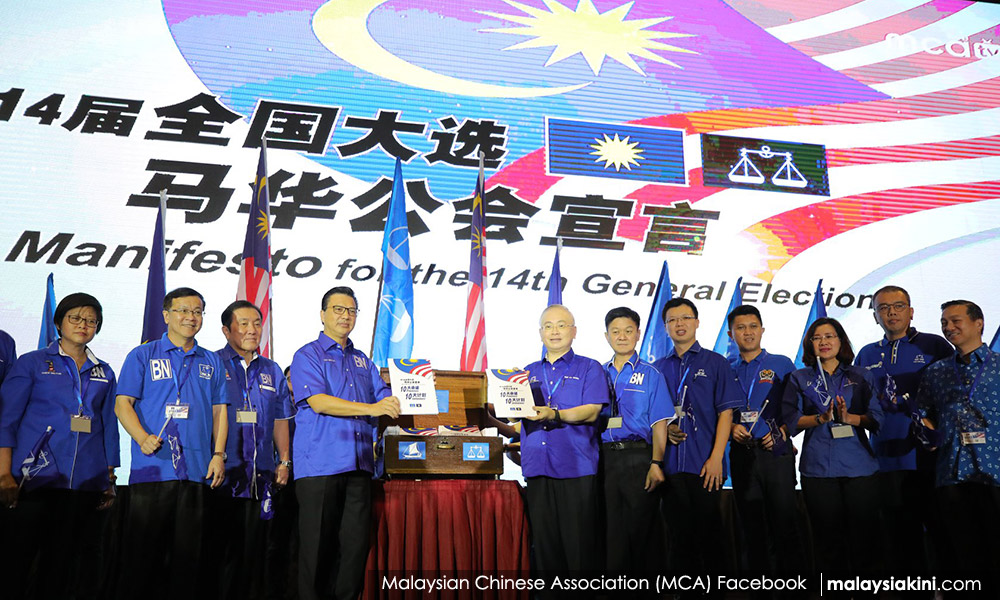
I think it is fair to be disappointed regarding the unfulfilled pledges. However, on a purely practical basis, any realistic analyst would hardly be surprised that a government - consisting of humans and not deities - did not fulfil every single thing in this rather ambitious document.
Does this warrant criticism? I think the criticism is fair; especially the criticism that one should not promise so much if one cannot deliver. One could also fairly say: next time, please scrutinise your manifesto much more closely before approving it (regardless of how few people will read it).
Transparency and accountability
I imagine most reasonable Malaysians are willing to give some leeway for extenuating circumstances.
If say, global economic conditions have changed significantly (the US-China trade war might be an example), then perhaps it would be somewhat understandable if fulfilling certain pledges are not as financially feasible as originally thought to be.
There are times when the wording can be mildly ambiguous, as perhaps in the case of appointing certain individuals to the boards of government universities.
Ultimately though, I think it is important that Harapan does not brazenly violate anything within its manifesto, regardless of how the document came to be, or how much the general public cares about it.
Simply put, honesty matters.
At the heart of good governance are the principles of transparency and accountability. One cannot pick and choose where to apply them; they are applied everywhere, or they are not applied at all.
If there truly is a pressing reason why a pledge cannot be fulfilled, then please explain it in an extremely formal and thorough manner.
Should the explanation be convincing and backed up with solid evidence, I trust that Malaysians will understand.
In every other circumstance, keep to your promises. Who are we really, if we can’t even do that?
NATHANIEL TAN congratulates Anwar Ibrahim on his increased majority in Port Dickson.
The views expressed here are those of the author/contributor and do not necessarily represent the views of Malaysiakini.


Report this comment
Are you sure you want to delete this comment?
This action cannot be undone.