




COMMENT | No need for nitpicking over Indian custodial deaths
As Malaysians reflect over our internal injustice in light of the ‘Black Lives Matter’ movement in the United States, Suaram’s statistics on custodial deaths came to the fore of public discussion with some using Suaram’s data set to substantiate their views while others raised concerns on inherent inaccuracies and potential misinterpretation.
As the person sifting through limited data and producing them in the data set in Suaram’s report annually for the past five years, I think it is a good time for me to make a minor intervention...
COMMENT | As Malaysians reflect over the internal injustice in light of the Black Lives Matter movement in the United States, Suaram’s statistics on custodial deaths came to the fore of public discussion with some using Suaram’s data set to substantiate their views while others raised concerns on inherent inaccuracies and potential misinterpretation.
As the person sifting through limited data and producing them in the data set in Suaram’s report annually for the past five years, I think it is a good time for me to make a minor intervention to clarify the data that is out there based on the Suaram’s report.
How accurate is Suaram’s data?
To begin, I must first point out that data sets on social issues are often lacking or incomplete. Let us take a closer look at the information on deaths in police custody.
Parliament itself has provided contradictory answers to questions raised by its members. According to an answer provided to Kasthuriraani Patto in March 2018 parliamentary session, a total of 140 deaths in police custody were recorded between 2008 and 2018 (with 53 Malays, 28 Chinese, 34 Indians, 22 foreigners, and three from other ethnicities).
In the same session, a separate statistic that was provided suggests that there were 118 deaths between 2010 and 2018. Is it accurate then to say 2008 and 2009 itself accounts for 22 custodial deaths? Usually, I would say yes. In my experience on this job, it’s definitely a no. What I would do is validate by looking through older data sets provided.
One of such was provided in Parliament in October 2014, detailing seven deaths in 2009; and other data provided in June 2009 suggest 13 deaths occurred in 2008 (unfortunately, the Parliament reply for this question was not available online at the time of writing). Now, if you add these numbers, we are looking at a total of 138 cases reported by Parliament between 2008 and 2018. What happened to the two unknown individuals that seemingly vanished between the available statistics?
Fortunately, some of these data tally to a certain extent with data provided by the police to the Malaysian Human Rights Commission (Suhakam). They also provided an ethnic breakdown of these numbers and went further back in time as compared to those provided in Parliament (Page 35).
I do not want to read into the breakdown based on ethnicity here. I will let the readers read the report, look into them, and draw your own conclusion based on Suhakam’s overall observation.
Going back to the point, I started with incomplete data. I would like to think that at this point I have managed to make it clear that government data is murky at best and it takes years of the data request to various agencies and Parliament to even get to where we are.
Knowing the inherent inaccuracies of the data set available to us, we can only vouch for data that we have collected and verified ourselves by investigating, documenting and recording each individual case and comparing the information we collected with Parliament data and produced below:
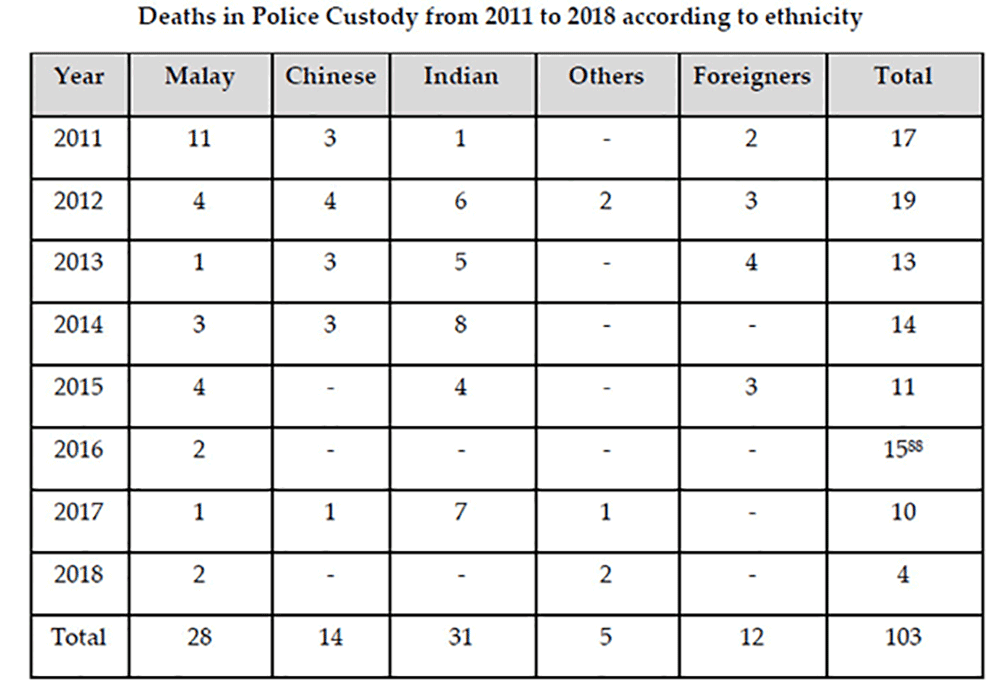
Is this data set sacrosanct? Of course not. You will notice immediately that data on our annual death are different from those provided by Parliament, as listed below:
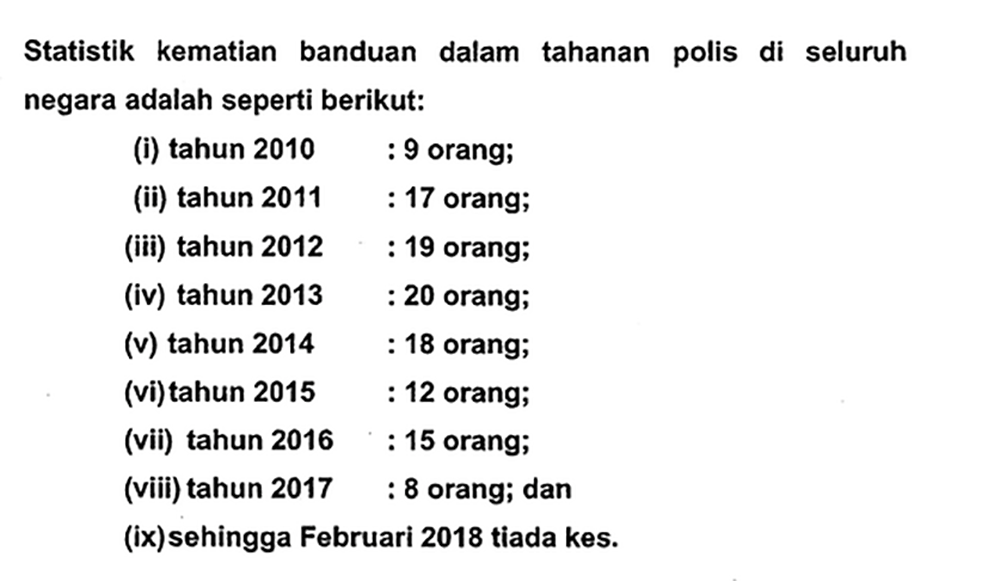
But what I can say in confidence is that each of those numbers you see printed in Suaram’s annual report has a name to them. There was an attempt to find out who they were, why they were detained, and how they met their untimely demise in detention. We know that these deaths did occur at a specific time at a specific place. Either way, I would say that the deviation in Suaram’s data from Parliament is not significant enough to dismiss Suaram’s data set.
Now let’s go back to why I am clarifying how I arrived at Suaram’s data that suggest that a substantial number of reported deaths in custody are Indians. I rarely felt the need to write an article to clarify the matter as I believe Suaram’s report outlines the available data well enough that it would be possible to read and understand them without a guide.

However, with the growing debate on the findings and implication alongside problematic comments made based on the interpretation of this data, I believe it is time I comment on it myself.
I take note of some of the comments that suggest this interpretation is inaccurate, as the data merely suggest Indians are more likely to vent their grief publicly or there may just be more Indian detainees in police custody. To me, such comments are problematic at best and willfully ignorant at worst as it relies on two things. One, anecdotal evidence by a person on ethnic stereotype is enough to disprove established statistics; and two, the death of these individuals is merely a numbers game.
Statistics vs anecdotal evidence
Suaram’s data from 2011 to 2018 point to a total of 103 cases. To make the comparison easier, let us take out 2018 where Parliament data are unavailable and 2010 where Suaram did not include in our table above. In the period, Suaram documented 99 cases of custodial deaths, whereas Parliament reported 109.
From there we can derive Indians make up 31.3 percent of the custodial deaths based on Suaram’s data as compared to 28.4 percent based on Parliament data, and this runs the presumption that none of the cases Suaram did not account for involves Indian detainees.
That deviation is relatively low. It would seem that all the grief that Indians supposedly express when compared to other ethnic groups barely changed the statistic.
So on to the next point raised on the representation of Indians in police detention. Unfortunately, I have to agree that there are no data whatsoever on the matter, and I do not believe anyone barring the Royal Malaysian Police and the Home Affairs Ministry would have anything conclusive on the subject matter. However, I would like to challenge the proposition put forward by some commentators.
Just a numbers game?
To me, nitpicking on whether the death of Indians in police custody is disproportionate carries the implication that we have no cause for anger if the 28.4 percent or 31.3 percent of the deaths involving Indian detainees were merely reflecting the overall detention population. Should we only be angry and concerned about the high prevalence of custodial deaths if its disproportionate to the number of Indian detainees in police custody?
If so, at which point should I or others be concerned or angry? 10 percent of deaths above the overall population? 15 percent? 25 percent? 50 percent?
If anything at all, right-minded Malaysians should feel concerned at the fact that an ethnic minority is disproportionately represented in a known and verified statistic on custodial death. If it turns out that the numbers of ethnic minority represented in detention is proportionate to the number of deaths in custody, they should feel even more concerned that an ethnic minority is disproportionately represented in police custody and that detainees are dying without any cause in detention.
I hope my views on the matter would help clarify some concerns and ambiguity behind Suaram’s data on custodial deaths and it would drive renewed debates and discussion on Malaysia’s way forward on challenging racial discrimination in our society.
The views expressed here are those of the author/contributor and do not necessarily represent the views of Malaysiakini.




Report this comment
Are you sure you want to delete this comment?
This action cannot be undone.