




History - a post-modern bend
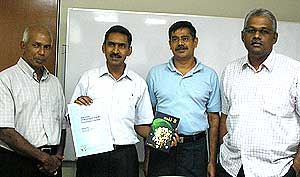
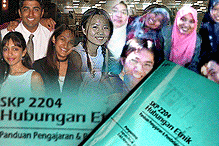
For quite a few days now, the Chinese dailies have been brimming over with blazing headlines about the guide book for a race relation course in UPM. A reporter has gotten hold of a copy of the guide book, and a few extremely contentious points were highlighted.
For instance, in the guide book, the May 13 was blamed on the DAP who was supposed to be representing the Chinese. The Kampong Medan incident in 2001 was blamed on some Indians. The Suqiu (pronounced Soo Chiew) was pronounced to be racist and extremist.
This sort of blame game obviously comes from a very specific racially-prejudiced view- point.
Blaming the Chinese and the DAP for the May 13 Incident has its source in the Malay Dilemma , the book written by a former PM. The book was banned when the former PM was ejected from Umno. That ban was lifted after he had become the PM of Malaysia. It was the same PM who branded the Suqiu group as extremists, a claim so ludicrous that I would not even try to refute it.
For quite a few days now, the Chinese dailies have been brimming over with blazing headlines about the guide book for a race relation course in UPM. A reporter has gotten hold of a copy of the guide book, and a few extremely contentious points were highlighted.
For instance, in the guide book, the May 13 was blamed on the DAP who was supposed to be representing the Chinese. The Kampong Medan incident in 2001 was blamed on some Indians. The Suqiu (pronounced Soo Chiew) was pronounced to be racist and extremist.
This sort of blame game obviously comes from a very specific racially-prejudiced view- point.
Blaming the Chinese and the DAP for the May 13 Incident has its source in the Malay Dilemma , the book written by a former PM. The book was banned when the former PM was ejected from Umno. That ban was lifted after he had become the PM of Malaysia. It was the same PM who branded the Suqiu group as extremists, a claim so ludicrous that I would not even try to refute it.
I am dying to know how the issue is covered in the Tamil press, but I do not read Tamil, so that is that. Apparently, even the MIC leaders are not amused.
One can only imagine how the students will react to this sort of course material. Among some Malay students, it will perhaps entrench in them all the ideology of resentment as contained in the nationalist myth propagated by the former PM.
For the Chinese and the Indian students, they will probably be seething with silent righteous rage, since the stories they have inherited from their family and community elders are vastly different from the monstrous national narrative of what actually happened in those tumultuous events.
Equally monstrous, is the clarification given by the Minister for Higher Education in Parliament. "I have checked with the writer and other reference books. There is no distortion of historical facts." He also said the expertise of prominent Malaysian academics were involved in drafting the module, as if the academics were responsible for the content of the guide book, and hence for all the glaring mistakes in the guide book.
Highly selective interpretation
With his superficial understanding of history and historicity, the minister is hardly qualified to be put in charge of our all important institutions of higher learning.
Of course some ugly incidents did happen as facts. But unlike brute facts of nature, historical facts are much more malleable and intractable. How the facts are described and named are very much a matter of highly selective interpretation, and cannot claim the kind of objectivity associated with the facts of the natural sciences.
Furthermore, the explanation after the so-called fact of why any group of people acted in such a way in history is even more speculative. This sort of wisdom after the event simply cannot be falsified completely, and it is very difficult to decide why one explanation is more plausible then another. History is not an exact empirical science like physics.
This does not mean that anything goes in the writing of history, or that the study of history is not important in the universities and the community at large. After all, our history is the depository of our collective memory. We are all "formed and determined by our History" as Foucault would say.
 It does mean that in the long history of philosophy in the West, the philosophy of history has always been a battleground of different schools of thought all claiming with their vastly different theories about what history ought to be. For instance, Marx's idea of historical materialist dialectic is diametrically opposed to Hegel's idealist concept of the Absolute Spirit working through the contradictions of Time.
Here in Malaysia, the history that is taught in schools is the discourse of Malay ethnic nationalism, that simplistic ideological construct of Umno. Nationalism and the nation states, as that Marxian historian Eric Hobsbawm will tell you, is the mainstay and a product of modernising forces first in Europe, and then throughout the world.
The emergence of Malay ethnic nationalism in Indonesia and Malaya after WW2 probably had its historical legitimacy. But that feasibility is itself slowly eroded away by the process of rapid modernisation and globalisation, and it is only now that the violent and nihilistic contradictions of modernity are beginning to be understood.
The best antidote to the blind optimism and insane excesses of modernity is post-modern reflection.
Michel Foucault, the grandmaster of postmodernism, has this to say about history:
"Here (in the study of history), I believe one's point of reference should not be to the great model of language and signs, but to that of war and battle. The history which bears and determines us has the form of a war rather than that of a language: relations of power, not relations of meaning."
Truths and knowledge
History is a war, that of many discourses, all of which are born from man's will to power, interest and desires. Daily, our public and private spaces are saturated with discourses fighting with one another for the right to interpret and narrate the stories of our world.
Traditionally, we tend to think of power in the negative sense of domination, control, discipline, and the deprivation of personal freedom. Foucault's greatest contribution is in revealing the positive productive and reproductive nature of power. Through discourse, power produces truths and knowledge.
Foucault's idea of genealogy is a painstaking study of historical events and records, especially in tracing the moment when there has been a significant turn in the discourse, with the aim of finding out how a particular truth came to be the truth.
 This view of history is highly subversive, to say the least. It denies the validity of mere historical "facts", and negates even the existence of foundational essentialist Truth with a capital "T".
If you apply this theory to the official version of how the May 13 incident came about, then you realise that the "truth' recorded in our history text books is merely a triumph of one narrative over the others, for the moment. The prominence of that "truth" as a truth, and its labelling and categorisation as an immutable "fact", is merely a result of the most powerful institution in the land, i.e., the government exerting its will to power.
Fortunately, the world is condemned to be pluralist. For any discourse, no matter how dominant or powerful, there are always counter-discourses. With a change of a PM in Malaysia, even the government's national narrative has gone through a slight shift. As I write, the cabinet has made a decision to withdraw the offensive guide book, and ordered a re-examination of the race -relation course.
What some Malaysian academics may want to do is to give a postmodernist treatment to the official account of how the May 13 incident happened. That will involve a great deal of very pedantic excavation work in what Foucault called the "archaeology of knowledge". At least many of the eye witnesses are still alive to day. The purpose is to find out how the official grand narrative of the event has been shaped by the war of discourse at that time, until it came to be the dominant 'truth' of to-day.
I did wonder aloud about the possibility of such a project once, when attending a small seminar organised by a local university. It was as if a bomb had been dropped in the middle of the room. The assembly of very distinguished and multi-racial scholars were visibly uncomfortable with the idea. A lady opined that such a project may not be so prudent after all.
I then realise that if Foucault was a Malaysian professor, he would have been detained indefinitely without trial under the ISA for sedition.
For the past decade or so, I have scoured books and periodicals written by experts and scholars all over the world on the question of race and ethnicity. The publication of books and materials on these subjects has become a huge industry for the past twenty or so years.
Will not succeed
Yet, despite the mammoth amount of very learned attention and painstaking research on these explosive and bloody fields of grave human concern, the best minds of the world cannot seem to agree on what constitute race and ethnicity. The most contentious debate is whether race and ethnicity are simply manufactured fabricated truths of history, or social facts like religion that are essential to our human condition.
And some Malaysian politicians and bureaucrats think they have all the answers, and think they can teach our university students all these eternal truths about race relations?
After all, our universities are not much a sanctuary for learning in the sense of exploring meaningful knowledge without fear or favour. They are even less a community of scholars. They are a powerful institution of state, from which the power flows, to produce the manpower required by the political-economic apparatus of the nation state, and to discipline young Malaysians into obedience consumer of the dominant discourse of the national narrative.
With the spectre of racism still raging through the national fibre, a course on race relation - no matter how its is designed - will not succeed in promoting meaningful dialogue between the races.
Scrap the course altogether, I say, unless we have the political will to reform our universities inside out first.


