


/file/publisher-c1a3f893382d2b2f8a9aa22a654d9c97/2020/09/385dae77e0e965640ed378718637bab3.jpg)

BOOK REVIEW | Malaysia is not a cultural desert
BOOK REVIEW | How do we begin talking about Malaysian art?
June Yap’s Retrospective: A Historiographical Aesthetic in Contemporary Singapore and Malaysia, gives this challenge a try. The result is an ambitious look at how regional contemporary art does more than capture the past, and instead also produces its own narratives of history.
This work is an extensive survey that spans several recent decades and takes into consideration the works of artists such as Wong Hoy Cheong, Green Zeng, Dain Iskandar Said and Reza Piyadasa, examining how they interpret the glossed-over and/or simplified histories of the Orang Laut, the Singaporean leftists and "Ops Lalang", among others.
The challenge with Yap’s book is that it is not accessible to a layperson audience, requiring a certain degree of familiarity with critical theory beforehand. The text, while informative, is often dense, and Yap also quotes extensively from the philosopher Georg Wilhelm Friedrich Hegel - who has a reputation for being notoriously difficult to read and understand.
Still, she lays out historical facts in great detail and her work catalogues various threads and recent important works of art, and the result can be vivid. The strangeness of some of the works surveyed, such as the aforementioned Wong’s alternative history “documentary” of the Malaysian conquest and colonial rule of Austria, or his public spraying of...
BOOK REVIEW | How do we begin talking about Malaysian art?
June Yap’s Retrospective: A Historiographical Aesthetic in Contemporary Singapore and Malaysia, gives this challenge a try. The result is an ambitious look at how regional contemporary art does more than capture the past, and also produces its own narratives of history.
This work is an extensive survey that spans several recent decades and takes into consideration the works of artists such as Wong Hoy Cheong, Green Zeng, Dain Iskandar Said and Reza Piyadasa, examining how they interpret the glossed-over and/or simplified histories of the Orang Laut, the Singaporean leftists and "Ops Lalang", among others.
The challenge with Yap’s book is that it is not accessible to a layperson audience, requiring a certain degree of familiarity with critical theory beforehand. The text, while informative, is often dense, and Yap also quotes extensively from the philosopher Georg Wilhelm Friedrich Hegel - who has a reputation for being notoriously difficult to read and understand.
Still, she lays out historical facts in great detail and her work catalogues various threads and recent important works of art, and the result can be vivid. The strangeness of some of the works surveyed, such as the aforementioned Wong’s alternative history “documentary” of the Malaysian conquest and colonial rule of Austria, or his public spraying of herbicides over the lalang that he planted in front of the former Balai Seni Lukis Negara, come to life in the context of whitewashed historical facts. But Yap is not the only one to write on the subject and in fact, references a work that 50 years earlier was a gem of contemporary art history in its own right.
A collection of articles, written in Chinese, were published in the month that Singapore, Malaya, Sabah and Sarawak merged to form Southeast Asia’s youngest country. All at once, A Brief History of Malayan Art (马来亚艺术简史) by Marco CF Hsü (瑪戈), was both a momentous and anachronistic text - the country known as Malaya no longer existed, but contained within it, the artistic movements of the Malay peninsula and Singapore were catalogued. Hsu’s book, although heavily grounded in the work of ethnic Chinese artists inspired by their tropical surroundings, was not exclusively communal.
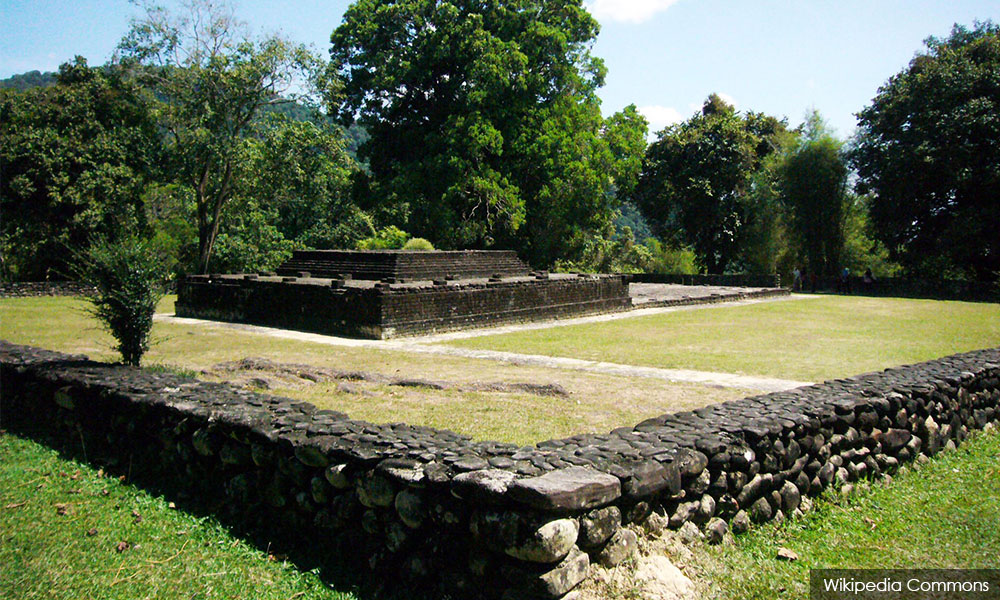
In fact, he traces the idea of Malayan art back to the Lembah Bujang civilisation, describing the treasures unearthed from the mysterious site, and also includes chapters on indigenous and Malay art. Hsü’s work was largely forgotten in Malaysia during the intervening years, perhaps partly because of it could be read as a Singaporean text, as well as the overwhelmingly Malay-centric focus of the post-May 13th National Culture Policy. Either way, its reappearance in a lavish 1999 translation was a surprise.
Extensively worked upon by Lai Chee Kien, the English-language version came complete with photographs and illustrations to bring Hsü’s almost-forgotten work to life once more. The act of translation brings to life the ethos and work in the “Nanyang Style” across many of the pioneering artists of his period, and the movements such as the Equator Arts Society and the work of artists such as the enigmatic Georgette Chen. Whereas Yap’s text can be academic, almost sterile, Hsü’s voice in translation is lively and descriptive, featuring artists he was very familiar with.
Dreamlike, maddening
Although out of print, and relatively difficult to find, A Brief History... remains a crucial addition to the narrative of art and society, concluding that Malaya is not a “cultural desert” after all, despite assumptions of it being a backwater. With that being said, Hsü’s work is far from being forgotten - on the 50th anniversary of its publication, the NUS Museum ran a three-year exhibition commemorating the book’s publication and its legacy today.
As for the subject of an artist-in-the-making, there is a republication of the student diaries of the artist, writer and translator Zakaria Ali by the Kelantan-based publisher, Buku Hitam Putih. Diario de Mexico is decidedly personal and anecdotal, documenting Zakaria’s experiences crossing the border from the American South to Mexico, where he spent several formative student years. The setting can feel downright exotic from a Malaysian perspective, with journeys on donkeys and hikes up to the volcanic heights of Popocatépetl.
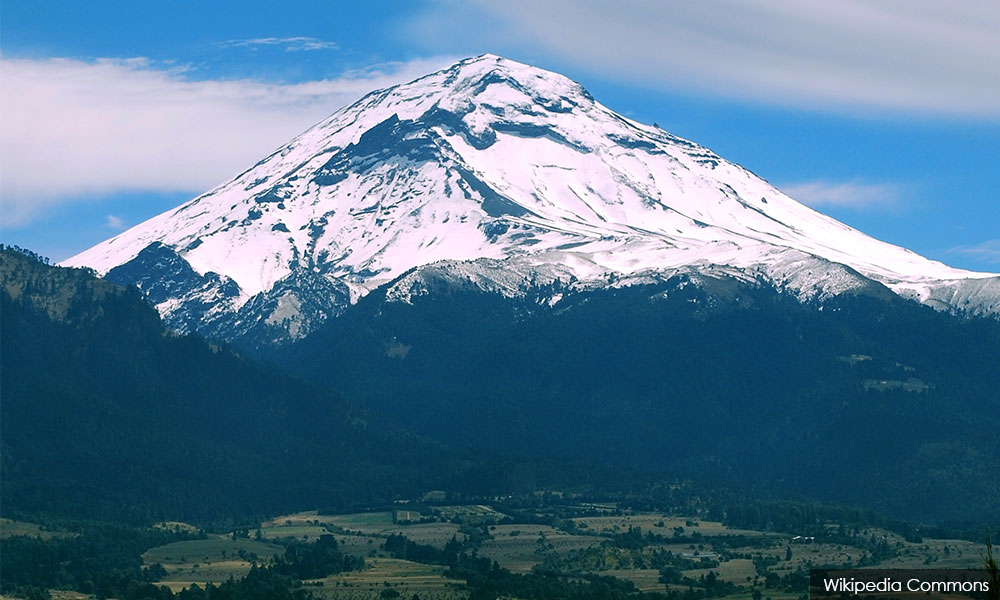
Some scenes are almost dreamlike, such as his accidental meeting with Octavio Paz, and others maddening, such as how the search for lost luggage takes on Kafkaesque dimensions. But at the same time, it does not cease to be political. Written while the world was in the throes of the Long Sixties, and with the grand restructuring efforts of the New Economic Policy back home (only to be defeated by its overt strategy of trying to create a Malay capitalist class), Zakaria, being young and Malay abroad, muses on his situation.
He does not limit his scope to the home country and writes on the bureaucracy and official corruption experienced in Mexico at the time while recognising his own affinity with ordinary Mexicans, whom he felt that under the different circumstances he could blend in. There is something of the ethos of the Beat generation, recalling Kerouac’s road trips, and even some observations that could fit right into Che Guevara’s Motorcycle Diaries, as the narrative weaves idealistically between the cynicism of the real world and the promise and potential of art.
“Perang yang dilancarkan oleh seniman ialah terhadap kemandulan ide,” he writes. Written in the blaze of youth, this edition, complete with reproductions of artwork and various souvenirs, offers up the colourful portrait of an artist as a younger man.
(Writer’s note: Although the subject is “Malaysia”, “Malaya” would really be more accurate, since the books reviewed here are still heavily peninsula-centric. Besides this book, the Naratif Seni Rupa Malaysia series, as well as the works of TK Sabapathy, are also highly recommended.)
WILLIAM THAM WAI LIANG is an editor at Gerakbudaya and the author of two novels. His new novel, The Last Days, is set in 1981 and covers the continuing legacy of the Emergency. His first book, Kings of Petaling Street, was shortlisted for the Penang Monthly Book Prize in 2017.
The views expressed here are those of the author/contributor and do not necessarily represent the views of Malaysiakini.


Report this comment
Are you sure you want to delete this comment?
This action cannot be undone.