



BOOK REVIEW | No compromise on meritocracy
BOOK REVIEW | Unlike the usual autobiographies of leaders and captains of industry, this one is more than a mere one man’s survival in a government agency where danger lurked in every corner - from inept colleagues to ambitious politicians.
To steer away from the inherent dangers, some people perfect a system of deflecting issues and running away from them into fine art. But not M Rajasingam – he took them head-on. Without mincing his words, he notes: “I survived navigating turbulent times with an unblemished clean record... in a corrupt country like Malaysia.”
His journey to Port Swettenham Authority - now Port Klang Authority (PKA) - began when he received his letter of appointment to report for duty on July 1, 1965 as assistant traffic superintendent.
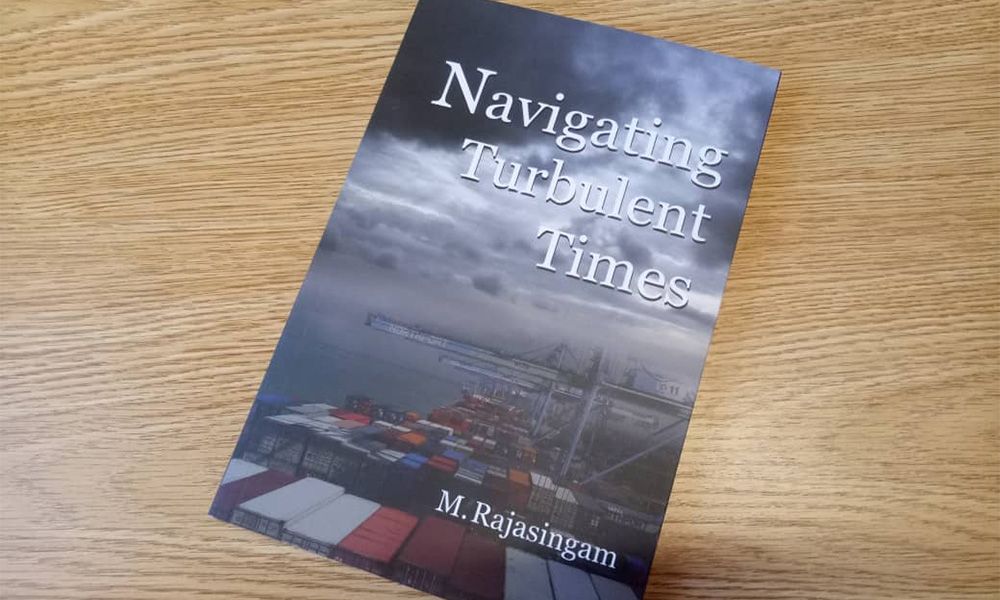
In "Navigating Turbulent Times", Rajasingam narrates his 33-year experience with the PKA with no-holds-barred views for readers. Readers are left to judge for themselves how he managed those challenges and came out unscathed with his head held high.
He writes passionately about his father, who himself had a distinguished service record with the Customs Department. He would adhere steadfastly to his father's advice: “Please remember: Always walk with your head held high.” It is obvious that he is a chip off the old block.
This, Rajasingam notes, calls for “dedication, commitment, pride in performance, work beyond the call of duty and above all, service to the nation".
It was not plain sailing for him in PKA. Being an Indian and holding executive post, he discovered to his horror, the reality of working life where racism, cronyism, corruption and political pressure from ultra-nationalists who left no stone unturned to discredit him...
BOOK REVIEW | Unlike the usual autobiographies of leaders and captains of industry, this one is more than a mere one man’s survival in a government agency where danger lurked in every corner – from inept colleagues to ambitious politicians.
To steer away from the inherent dangers, some people perfect a system of deflecting issues and running away from them into fine art. But not M Rajasingam – he took them head-on. Without mincing his words, he notes: “I survived navigating turbulent times with an unblemished clean record... in a corrupt country like Malaysia.”
His journey to Port Swettenham Authority - now Port Klang Authority (PKA) - began when he received his letter of appointment to report for duty on July 1, 1965, as assistant traffic superintendent.
In "Navigating Turbulent Times", Rajasingam narrates his 33-year experience with the PKA with no-holds-barred views for readers. Readers are left to judge for themselves how he managed those challenges and came out unscathed with his head held high.
He writes passionately about his father, who himself had a distinguished service record with the Customs Department. He would adhere steadfastly to his father's advice: “Please remember: Always walk with your head held high.” It is obvious that he is a chip off the old block.
This, Rajasingam notes, calls for “dedication, commitment, pride in performance, work beyond the call of duty and above all, service to the nation".
It was not plain sailing for him in PKA. Being an Indian and holding executive post, he discovered to his horror, the reality of working life where racism, cronyism, corruption and political pressure from ultra-nationalists who left no stone unturned to discredit him.
Rajasingam writes that his first baptism into racism came two months after he started working when he rebuked a colleague for coming late to office. He was shocked when told: “Don’t ever forget you are the only Indian officer in the operations department. Don’t ever try to be smart. We call the shots. Be very careful.”
It was a challenging time where he, coming from a minority group, had to face insurmountable political pressure to comply with the New Economic Policy (NEP) of giving preference to race rather than meritocracy for key posts in PKA.
Meritocracy is the theme of the book for which sets out his journey as a young officer until he retired as general manager. Indeed, any compromise to meritocracy, he argues, will not do good to any organisation.
Rajasingam writes: “The success story of any port is judged by the efficient performance of ship handling, cargo clearance, minimal damage and loss of cargo in addition to port and maritime safety of the highest standards. To achieve this, we needed the highest calibre of human capital on the board with integrity and corporate governance as their hallmark.”
To achieve these criteria, he refused to employ or promote fools (as he refers to them) with political clout just to satisfy the NEP. He argued that he was not being racial with his tough decisions for meritocracy.
He even challenged a (then) powerful Selangor Umno group by showing he was prepared to promote three Malay officers purely based on merit if they could secure three posts for them by convincing the Public Service Department.
Calling a spade, a spade, he even challenged ministers to prove his point and to show them what he was doing.
Episodes of heroism, exceptional leadership qualities, negotiation skills, competencies, responding beyond the call of duty, and a burning passion to make PKA a household name runs throughout the book.
Rajasingam had an unenviable task to transform PKA to be better than the Singapore Port Authority. He made many bold and daring changes by extending and deepening the port for big ships to berth using the PKA's own money without seeking funds from the Treasury. Even then prime minister, Dr Mahathir Mohamed, was surprised with his capability which saw PKA being financially sounds and self-sufficient.
Challenges not only came from political circles but a stifling civil service system which attempted to put square pegs in round holes. He writes that this is one area which should be left to the professionals to do without hindrance.
Corruption was one of the biggest problems he faced in PKA. He took it in good stride, facing them with courage, and putting fear into corrupt executives not to test him.
Being straight and honest will create a fair number of enemies. Rajasingam was shocked to know that there had been 200 poison letters lodged against him with various agencies, but none was able to pin him down on any misdemeanour or illegality.
When he retired, he had left a tidy sum of RM500 million in PKA’s coffers, but a few years later, PKA was on the verge of insolvency and only an injection of RM4 billion from the government saved it from going under.
"Navigating Turbulent Times" is available at Gerakbudaya.
The reviewer is a former civil servant who is attending a writing course conducted by Kini Academy and shares the same vision and passion as the author in bringing about much-needed changes to our system of administration. He can be reached at: thassanmy@yahoo.com
The views expressed here are those of the author/contributor and do not necessarily represent the views of Malaysiakini.



Are you sure you want to delete this comment?
This action cannot be undone.