



COMMENT | Rethinking housing affordability objectively and rationally
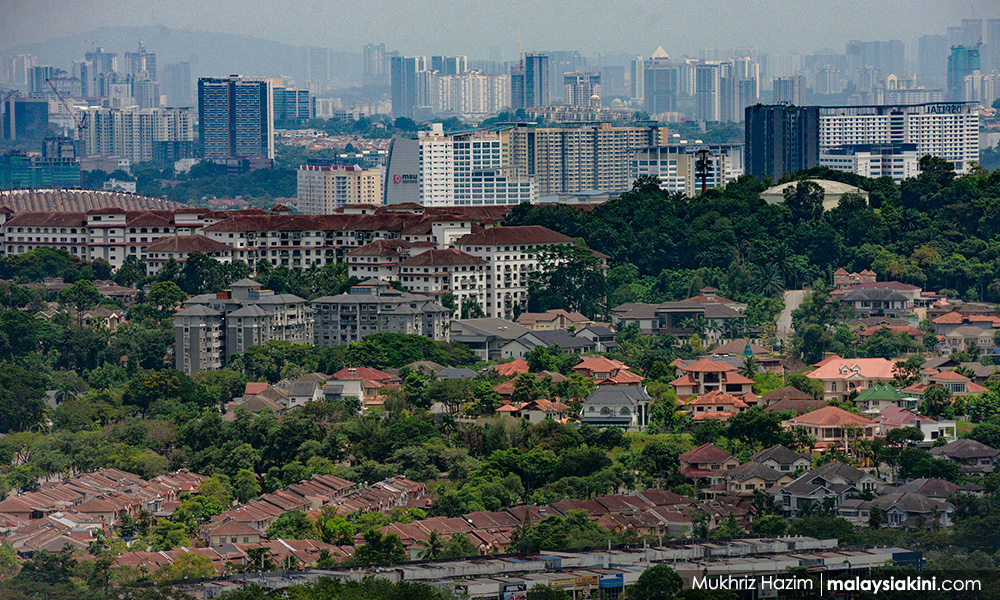
COMMENT | Often, there are voices proclaiming that the government has done too little to regulate house prices in the market, leading to the widening gap between income and house price, and hence, deteriorating the people’s ability to afford housing.
Given that housing is a merit good that an individual should have on the basis of need, house prices should be controlled in order to ensure they are affordable to the average rakyat.
While such an argument can be defended on the ground of social justice, one must realise that interfering with house prices can further propagate the deviation of house prices from its fundamentals, resulting in a profound structural problem to the country’s housing supply-delivery system.
This is because the entire housing industry functions as a balanced ecosystem, with various stakeholders – manufacturers, contractors, developers, real estate agents, insurances, bankers, house buyers, investors, government agencies, etc. – inextricably connected to each other, in such a way that each entity in the industry affects and is affected by others.
Disturbing the balance of the ecosystem can pose a negative impact on all stakeholders relying on it.
The negative impact of price control can be seen through the housing policy implemented in New York City...
COMMENT | Often, there are voices proclaiming that the government has done too little to regulate house prices in the market, leading to the widening gap between income and house price, and hence, deteriorating the people’s ability to afford housing.
Given that housing is a merit good that an individual should have on the basis of need, house prices should be controlled in order to ensure they are affordable to the average rakyat.
While such an argument can be defended on the ground of social justice, one must realise that interfering with house prices can further propagate the deviation of house prices from its fundamentals, resulting in a profound structural problem to the country’s housing supply-delivery system.
This is because the entire housing industry functions as a balanced ecosystem, with various stakeholders – manufacturers, contractors, developers, real estate agents, insurances, bankers, house buyers, investors, government agencies, etc, – inextricably connected to one another, in such a way that each entity in the industry affects and is affected by others.
Disturbing the balance of the ecosystem can pose a negative impact on all stakeholders relying on it.
The negative impact of price control can be seen through the housing policy implemented in New York City – rent control – where the government limits how much a landlord can charge a tenant or by how much the landlord can increase prices annually.
While the intention of rent control is to make rental units cheaper for tenants than they would otherwise be, the net effect is to discourage real estate entrepreneurs from becoming landlords, thus creating a supply situation in which there is less rental housing available than the amount that would be created by the free market.
Since there is a queue of people willing to rent each apartment and landlords are not permitted to discriminate based on price, the landlords will discriminate on whatever characteristic they please. Landlords may even ask for under-the-table payments from tenants or require renters to hand over an initial fee in order to sign the lease.
Another typical example is the problem of cross-subsidisation – a direct outcome of building price-controlled social housing in Malaysia. To note, Malaysia is the only country in the world that the private sector is imposed with compulsory price-controlled social housing quota across the board nationwide.
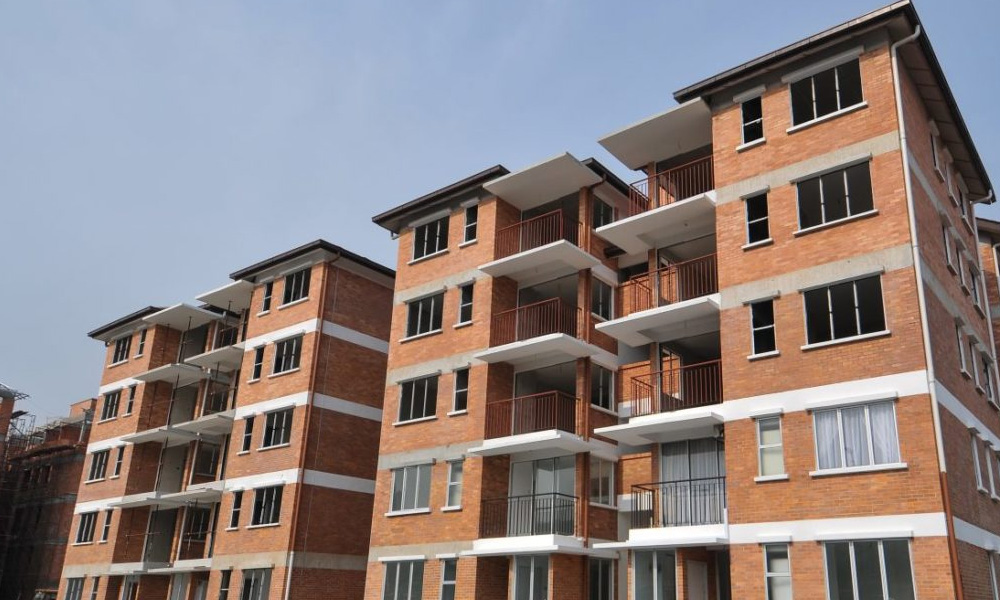
In Selangor, for example, developers are mandated to deliver a certain percentage of their free-market housing products as a combination of Rumah Selangorku (RSKU). Since the actual development cost of an RSKU unit is higher than its capped selling price, the surplus cost will be subsidised by the free-market house buyers.
Given that the development of RSKU is imposed on all projects, regardless of land suitability and the selling price of free-market houses, the commercially rational response by developers is to build high-end houses rather than houses that meet mass-market demands.
This leads to a skewed-market that is flooded with over-priced housing products, thereby reducing the accessibility of middle-income buyers.
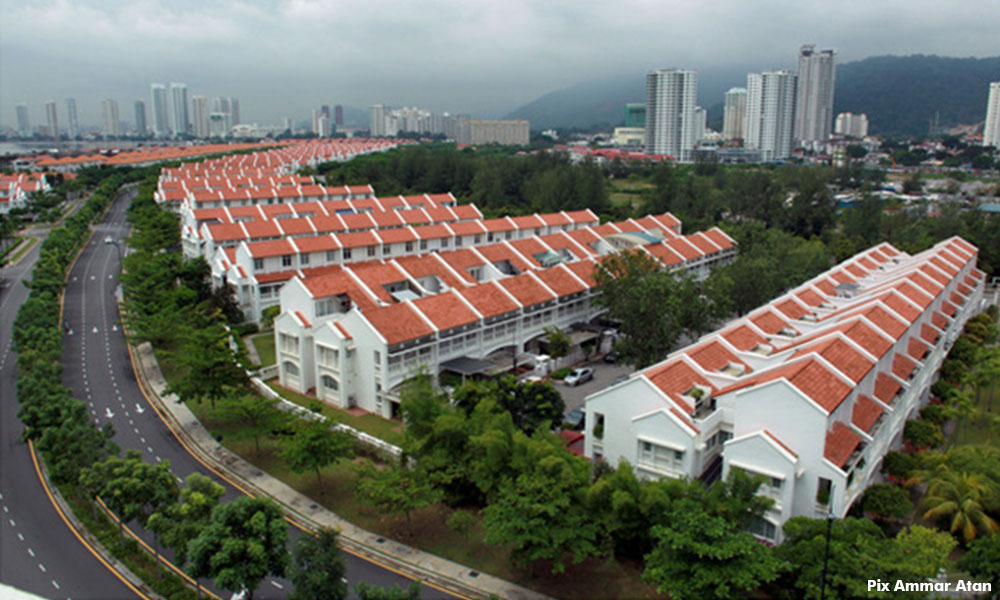
The mandatory building of price-controlled social housing may enhance the low-income group’s homeownership rate in the short term, but in reality, it is transferring the problem to another income group, as the open market buyers are paying higher prices to share out the cross-subsidy that enables such discounts to be in place.
In fact, many cities fail to address the housing affordability crisis as they ignore the basic economic forces of supply and demand. The long history of countries implementing price control has shown that, at best, they are only effective on an extremely short-term basis.
Over the long run, price control ends up hurting those it is intended to help. So, being the central planner by nature, the government should avoid regulating house prices in the market.
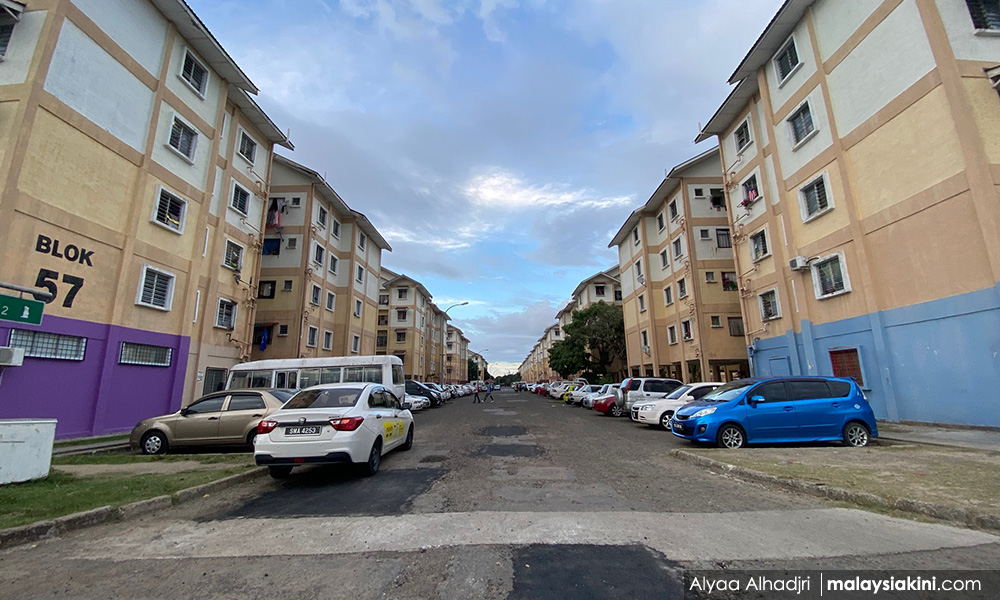
This is because the government cannot capture the effective demands that reflect the actual market needs; due mainly to the fact that the government tends to treat housing affordability as other social policies with the aim of helping low-income and vulnerable populations, without considering the dynamic change of the market over time.
While private developers also cannot completely capture the effective demands; they are in a better position to tackle the dynamics of the market. This is because, through exposing themselves to the changing property landscape,, as well as through a better understanding of the consumer's lifestyle trend, private developers can perform a more accurate estimation on housing preferences.
Hence, they are able to evaluate the economic sustainability of their projects. It is this missing part that differentiates them from the public sector, which tends to address housing affordability as a statistical matter by simply relying on the ratio between median house price and median income, while lacking the sense of locality and buildability.
Should the government attempt to do something in order to respond to the social pressure in providing acceptable housing standards at an affordable price for all, the government can focus on the delivery of public/social housing or affordable rental housing as a national agenda.
Meanwhile, the private sector should be focusing on delivering market-driven affordable houses within a threshold of maximum price levels based on market demand, feasibility and affordability of the target market, without price controls or quota.
FOO CHEE HUNG is a researcher from property developer MKH Berhad.
The views expressed here are those of the author/contributor and do not necessarily represent the views of Malaysiakini.




Report this comment
Are you sure you want to delete this comment?
This action cannot be undone.