


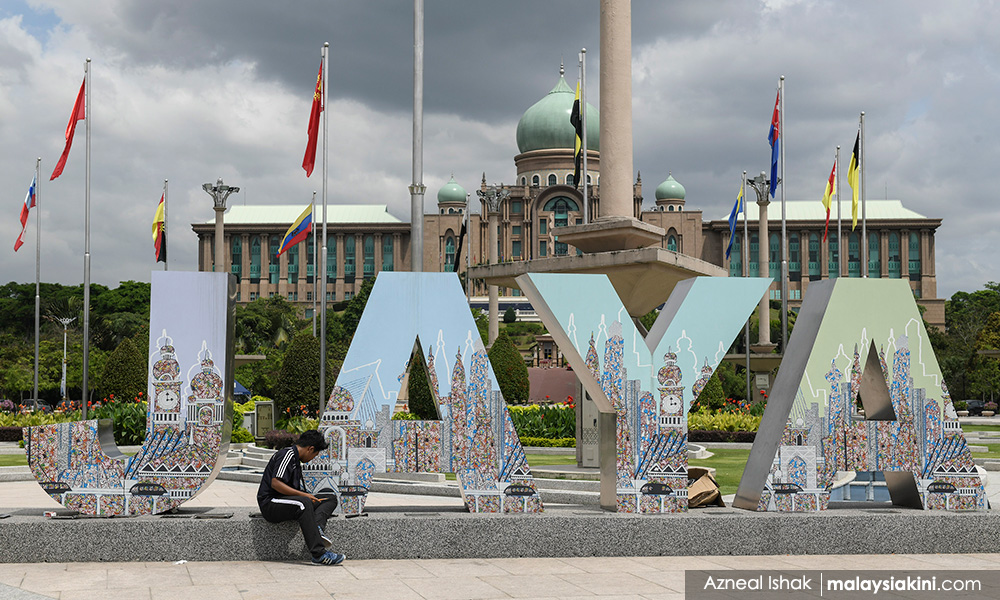

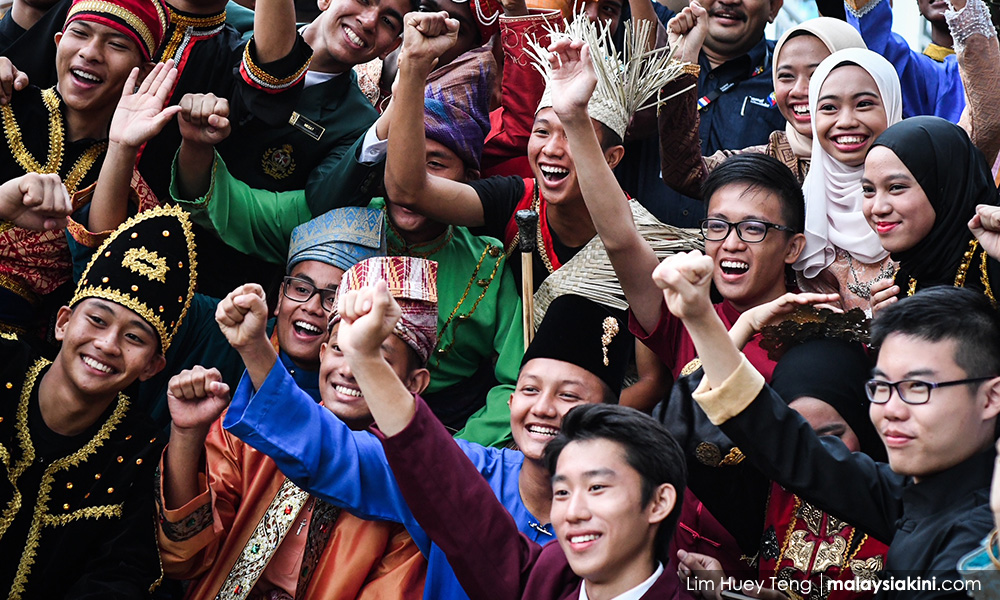
COMMENT | Are we supporting youths as future leaders in M'sia?
COMMENT | I welcome the suggestions written by Iskandar Puteri MP Lim Kit Siang which is to provide more opportunities for young Malaysians to lead and resolve national problems. I strongly agree that this should be the epoch of millennials. The key question - is our country doing enough to support aspiring youths as future leaders?
The answer is not very straightforward. Although the labor force participation among young people is gradually increasing every year in Malaysia, I could say there is a relative absence of youths holding top or senior positions, whether in private or government sectors.
The default setting always follows traditional bureaucratic red-tape. The long-serving and older workers are first in line for top positions. For that reason, we have seen young Malaysian talents going abroad and being appreciated in other countries.
Age discrimination is a factor that limits the development of young leaders. We may hear some quarters in the country calling for "youth empowerment", but how have we empowered our youths?
Young people are being treated less favorably because of their age. We see much of this in the political scene - older parliamentarian calling younger lawmakers "budak" (child) for no logical reason and young Veveonah Mosibin was even labeled a liar once...
COMMENT | I welcome the suggestions written by Iskandar Puteri MP Lim Kit Siang which is to provide more opportunities for young Malaysians to lead and resolve national problems. I strongly agree that this should be the epoch of millennials. The key question - is our country doing enough to support aspiring youths as future leaders?
The answer is not very straightforward. Although the labor force participation among young people is gradually increasing every year in Malaysia, I could say there is a relative absence of youths holding top or senior positions, whether in private or government sectors.
The default setting always follows traditional bureaucratic red-tape. The long-serving and older workers are first in line for top positions. For that reason, we have seen young Malaysian talents going abroad and being appreciated in other countries.
Age discrimination is a factor that limits the development of young leaders. We may hear some quarters in the country calling for "youth empowerment", but how have we empowered our youths?
Young people are being treated less favorably because of their age. We see much of this in the political scene - older parliamentarian calling younger lawmakers "budak" (child) for no logical reason and young Veveonah Mosibin was even labeled a liar once.
Moving forward, the practical approach is to execute the suggestion made by Lim. First, recognise and appreciate our young talents. We should give them a platform to direct their skills - for instance, a quota reservation for young Malaysians to hold top positions in government or private sectors.
Political parties must also anchor a plan to push their young members to run for office. In this era, I am of the opinion that young people are capable of taking charge.
We have so far been seeing the same-old dull sketch of Malaysia's political landscape in the first 11 months of 2020. The crux of this whole political catastrophe is about the power struggle among the older generation of politicians in Malaysia. I know young Malaysians are disappointed seeing this entire fiasco but do not give up.
Success does not happen overnight. It requires effort, practice, and time. Having said this, leaders must be trained from young. Leadership skills must be formalised and coached in the education sector to outfit youths for the future. This is to boost confidence, master problem-solving skills, and transform creative ideas into solid action outcomes.

In fact, the vision of having young leaders is consistent with the national education philosophy. But, is the national educational roadmap consistent with its philosophy?
Make the young voices heard! This mantra must be materialised with tact and strategy. Listening and prioritising the perspectives of the youth in decision-making is definitely a progressive step to achieve this goal. All sectors, private or government, must embrace and honour the principle of listening to the youths.
In particular, the government can do more to empower the Malaysian Youth Council and other youth councils by arranging regular meetings with them to comprehend their views and adopt them into action plans.
Young people must make a change and contribute to our country, take the lead, continue to fight, and never surrender. One day, I hope to see more promising young leaders in Malaysia.
I believe they will serve us and represent our voice better than politicians from older generations who practice the same old-fashioned clichés.
ALIYA ASHIQIN is the publicity secretary of the DAP Socialist Youth (DAPSY) Damansara.
The views expressed here are those of the author/contributor and do not necessarily represent the views of Malaysiakini.





Are you sure you want to delete this comment?
This action cannot be undone.