




Beliefs, conviction and doubt
The dogs of war in the Middle East have finally taken a breather from their gruesome business.
For over a month, the Earth's citizens are treated to a daily television diet of death and destruction in the comfort of their living room. Some must have suffered compassion fatigue from such an over-exposure to the horror of war. Younger people might have been desensitised to the evil of a killing carnage, since - on television - the war looks like a game that one can play on the internet anyway.
It began with uneasy rumblings between Israel and Palestine, following the electoral victory of Hamas in that unfortunate non-country. There was a spate of skirmishes, which was nothing new. Then a couple of Israeli soldiers were kidnapped. That "Jewish state" responded with predictably excessive violence.
The dogs of war in the Middle East have finally taken a breather from their gruesome business.
For over a month, the Earth's citizens are treated to a daily television diet of death and destruction in the comfort of their living room. Some must have suffered compassion fatigue from such an over-exposure to the horror of war. Younger people might have been desensitised to the evil of a killing carnage, since - on television - the war looks like a game that one can play on the internet anyway.
It began with uneasy rumblings between Israel and Palestine, following the electoral victory of Hamas in that unfortunate non-country. There was a spate of skirmishes, which was nothing new. Then a couple of Israeli soldiers were kidnapped. That "Jewish state" responded with predictably excessive violence.
Somehow or other, the Shiite Hizbollah movement in neighbouring Lebanon decided to lend their support to the Sunni Hamas; they too kidnapped two Israeli soldiers, and demanded an exchange of prisoners. Being a Spartan state very conscientious in protecting and honouring their warriors, living or dead, the Israeli war machine swung into full throttle.
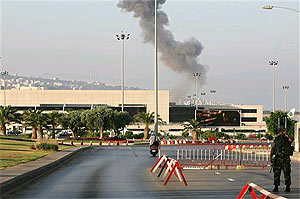 A month later, thousands of Lebanese citizens were killed or wounded; and one third of the casualties were children. Millions of the population were displaced. Much of their infrastructure was bombed to smithereens. It would take US$10 billion to rebuild that shattered country. In contrast, casualties and destruction on the Israeli side were more limited.
Now an uncertain truce sits nervously on the Israel-Lebanon border, after the UN Security Council adopted a resolution on a cease-fire. As some cynical war commentators would remark, diplomacy is an extension of war, and whatever peace there may be is just a lull between the next rounds of vicious fighting anyway.
Religious significance
Lasting peace and meaningful co-existence seems like a remote possibility in that region, if history is anything to go by. In fact, this current conflict is mired in history itself, and has its roots probably in the carving up of the old Arab order after the Second World War, and the creation of the state of Israel in 1948, on land where many Arabs were already living for eons past.
Then there are different kinds of history at work. The Middle East is one of the areas where human civilisations began. It is steeped in the sort of history as told by the holy books of three major religions, all claiming various swaths of the landscape there as their holy sites and their promised land in one way or another.
Over the past thousands of years, the followers of these three major religions of the world have gone through heart-rending sufferings in various forms, from mutual persecution, massacres, and massive exile. In the collective memory of their respective religious community, the landmarks of this ancient land are impregnated with religious significance that forms an integral part of their faith.
Add to this the rise of modern nationalism, which more often than not seeks mass mobilisation through religious identification, for the purpose of territorial claims. Land as defined by rivers and mountains is no longer merely economic capital for national development; it is the platform on which the drama of their destiny is being staged.
With increasing globalisation, world powers of various shades have also staked a claim in the geo-political conflicts by sponsoring client states involved in the regional conflicts. One cannot be far wrong in characterising the current tension as a proxy war between the West and the Iran/Syria alliance.
At the end of the day, the victims of the recent month-long war are the innocent citizens on both sides, mostly women and children, who happened to be born to the wrong place at the wrong time. There was a time in history when civilians were not involved in war. If the soldiers had to kill people, they do it to their opponents in uniform. But we live in the dangerous age of total warfare, and "collateral damage" in property destruction and loss of civilian lives are but an integral part of the process of war - regrettable but unavoidable!
For the heads of the various warring parties, and those international movers and shakers in the UN Security Council, they are well fed, well clothed, and safe from the bullets and missiles flying at the front lines. They can afford to take their time about the terms of a ceasefire, and the rules of engagement for a peace-keeping force.
What they have in common is very strong conviction in their respective cause. You can see it in their shinning eyes, their determined visage, and their carriage that reminds you of prophets and visionaries. They all talk as if they have their god on their side, as if they exchange e-mail messages with their god on a daily basis.
Unshakeable beliefs
Their language is heavily tinted with moralistic fervours. Standing on moral high ground as they do, they confess their intention to do the Good, to wipe out the Evil as personified by their opponents. Nowhere is this more obvious than on the face of the American President when he preaches from the pulpit of freedom and democracy on television.
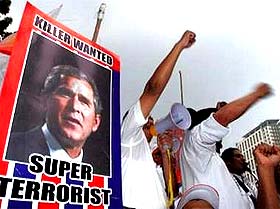 When all these strong convictions and noble intentions collide in a mammoth contest of "national will", and translate themselves into justification for cataclysmic nihilistic destruction of lives and properties, how are disinterested parties like you and me to make sense of this nihilistic eruption of violence and death?
I use the word "disinterested" loosely. In a world of universal guilt, nobody can really think of himself as innocent.
And then, the kind of Clash of Civilisations that Huntington predicted in earlier decades has been a kind of self-fulfilling prophecy. The Middle East powder-keg is certainly the locus of a clash of many civilisations, if by 'civilisation" we mean a whole set of conceptual scheme that has evolved over a unique congruence of space and time encompassing all the beliefs of a people inhabiting them.
We now know that human beings are creatures of beliefs. A person's sense of individual and group identity is anchored on the unshakeable beliefs that articulates and forms his universe of meaning. Faith of various forms in various values is the bed-rock of man's existence.
Unfortunately, too many people mistakenly identify the truth of their beliefs with the strengths of their convictions. They have forgotten that absolute truths belong to God, and that man believes precisely because he does not know the absolute truth. At least, that is the lesson from Kant anyway.
The trouble with our world now is not a lack of beliefs. We have more than a sufficient number of religious faiths and political causes for all the concerned members of our human race to devote their entire life to the belief of their choice.
No clear cut answer
And so this is the current state of our world, one that is bursting with a plurality of religious faiths and political ideologies. To call this world a "community of nation states" is not entirely appropriate, since the collection of nation-states forming the UN has hardly shown the kind of neighbourly spirit that characterises a community.
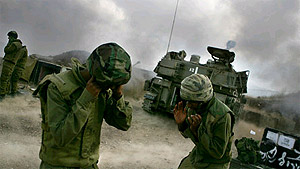 In fact, the state of the world to-day is more like Hobbes' brutish "state of nature" Why is it so difficult to institute an international social contract is not easy to understand. The cynical elitist would ascribe this messy state of affair to man's inability to evolve beyond his animal existence to a higher level of civilisation. He would subscribes to the validity of psychoanalysis would remind us of man's self destructive instinct, described by Freud as the death-wish.
I have no clear cut answer either. Nevertheless, I have since grown weary, not of beliefs as such, but in the manner of acting on convictions in those beliefs. Obviously, some mode of believing cannot be right. If anyone believes that he can die the glorious death of martyrdom and be assured a place in the afterlife by killing innocent bystanders, his belief is suspect. I am almost tempted to propose that no cause is worth dying for, just as I am tempted to oppose all wars!
Here, perhaps we must distinguish between blind beliefs and rational beliefs.
A blind belief is an unquestioning conviction in a religious or political creed. It is like superstition. A blind believer is more likely to be inclined to uncritical orthodoxy and hard-headed dogmatism, and so he is not likely to tolerate dissenting opinions, especially if he thinks he is also one of the Chosen Ones to be the guardian of his particular cause.
A rational belief must temper conviction with the readiness to reason openly with others of different beliefs. He would always be tormented by a lingering doubt that he does not know the entire truth about his religious faith or his political ideology. Perhaps, a fervent believer with doubt in his heart is a more peace-loving believer than one who has no doubt at all.
To deny the certainty of religious or political conviction may be labelled as heresy by some people, but it may be necessary in making rook for human survival.


Are you sure you want to delete this comment?
This action cannot be undone.