


COMMENT | Covid-19 immunisation within the context of FTTIS
COMMENT | Three Chinese nationals who previously had close contact with an infected person in Singapore were the first cases of Covid-19 reported by Malaysia on Jan 25, 2020, exactly one year ago.
The first local case was confirmed 10 days later, on Feb 4, 2020. He, too, acquired it whilst in Singapore, attending a conference.
He passed it to his younger sister, who became the first case of Covid-19 acquired by local transmission.
This was the first wave of Covid-19, which had a total of 22 cases.
It is pertinent to note another historical milestone in the Covid-19 pandemic. These were the events on Feb 24, 2020, which triggered the collapse of the legitimately elected Pakatan Harapan government.
Three days after the Sheraton Move, Malaysia experienced the second wave on Feb 27, 2020. There were no cases in the preceding 11 days.
Malaysia hosted the tabligh ijtima` (large gathering) in Kuala Lumpur from Feb 28 till March 1, 2020. The tabligh cluster has since become the single largest cohort of Covid-19 cases in the second wave (40%) and contributed...
COMMENT | Three Chinese nationals who previously had close contact with an infected person in Singapore were the first cases of Covid-19 reported by Malaysia on Jan 25, 2020, exactly one year ago.
The first local case was confirmed 10 days later, on Feb 4, 2020. He, too, acquired it whilst in Singapore, attending a conference.
He passed it to his younger sister, who became the first case of Covid-19 acquired by local transmission.
This was the first wave of Covid-19, which had a total of 22 cases.
It is pertinent to note another historical milestone in the Covid-19 pandemic. These were the events on Feb 24, 2020, which triggered the collapse of the legitimately elected Pakatan Harapan government.
Three days after the Sheraton Move, Malaysia experienced the second wave on Feb 27, 2020. There were no cases in the preceding 11 days.
Malaysia hosted the tabligh ijtima` (large gathering) in Kuala Lumpur from Feb 28 till March 1, 2020. The tabligh cluster has since become the single largest cohort of Covid-19 cases in the second wave (40%) and contributed to 23% of Covid-19 deaths then.
And due to the grassroots appeal of the tabligh persuasion, the disease spread to all the states in Malaysia, spawning a five generational spread and multiple Covid-19 sub-clusters.
And Malaysia became the Covid-19 hot spot in Southeast Asia (SEA) and spread the coronavirus to all other countries in the SEA region.
The Sri Petaling tabligh gathering cluster, which heralded the second wave, officially ended on July 8, 2020.
The rakyat and leaders were basking in their triumph over the coronavirus and failed to capitalise on the opportunity to put in place serious mid- and long-term plans to keep the virus at bay pending the availability of safe and effective therapeutics and vaccines.
A senior minister in the government even declared: "It was good luck (nasib baik) that the Pakatan Harapan government was not ruling, otherwise there would be more deaths due to Covid-19."
The celebrations came to an abrupt end with the explosive number of new cases registered in the Benteng Lahad Datu (LD) cluster in Sabah and Kedah's Tembok cluster in Alor Setar.
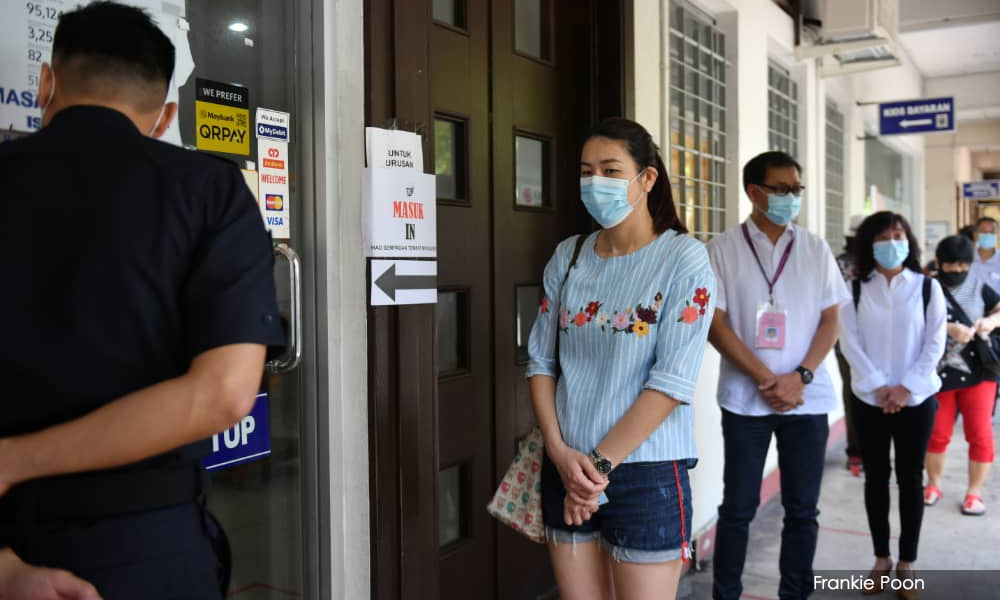
The other super-spreader event was the Sabah state election. The nation has yet to recover from this third wave despite the imposition of the second movement control order, reinforced with the emergency ordinance (Jan 12, 2021, the country's fifth emergency since its independence in 1957.
Both the MCO and emergency are really an overt declaration of failure of the Covid-19 leadership in the country to curb the spread of the coronavirus.
Profoundly disturbed by the failure of the political and health governance to adhere to good science to manage the pandemic, 46 top physicians in the country submitted a 10-prong strategy to the prime minister to save the nation. Except for a polite political reply from the PM, nothing else has happened since their submission on Jan 7, 2021, which is nearly 50 days ago.
The euphoria of the arrival of the Pfizer-BioNTech mRNA vaccine in Malaysia on Feb 24, 2021, must not distract us from the Covid-19 statistics that have yet to improve, let alone bend the pandemic curve.
The trajectory of the pandemic continues to track a malignant uptick. I wished that the downward trend witnessed the past few days was real, but I cannot dismiss the fact that the decline in the numbers of cases is actually related to the decreased number of tests carried out by the Ministry of Health (MOH), i.e. the self-fulfilling Trump philosophy of fewer tests equals fewer cases.
This thought is similar to that voiced by public health physician Awang Bulgiba in a recent newspaper report dated Feb 24, 2020.
Back to basics of pandemic management needed
Ever since the onset of the third wave in October 2020, the positive test rate has hovered between 6-10% which well exceeds the World Health Organisation (WHO) benchmark of more than 5% which signifies that the pandemic is not under control.
Most of the best-performing nations like Singapore, New Zealand, Australia and Thailand post a positive rate of less than 3%. In fact, Malaysia at the height of its successful pandemic control of the second wave clocked a positive rate of less than 1%.
Until and unless the back to basics of pandemic management is in place, we will not be able to control and contain the outbreak and enjoy the optimal power of the vaccine rollout.
There is an urgent need to transform the Find-Test-Trace-Isolate-Support (FTTIS) towards surveillance and prevention so that the MOH can always remain ahead of the pandemic curve.
This can only be achieved if the following pillars of the FTTIS are functioning optimally and at warp speed.
Three out of five Covid-19 cases do not show symptoms. They are either asymptomatic or pre-symptomatic.
The MOH previously only tested those with symptoms which would miss 60% of the cases which would silently spread the disease. So the MOH must find both those with and without symptoms.
The public must be informed of the salient features of Covid-19, why they need to be tested and where they can get themselves tested. Using artificial intelligence embedded in the digital app, SELangkah has been able to detect the hotspots and conduct targeted and mass testing campaigns.
Secondly, the MOH needs to shift away from polymerase chain reaction (PCR) for surveillance tests and instead utilise Antigen Rapid Test Kit (RTK-Ag) on a much larger scale than presently done.
The RTK-Ag test results can be obtained within an hour at the point of care or latest by a day instead of the three days currently. And we need to ramp the test numbers to drive the positive to below the 5% WHO benchmark. All the positive cases must be appropriately counselled and informed as to what needs to be done next.
80% of the contacts of the index case must be traced within two days instead of the 4-7 days presently or even traced at all. The MOH has admitted failure of its manual contact tracing methods.

Yet again, SELangkah has utilised data science and machine learning to perform digital contact tracing, which has reduced the need for manual labour, increased the speed and accuracy and obviate the backlog of cases as has happened with the recent surge in numbers of cases which did not represent real-time numbers.
This digital system also detects the sporadic cases early before they spread to become clusters. Therefore, unchallenged access to national data is critical.
To suppress Covid-19, we must isolate cases and quarantine contacts within a space of two days instead of the 7-10 days presently. Category I & II cases can be isolated at home with close monitoring digitally and by the health care professional (HCP).
The cases and contacts are informed of the early warning signs of deterioration. And immediate transfers would be arranged for the worsening cases.
For those who cannot isolate themselves at home, they can be referred to low-risk centres.
They must be provided with financial support for their lost income. They and their families should be provided with food and basic essentials such as masks and sanitisers.
The HCP must follow up to check their wellbeing. We should also empower the local community to provide support to their affected neighbours.
All of these pivots of FTTIS is critically dependent on the availability of data sets, namely:
1. To find hotspots to undertake targeted mass testing.
2. To automatically upload test results into SIMKA (Sistem Informasi Makmal Kesihatan Awam).
3. To do digital tracing of contacts.
4. To perform online admissions or bookings for isolation cases.
5. To conduct digital monitoring of cases under home isolation.
6. To direct support to the needy.
It is obvious that the present FTTIS as implemented by the MOH is neither rapid, efficient, effective nor impactful. This has been pointed out repeatedly by various concerned doctors but has fallen on deaf ears.
The MOH is expecting the vaccine delivery to contribute to the falling numbers of daily cases and hence pacify the very anxious rakyat.
"You can fool some of the people all of the time, and all of the people some of the time, but you can not fool all of the people all of the time."
DR MUSA MOHD NORDIN is a paediatrician and chairperson of the Federation of Islamic Medical Associations advisory council.
The views expressed here are those of the author/contributor and do not necessarily represent the views of Malaysiakini.


Report this comment
Are you sure you want to delete this comment?
This action cannot be undone.