




Rainbow of faiths
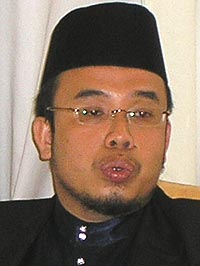
Perlis Mufti Dr Mohd Asri Zainal Abidin has called for state religious authorities to stop moral policing, such as spying, snooping, and the practice of looking for couples to be charged with khalwat (close proximity). He said such acts were against the Islamic principle of respect for people's privacy, and were acts of trespassing.
He is also quoted to have said, "It is an embarrassment to Islam to see religious officers going to hotels and demanding the guest list. Islam does not encourage people to look for acts of sin."
When asked whether he is condoning vice activities, Mohd Asri said, "There is a hadith (saying of the Prophet) that says, "If you conceal the shame of others, Allah will conceal your shame in the hereafter. The Prophet is not asking us to sin, but he has made it clear for us not to find the find the faults of others."
Perlis Mufti Dr Mohd Asri Zainal Abidin has called for state religious authorities to stop moral policing, such as spying, snooping, and the practice of looking for couples to be charged with khalwat (close proximity). He said such acts were against the Islamic principle of respect for people's privacy, and were acts of trespassing.
He is also quoted to have said, "It is an embarrassment to Islam to see religious officers going to hotels and demanding the guest list. Islam does not encourage people to look for acts of sin."
When asked whether he is condoning vice activities, Mohd Asri said, "There is a hadith (saying of the Prophet) that says, "If you conceal the shame of others, Allah will conceal your shame in the hereafter. The Prophet is not asking us to sin, but he has made it clear for us not to find the find the faults of others."
 I was pleasantly surprised to read this report in the
New Straits Times
(15.12.2006). Rarely have I seen this kind of compassionate and enlightened image of Islam in Malaysia reflected by a mainstream Islamic scholar before. If every Mufti speaks like him, and if all Muslims are as open and inclusive, there would not be any problem with inter-faith relationship at all.
I was pleasantly surprised to read this report in the
New Straits Times
(15.12.2006). Rarely have I seen this kind of compassionate and enlightened image of Islam in Malaysia reflected by a mainstream Islamic scholar before. If every Mufti speaks like him, and if all Muslims are as open and inclusive, there would not be any problem with inter-faith relationship at all.
Immediately, I recognise in his views parallel messages of humility and forgiving spirit in mainstream Christianity. Billions of Christians all over the world will have to include in their daily prayer this appeal to the Almighty, "Forgive us our sins, as we forgive those who have sinned against us." This would indeed be one of the many common grounds for inter-faith dialogues between Muslims and Christians.
Obviously, after the outburst of racial and religious fevers during the recent Umno general assembly, a general disquiet has pervaded our multi-racial society, despite the attempt of our prime minister at damage control during his closing speech. If left unchecked, this widespread of discontent would cause the Barisan Nasional to lose many seats, and the DAP would be the biggest winner. Above all, national unity would be the ultimate victim.
Since then, the NST has either been instructed or has found sudden enlightenment in a sustained effort at highlighting more moderate and constructive views on nation-building.
Different interpretations
An earlier interview with Mohd Asri was published on Nov 12. He did criticise Muslims in Malaysia who are focused on punishing the wrong doers, especially apostates, pointing out that the Quran never said that we must kill apostates. According to him, specific quotations from the Holy Book were subject to interpretation.
In connection on whether Muslims to-day are more close minded, he said, "What makes Muslims confused is the question of which is the opinion of an Ulama and which is the textual evidence of Islam. We cannot oppose the evidence of Islam, and what is in the Quran and Sunnah. But the interpretation of the Quran and Sunnah by the religious experts are open to evaluation."
"When someone evaluates your interpretation, it does not mean he is rejecting the Quran and the Sunnah. He is merely rejecting your understanding of it."
Mohd Asri, at 35 years of age, is he youngest Mufti in the country. He is also hailed as one of the new breed of religious scholars who are calling for a more modern and compassionate face to Islam.
For too long, non-Muslims in this country have been exposed to a brand of Islam that calls for rigid implementation of moral and other codes, with threats of severe punishment for the offenders. There have been an abundance of voices that seem intent on building walls, rather than bridges between people of different faiths. If Islam is a universal religion as Muslims claim, then there ought not to be walls at all.
Having lived through the religious and racial turmoil in Malaysia for close to six decades, I have always been very sensitive to the religious sensitivities of other people. Sometimes, the best thing is to say nothing at all, and sweep my personal feelings under the proverbial carpet.
Take Islam for instance. There is the question of locus standi. According to the former PM, only a Muslim can make any kind of criticism on anything that is concerned with the religion. For a non-Muslim to make any kind of commentary on Islamic issue, he would be open to accusation of interfering into the internal family matter of the Muslims at best, and be subject to being an enemy of Islam at worst.
Obviously, this exclusive view does not always hold water. My friend Farish Nor, who used to write for malaysiakini , confided in me that he would receive up to 40 hate mails a week after he had criticised certain Islamic views.
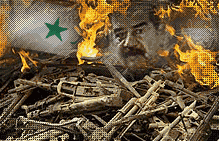 Looking at the rampant persecution of certain Muslim sects by another Muslim sect, in Iraq under Saddam Hussein for instance, you wonder if even being a Muslim can qualify one to criticise Islamic practices safely.
Iraq is a good example. It is now in the throe of a sectarian civil war between the Shiite and the Sunni. If the Americans and their allies do withdraw their troops completely, and the civil war degenerates into a genocide of one Muslim sect by another, are we then to abstain from a crime
against humanity, simply because as non-Muslims, we must not criticise anything that is done by Muslims?
Under the same sky
After all, we do share the same humanity. In Malaysia, we live under the same bright tropical sky. Whatever our ethnic origin and our religious creed, we are nourished by the same land and water.
Take for instance the PAS proposal to institute the death sentence for certain offences under Hudud law.
I am opposed to that particular aspect of the Hudud penalty not because I am against certain interpretation of the Quran, but because I am opposed to any form of the death sentence, period. But would I then be labelled as anti-Islam, liable to an edict for my head as retribution?
Here, the question that arises is: how do the believers of any faith regard people who do not share their belief?
Are non-believers to be seen as pagans, heretics, infidels, enemies of the faith, a fearsome hostile threat, destined for hell and eternal damnation, to be kept in abeyance, and watched very closely with suspicion and vigilance?
Or are they to be treated as fellow creatures of God s creation, blessed with an eternal soul, and thereby worthy of love, compassion and forgiveness? People from other faiths are but neighbours on God's good earth. Should not we love our neighbour as ourselves, if not more?
These questions apply equally to all the three major monotheistic religions, Christianity, Islam and Judaism. The nature of monotheism is such that it is not hard for the faithful to regard themselves as having been chosen for having found salvation in their God. They tend to look at the world from the metaphysical centre of their faith. From that perspective, any other form of religious faith is a profanity, a sacrilege to the divinity of their one true god. This is the origin of religious exclusivity and religious warfare.
Imperfect beings
As the good Mufti from Perlis has observed, the truth as revealed to the Prophet and recorded in the Holy Book cannot be doubted. The trouble is isolated words do not have meanings.Words operate within the context of their textuality, as well as the larger context of space and time under which the words were uttered.
Then again, laymen and theologians alike are imperfect human beings. They can interpret the holy books as best they can, but they will never be free from their natural disposition, or the influence of their socio-cultural niche. Like all human beings, their interpretation will range from the conservative, the moderate and the radical.
Such disagreement is the reason why, even within the same organised religion, they are so many different sects and denominations. Who then is qualified to be the final authoritative adjudicator on which is the correct interpretation?
The only reasonable course of action seems to be this: all human beings must be given room to interpret their Ultimate Reality. Of all God's creatures, only mankind has the freedom of will, to choose God or to reject salvation. This is the basis of religious freedom, not only in insisting that I have this freedom as a matter of right, but also in demanding that I allow others this freedom of faith.
I am not a member of any organised religion. That does not mean I am not religious, or that I have no spiritual life of sort. I have this innate respect for all the major religions that find neighbourly and peaceful co-existence in Malaysia.
Therefore, on this the eve of the 2006th anniversary of Jesus Christ, I wish all Malaysians a Merry Christmas and a Happy New Year!


Are you sure you want to delete this comment?
This action cannot be undone.